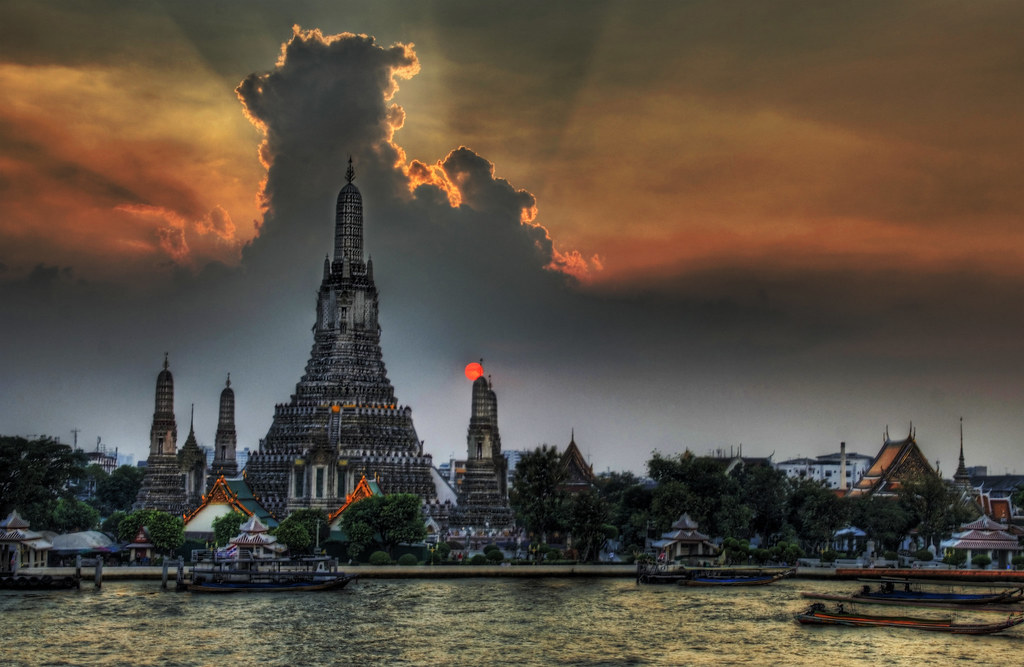
10 Easy Steps To Advanced Photography Skills

By Trey Ratcliff (aka Stuck in Customs), one of the most famous and renowned HDR photographers on Flickr. In his article Trey describes some professional insights and useful photography tips that he collected over the years of his career.
A camera does not work like an eye; film does not work like memory. There is a fine line between a photo that is quite nice and one that is quite breathtaking. At some unknown point, a photo can cross the Rubicon and be forever a piece of beautiful art. That hinterland between a regular photo and evocative art is a shifting area from person to person and taste to taste. However, that zone can be narrowed a bit once you start to consider the way the brain stores memories and emotions.
And yes, it gets a bit touchy-feely here trying to determine if your work has crossed that line. With rigorous practice and peer feedback, you can start to appreciate where that zone is and, consequently, improve your hit ratio.
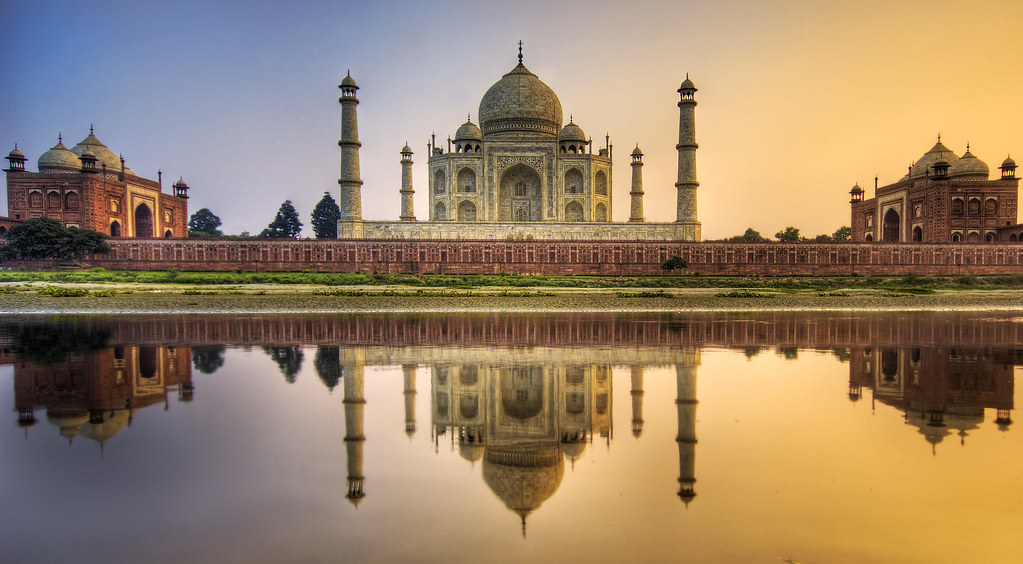
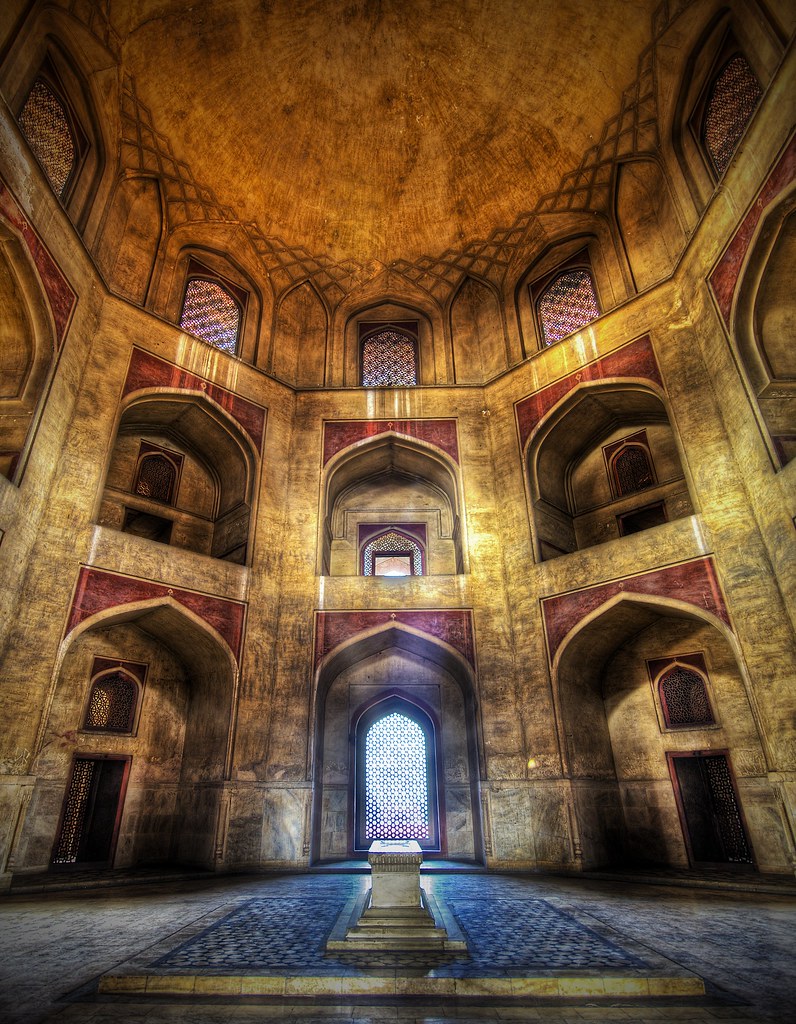
The back of the Taj Mahal during a summer sunset.
The good news is that divining your way to more beautiful photos does not require rune rites of scapulimancy. There are some basic things and mantras to keep in mind as you practice and fail, then practice and succeed, then practice and fail, then practice and succeed, and rinse and repeat. We’ll detail a few of these below.
1. Think About The Brain
I’ve always thought about photography differently. I grew up seeing out of only one eye, thanks to several botched surgeries in the 1970s using refurbished archaeological tools of the Australopithecus medicine men.
When you see out of one eye your whole life and then start using a camera in your mid-30s, something happens to you! You come to realize that a camera works nothing like the eye. Forget 3D; I’m talking about the way the brain stores images and scenes.
Upon birth, you have legs, but it takes a few years for your legs to get along with your brain well enough to actually walk you around the savanna a bit. The eyes are the same. They get wired faster than the legs, but the neural pathways from the optic nerve to the parts of the brain that matter take a while to find their chemical trails. You start to sense light levels, then shapes, then edges, then relative positions and the like. And then, around the age 2 or 3, you finally come up with a tagging system that allows you to know generally what a “barn” looks like. Your brain has been working nonstop over that time to give you the visual and memory infrastructure to enable this watershed event.

Fourth of July on Lake Austin: the first HDR photograph to hang in the Smithsonian.
Now, let’s fast forward to today. You’re older, your brain is more or less fully formed, and you happen upon a barn in a field. But it’s not just any barn: it’s the barn you’ve been wanting to see your entire life. And in the distance, a storm is brewing as a gentle sun sets. It’s beautiful; you lock it into memory. The way you lock it into memory is nothing like the way a camera records the image on film (or a CCD). This is what I quickly came to realize as I sat there, looking at a photo I took with a fabulously expensive Nikon and showing it to a friend. “Well, you really had to be there.” I’m sure you’ve all said that!
Now, this first step is a big step: it’s a philosophical re-assessment of how the camera works in contrast to how the memory maps a scene, the latter being a process of layering visual reality with the emotions and memories linked to that scene. You see, you are not just remembering that barn but are remembering every barn; you are not just remembering that storm but are remembering every storm. A beautiful photo must tell the epic tale of the memory, linked with the other emotions that fold into a whole.
2. Engage In The New Global Salon
In the 1860s, all art roads led to the Salon in Paris, which was the most important judged competition of art in the western world. During a period of just over 10 years, the Impressionist masters battled it out in a competitive and cooperative tour de force that created a panoply of creations that we now cannot imagine the world without.
The reason Paris became the center of the art world and an explosion of new art is the combination of new technology in travel and communications combined with Napoleon III’s focus on infrastructure around the Salon.

Hong Kong from a peak on a summer night as the city comes alive.
Today the same thing is happening, although perhaps not everyone really realizes it in a grand historical sense. It’s called Flickr. Flickr has become a techno-Salon, allowing the world to easily use the Internet to enter the competition and force each other to evolve and improve their art. The automated “Explore Algorithm” does a pretty good job of automatically filtering the best photos that are uploaded every day. Go ahead and look at some of the current best of the last 7 days.
Click “Reload” a few times and I promise you will have seen something that impresses. It is quite unbelievable the level of art and beauty that is created every single day. Now, all of this amazing art on Flickr can either inspire or intimidate you, depending on your mindset for competition. I hope it inspires you to upload one photo a day and see if you can make it in the top 500 or even the top 10. And don’t give up. Competition makes everyone better; this is an undeniable truth, and you are not realizing your full potential if you remove yourself from the process.
I can think of a number of things Flickr can do to improve this new global competition. Its AI algorithm to find the most interesting new artists still makes many mistakes. Maybe I will save that for another article! But in many ways, Flickr is close to squandering an amazing opportunity to set the art world on fire.
3. Get Rid Of Your Toy Camera
Oh, look at that camera you have! It’s so tiny and slim and techno-looking. Look! It fits right in your pocket! Oh my, you can take it to parties and sporting events, and it’s so convenient. Oh, it is 10 megapixels, too? Oh my. Well, that is a good camera then!
No, it’s not. It’s a toy: give it to your kids or the nearest gradeschooler (for whom it was designed) and get serious. I know that 19-year-old punk at Best Buy told you that your compact camera is really neat and just what you need. But are you gonna listen to him or me?
Get yourself a DSLR (I have suggestions on my page that aren’t very expensive for people just starting out). For those of you who don’t know, a DSLR is one of those cameras you see the pros carrying, but it doesn’t have to be a giant one like what you see in the NFL endzone.
Sorry to be rude about the toy thing, but you want to take more beautiful pictures, no? Well, a decent DSLR has such a good sensor chip, combined with more flexible lenses, that your batting average will dramatically improve.
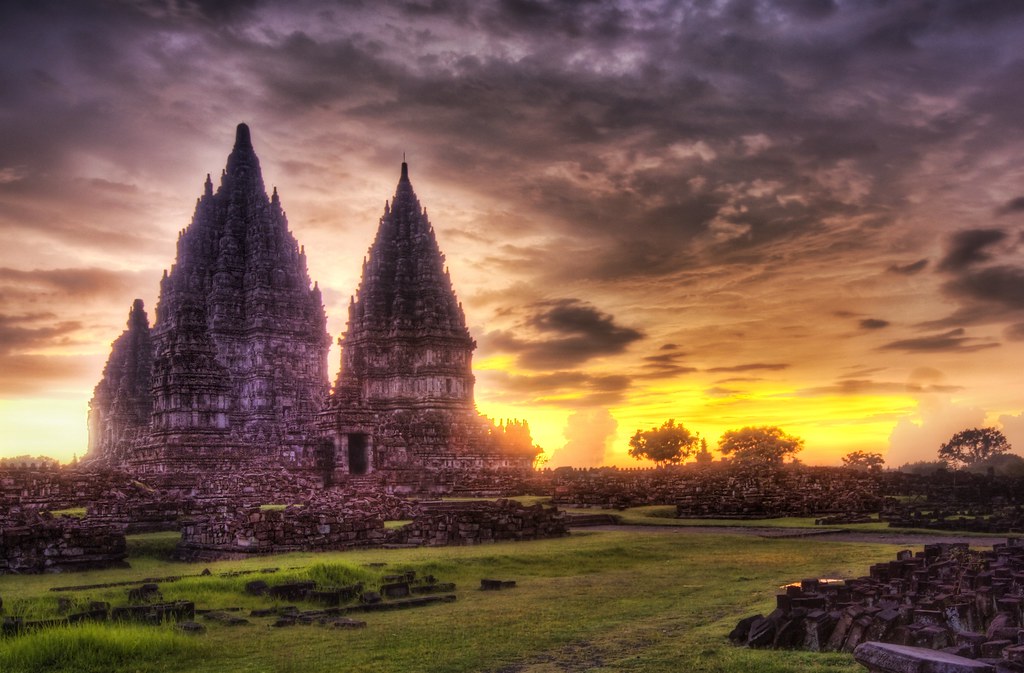
An ancient Hindu temple at sunset in the jungles of Indonesia.
Also (people with DSLRs already know this), it is important to have a good wide-angle lens for landscapes. Beautiful photography does not have to be of a landscape, but it commonly is, and this is what many people envision when they want to make their own beautiful photos. So, we should talk about wide-angle lenses here for a moment.
If you are used to using a toy camera, then you have never really seen the world through a good 10 to 24mm lens. It’s almost the difference between regular TV and HDTV. The vistas are wide and bold; the clouds, sun and mountains all fit; the river and bridge are easy to compose; and so on. Once you go wide-angle, your landscape will never be the same!
4. Carry A Tripod For Those Beautiful Sunsets And Sunrises
Oh, what’s that? You don’t want to carry a tripod? What are you, a 9-year-old? Now, come on. You’re a grown-up, and you want to take some seriously beautiful photos. Do you think pros carry around tripods because they like the extra weight? No, of course not. They know what the heck they’re doing.
If you bit off on getting a DSLR, then you are going to need a tripod, especially for sunset and night shots. Unless you have the steady hand of a T-1000, you are going to get some camera shake.
A tripod allows you to do the following things with landscape photography (in no particular order): set up and take your time to compose a photo with serious intent; keep noise low as the shutter stays open longer; look cool as you carry it around; keep the shutter open for 5 or more seconds for those fleeting sunrise and sunset shots; use it as a weapon in a tight spot while traveling (not kidding).
So, are you still worried about carrying it around? The problem, you understand, is mostly your attitude. Let me provide a different perspective. Nothing in life is worth doing unless you’re serious about it. Believe that you are going to shoot that sunset, and you are going to take your nice DSLR and tripod out there and make it happen, and no one is going to stop you. You’re carrying that tripod around because you’re serious about it. Otherwise, you could just go sit on a pretty beach at sunset and drink beer with your friends and not be serious about it. Go ahead… but you won’t be getting any beautiful photography out of it.
5. Admire Impressionism
I spoke earlier about the Salon of Paris and what happened during the Impressionist movement. While the process and examples of what happens when artists start cooperating and competing is interesting from a social-group evolutionary perspective, this section is more about the art itself.
Early critics of the art form found it crude, sloppy and unconventional, to the point that they felt it didn’t even deserve to be placed alongside the classic masters. But the public was awestruck by the new art form. It doesn’t take a critic to know good art, but it does take a careful and discerning eye.
Consider the colors and styles of Degas, Cézanne, Monet and Renoir. There is not a single detail about any well-known Impressionist painting that is the slightest bit “realistic.” But yet, the rough shapes and colors still make sense. Something about it just feels right. What is that something?
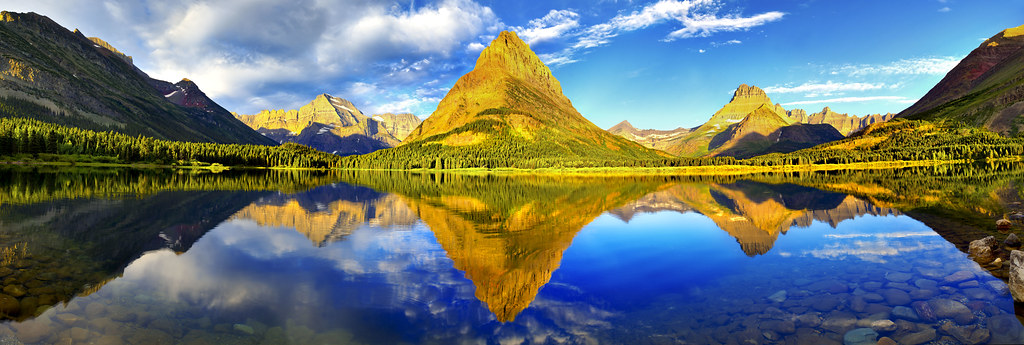
An icy lake at sunrise, fed from the seasonal melt at Glacier National Park; a panorama of 90 shots.
To me, what feels right about Impressionism is what we discussed above. These Impressionist images go deep into viewers’ brains and evoke memories of shared scenes and events. The memory is in fact an Impressionist playground of fleeting colors, shapes and edges. A face here, a blur there, a hint of something almost there, but not quite.
Look at Monet’s work. Think about how the yellows of a sun in the distance is the same yellow as an up-close flower. But something about the colors makes the sun feel brighter than the flower. How does he do that? Can you get closer to achieving this with your photography?
As you look at Impressionist paintings, juxtapose them with your own photography. If you want to evoke the same sort of feelings, then consider how it was done without resorting to realism.
6. Practice With HDR
What is HDR? It’s short for High Dynamic Range photography, and it’s all the rage. I have a tutorial on HDR on my blog. But here, I’ll explain HDR in a circuitous but meaningful way.
About 80% of my photos are in HDR, but I do something a little different. As you start looking into HDR (many of you already have), you will begin to notice how absolutely horrible most HDR looks. When many people begin experimenting with it (myself included), it is overdone and looks too psychedelic. Over time, mine have improved via rigorous self-examination and an evolving methodology.
Remember that bit about me growing up and seeing the world with one eye? Now, we come to the second part of this daring mini-biography as we are cross the stepping stones to my point. My background in college was Computer Science and Math, so I’ve always thought about things in terms of algorithms and software. The very first time I used a DSLR camera, when I was 35 or so, I very quickly came to the realization that something was missing.
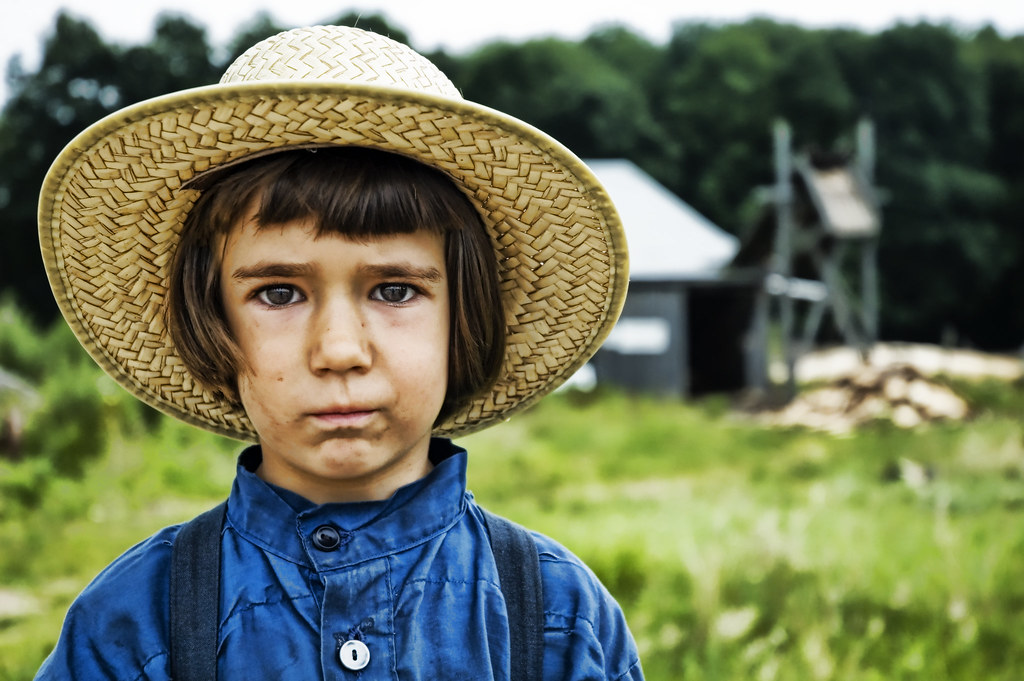
A young Amish boy allows me to freeze time after I help him carry wood with his sisters.
That missing something was the “software” layer between the eye and the memory. Consider what you do with the barn and apply it to how the camera works. You survey the scene. Your eye jumps around from interesting object to interesting object, sometimes moving slowly, sometimes quickly. Your eye lets in more light in some areas, less in others as your pupil dilates. You squint into the setting sun and see warm colors splashed across the clouds, grass and barn. You remember other barns, other storms, other sunsets. You may have been with someone or were alone, but you certainly remember. You lock it all up in your mind’s eye forever.
Because we are visual creatures, a photo or painting can evoke great memories. But the only way to trigger some of those intense memories on a deep level is to adjust the light levels in the photograph, so that the light levels and color match those buried in your head. The HDR process can help achieve these goals.
7. Take Your Camera Everywhere
Don’t just take your camera out on those rare occasions when you actually decide to set aside a portion of your day for photography. Face it: we’re all busy people with real lives, and setting aside three to four hours for anything extracurricular is tough. But it takes only a few seconds to get inspired for a photo, and it’s no good if your camera is back home.
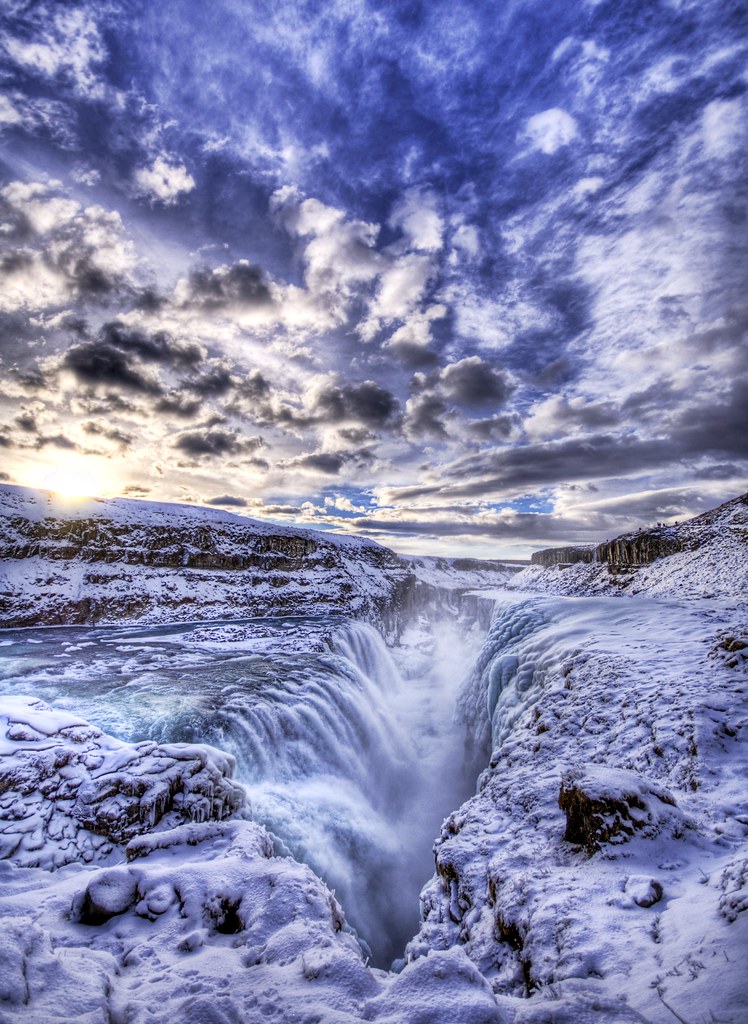
Gulfoss in Iceland. Catholic theologians of old believed this was the entrance to hell.
Keep it in the trunk of your car in a fun little photo backpack, with a small selection of lenses. You never know when you will see something wonderful. Use this opportunity to take at least one photo a day. It doesn’t have to be a grand landscape; just something small and nice that you may not have noticed before.
8. Understand The Fantasy/Reality Membrane
Do you have kids? Are you a kid at heart? Think about when you were a kid and what happened when you turned into a jaded old grown-up. Maybe by the end of this section you can ask yourself some new questions about reality.
Kids have this remarkable “membrane” between fantasy and reality. They can jump back and forth between the two in an effortless way. In fact, the membrane itself is wonderfully “thick,” in that there is a vast dream-state wilderness where the world is both fantasy and reality. When pressed, kids will tell you what is real and what is pretend, but that is often a painful process that pries them from the escapism they felt so viscerally just a few moments before.

My personal foray over the last year into learning how to draw.
When we are all grown up and serious, that membrane is razor thin, and there is little tolerance of “pretend” and “fantasy.” Why is this? Is it because we are surrounded by other serious people and want to conform? Is it because fantastic escapades are what “kids” do and thus not pertinent to our lives?
Obviously, we can all still get into that fantasy zone, and we all love it. That’s why movies are still such a potent force; they give us social permission to be like kids for two hours, once a week. It also explains the growing relevance of online games.
But when we start talking about photography — well now, that is a different subject! Photography is a serious art form, practiced by classically trained masters whose reality is quite serious indeed! There mustn’t be anything fantastical in the art form. The process goes from camera straight to the film, you see!
Poppycock.
9. Learn To Draw
This is a weird one, eh? Who on Earth has time to learn to draw? Well, you would have time if you stopped wasting it on less important activities. You’ve got one life here, so you might as well start applying yourself. “I don’t have any time! I have kids to look after, a full-time job, a bunch of cool games to play, books to read, exercising to do, a bit of photography, and blah blah blah.”
As a personal experiment, I wanted to see if anyone could learn to draw. This is similar to an earlier experiment I did on myself to see if I could take something I hated and turn it into something I enjoyed. That experiment was with coffee, but I was afraid that learning to draw would be harder, particularly because of the jitteryness introduced from the first experiment.
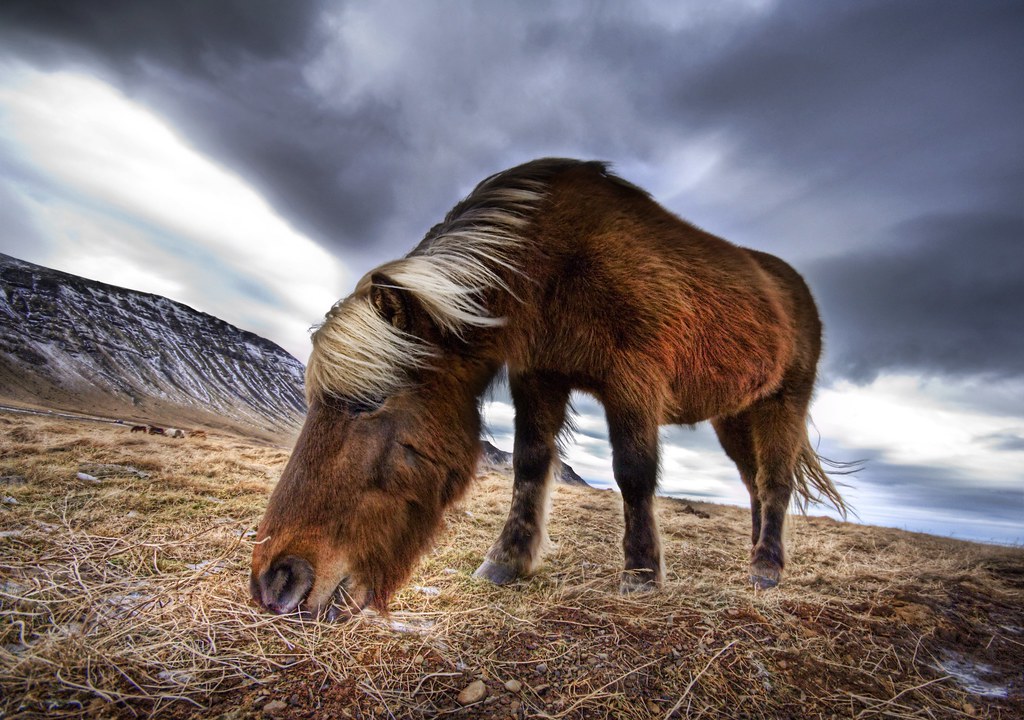
A tame wild-haired horse on the windy fjords of Iceland.
I’ve always admired people who can just grab a pencil and paper and make something amazing. Man, I’ve always wanted to be able to do that! I began the experiment with the hypothesis that great natural artists can draw anything without any instruction whatsoever. These are true masters, and I was unlikely unlikely to reach that level. However, I thought I could become adequate at drawing and be at least satisfied with myself. A great side-effect, I envisioned, would be new insight into photography: into line, shape, light and composition.
All of this turned out to be true. So, if you have hit a rough spot or are in the doldrums with photography, take up drawing. A few instructional books out there are practical hands-on guides that give you basic pointers. I think you will be quite impressed by how it starts to bleed into your photographic art!
10. Make Mistakes
Make a lot of mistakes. Throw yourself and your art out there and see what works and what doesn’t. Show your stuff to true friends who will give you frank feedback.
Don’t be like those sorry saps on American Idol who make fools of themselves in big auditions because they’ve spent their whole life listening to their tone-deaf mom tell them they are incredible at singing “Over the Rainbow” or because Aunt Mabel enjoyed it so much during the grade 2 play.
Get yourself online and begin making friends by finding other photographers who you respect. Beg and plead for them to come look at one or two of your photos and give frank feedback. They will cut you apart, but just take your medicine, lick your wounds, and go out there and improve.
Fin
And there we have it: 10 things to shake up your world a little bit. I’m no Baudelaire when it comes to writing these sorts of polemics. However, just as he drove Manet to be Manet, perhaps I can do my own little part to stoke the fires and help drive a new art revolution. Evolve and evoke, or whither into nothingness.
Extra Credit
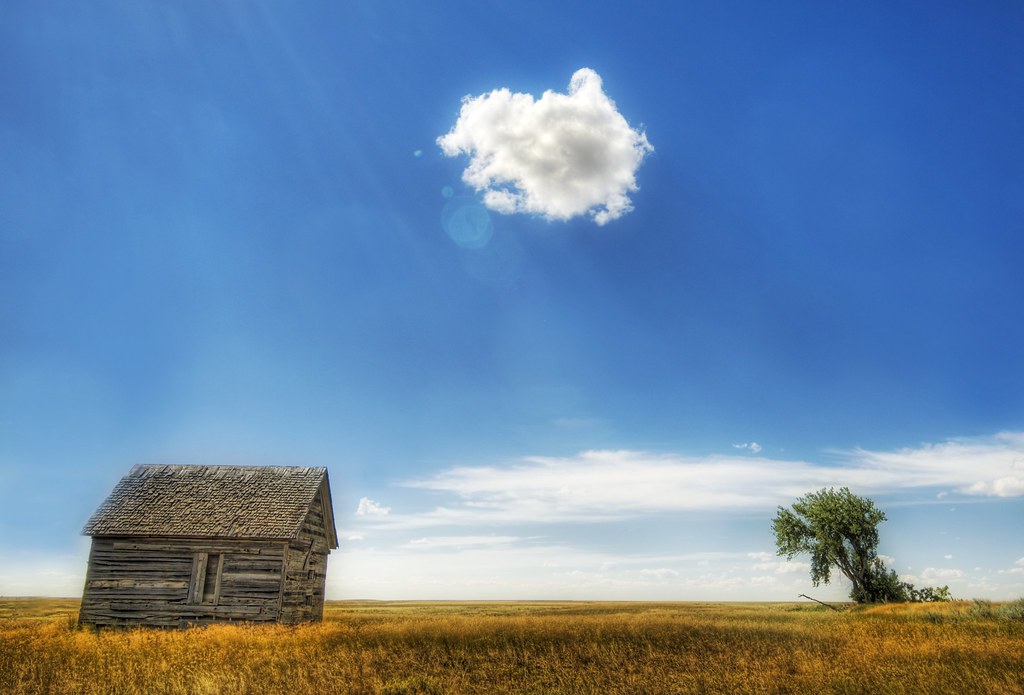
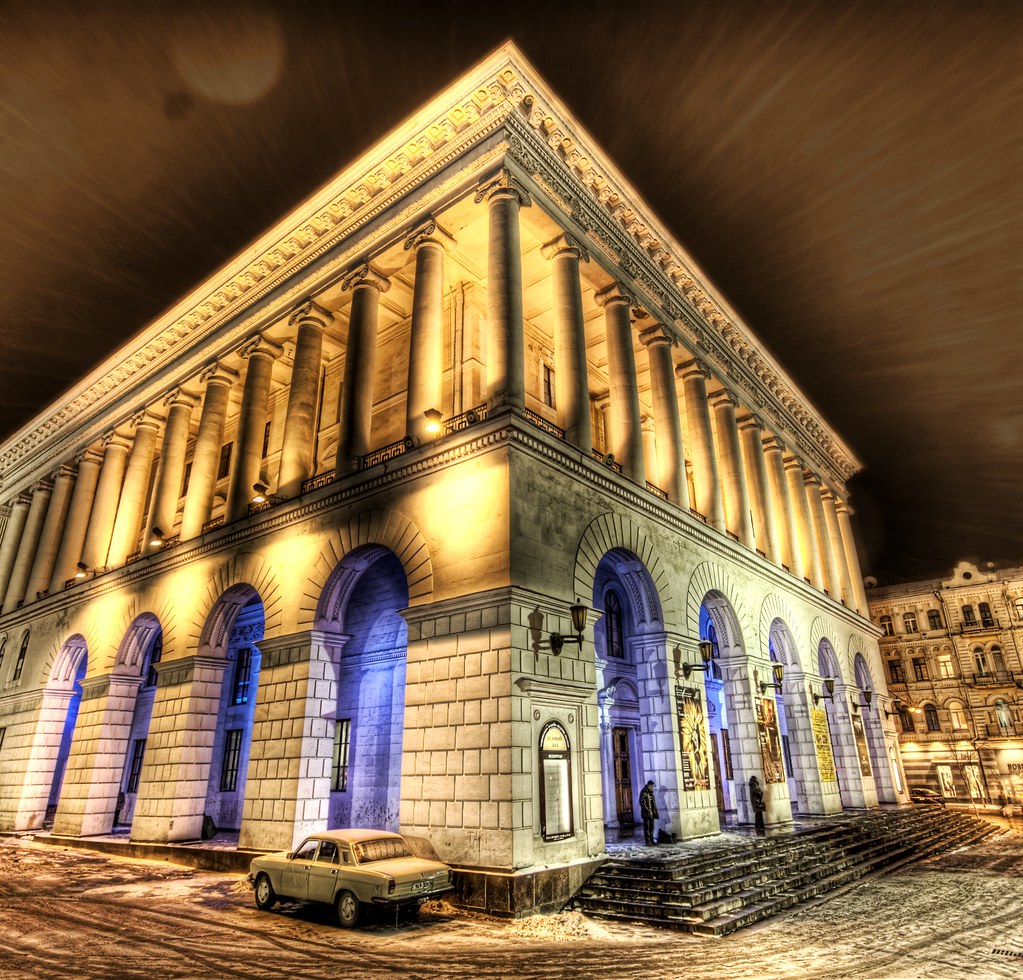
To end off, here is a random selection of some of my other favorites.
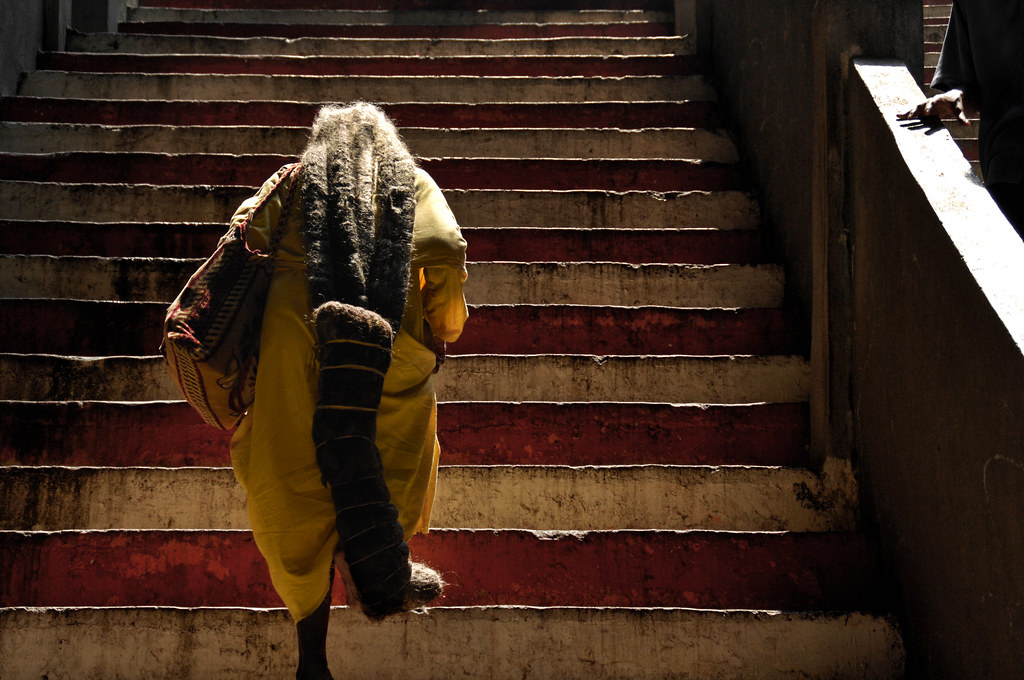
An elderly woman, who has never cut her hair, ascends the stairs to her daily Hindu pilgrimage
Dante’s Gates of Hell, a sculpture by Rodin, captured in proper lighting
(al)


Ed
February 20th, 2009 9:45 amre rich, post#201.
Sorry about my previous post, it should have read “if” not “that”.
“As for the examples used in this article its just unprofessional if they are not rightly credited.” Im not trying to make any unfounded accusations.
Trey Ratcliff
February 20th, 2009 11:23 amhehe… yes I steal all of Rebekka’s photos. This is well known. In fact, here are some more: http://www.stuckincustoms.com/2007/02/24/rebekka-in-action/
And yes, I do wear an eye patch with a skull&crossbones emblazoned upon it in gold lamay.
Evan Snyder
February 20th, 2009 1:29 pmHow about HDR in Moderation? Everyone seems to crank the crap out of the HDR meter in post processing… Rather, it should be a simple touch to slightly enhance the image, here are two examples: in color and in b&w.
Brian
February 20th, 2009 7:38 pmvery informative article , especially for a novice photographer like myself; thank you kindly for this, mr. ratcliffe
some of the comments on here are ugly rants, but i did find two that i agree with.
1. this article’s title is a little unfocused. when i first clicked on the link, i expected an article on advanced camera techniques in general; the hdr was a surprise. however, that is not to say that i did not thoroughly enjoy the article and appreciate the time and and effort in making it. i just suggest that some of the angry anti-hdr(/anti different-from-self-ideals) group may not have been so upset if this article’s title was a little more specific.
2. PDF versions of article.
my goodness, this would be brilliant!
i suppose we, the visitors, especially those of us that are designers and are digitally savvy, should be able to do this on our own without any difficulty, but dood, hahahah
anyway, yes, pdf’s would be brilliant.
ok, maybe not brilliant, more like a wild idea.
but man
what a great one!
thanks all you people at SM
you people rock
ra
February 21st, 2009 2:55 amsorry, but this is propably the worst article I saw on this website. things like “get rid of your toy camera” and “hdr everything” are total bulshit. you DO NOT have to own a dslr to make great pictures. this is just excuse to don’t make photos (“i don’t have proper equipment”).
belive me – good photographer will make awesome pictures with everything, from pinhole to hasselblad, without even touching a computer. and i mean photos, not these photoshop generated graphics presented here
Angela Catalan
February 21st, 2009 5:09 amThat was the best 9 minutes of my life. That was probably one of the most enjoyable articles I’ve read on photography.
zfred
February 21st, 2009 3:56 pmSheesh – all you folks who don’t like indoor plumbing, no worries – stick to your two holers! Beth – better have a little chat with Rebekka Guðleifsdóttir or have your eyes checked; Trey shoots his own stuff. For the storytelling angle, Google “chernobyl trey ratcliff”.. it’s wild.
Trey – you are THE MAN! Thanks for sharing..
Brando
February 21st, 2009 6:09 pmLeaving aside the HDR kerfuffel, three facts:
1) You do indeed need a DLSR. Why? So you can attach decent lenses. Economize on the body. Go for your lungs on the glass.
2) The advice to leave your kit in the trunk of your car should be retracted. You’ll kill your batteries in the winter and cook your body and lenses in the summer.
3) The advice to take drawing lessons is spot on. It doesn’t matter if you never learn to draw. That’s not the point. The object is to learn how to see.
Le Minh Phien
February 22nd, 2009 12:40 amthank so much for your entry, my english ‘s not good,i cant’ express by my-self, i say only u are the top-one
onucy
February 22nd, 2009 3:15 amI think author had no idea for this article.
paul (dex)
February 22nd, 2009 6:06 pmfirst of all: trey – thank you for sharing your views and knowledge so unselfishly; you’ve been an inspiration to many, including me, for a long time. all your efforts ARE appreciated !!!
secondly: I don’t pretend to be a “pro”, I just like beautiful images regardless of how the end result is accomplished and if “rules” have been followed or broken, but I spent quite some time reading all comments and it’s hard to believe (unfortunately not as shocking as it should be) how aggressive and rude some people can be, getting even down to personal attacks on someone trying to be positive and to encourage us “mere mortals” to have better results when taking pictures
for those who truly don’t like over saturated images there is an easy solution – MOVE ON! but instead you choose to take precious time out of your life to publicly put a negative spin on honest advice and come up with “constructive criticism” such as:
“the author is such a toss pot! … Get a life.” (8), “… that’s a piece of crap” (10), “I don’t think I’ve ever heard worse advice” (27), “masses have spoken” (29), “These HDR make me sick. HDR should be banned from the Internet!” (64), “.. .which in the end should be the main purpose” (65), “Bad. Please don’t do this again” (112), and on and on…
do I detect censorship (64)? do I detect an internet census by an authoritative (God-like) figure (29)? are we being told what the end result “should be” (65)?
who are you people? where did you come from?!? where is YOUR “art”? why don’t you let the “masses” of mere mortals give you the taste of your medicine and judge you, and your advices and tutorials? where is your “better” work that gives you the nerve to make these comments? (I’m not addressing the ones who bothered to explained their opinion, and with some good points too)
could it be that a simple technique which doesn’t require a university degree makes the “pros” feel threatened and you feel you have to make this effort and criticize HDR to this extreme and try as hard as you can to crush it? could it be envy that something so simple has such a huge potential and you feel threatened? or you feel it’s unfair that normal people can achieve amazing results without all the effort it used to take (to come up with just a pompous result?). btw: Ross (192) and Philosaur (186) – you both have a great analysis !
again trey – thank you for all your efforts!
paul
.
x
February 22nd, 2009 7:51 pmfirst of all: trey – thank you for sharing your views and knowledge so unselfishly; you’ve been an inspiration to many, including me, for a long time. all your efforts ARE appreciated !!!
secondly: I don’t pretend to be a “pro”, I just like beautiful images regardless of how the end result is accomplished and if “rules” have been followed or broken, but I spent quite some time reading all comments and it’s hard to believe (unfortunately not as shocking as it should be) how aggressive and rude some people can be, getting even down to personal attacks on someone trying to be positive and to encourage us “mere mortals” to have better results when taking pictures
for those who truly don’t like over saturated images there is an easy solution – MOVE ON! but instead you choose to take precious time out of your life to publicly put a negative spin on honest advice and come up with “constructive criticism” such as:
“the author is such a toss pot! … Get a life.” (8), “… that’s a piece of crap” (10), “I don’t think I’ve ever heard worse advice” (27), “masses have spoken” (29), “These HDR make me sick. HDR should be banned from the Internet!” (64), “.. .which in the end should be the main purpose” (65), “Bad. Please don’t do this again” (112), and on and on…
do I detect censorship (64)? do I detect an internet census by an authoritative (God-like) figure (29)? are we being told what the end result “should be” (65)?
who are you people? where did you come from?!? where is YOUR “art”? why don’t you let the “masses” of mere mortals give you the taste of your medicine and judge you, and your advices and tutorials? where is your “better” work that gives you the nerve to make these comments? (I’m not addressing the ones who bothered to explained their opinion, and with some good points too)
could it be that a simple technique which doesn’t require a university degree makes the “pros” feel threatened and you feel you have to make this effort and criticize HDR to this extreme and try as hard as you can to crush it? could it be envy that something so simple has such a huge potential and you feel threatened? or you feel it’s unfair that normal people can achieve amazing results without all the effort it used to take (to come up with just a pompous result?). btw: Ross (192) and Philosaur (186) – you both have a great analysis !
again trey – thank you for all your efforts!
paul (dex)
paul (dex).
André
February 23rd, 2009 4:50 amthese photos could have been taken with a toy camera… 90% of that is photoshop
i’m sorry but i don’t understand that as photography
blake
February 23rd, 2009 5:06 amdon’t. please just stop.
edit: whoops, according to paul i need to quantify my criticism… hdr is to photography what glass baubles were to the native americans.
Quinn
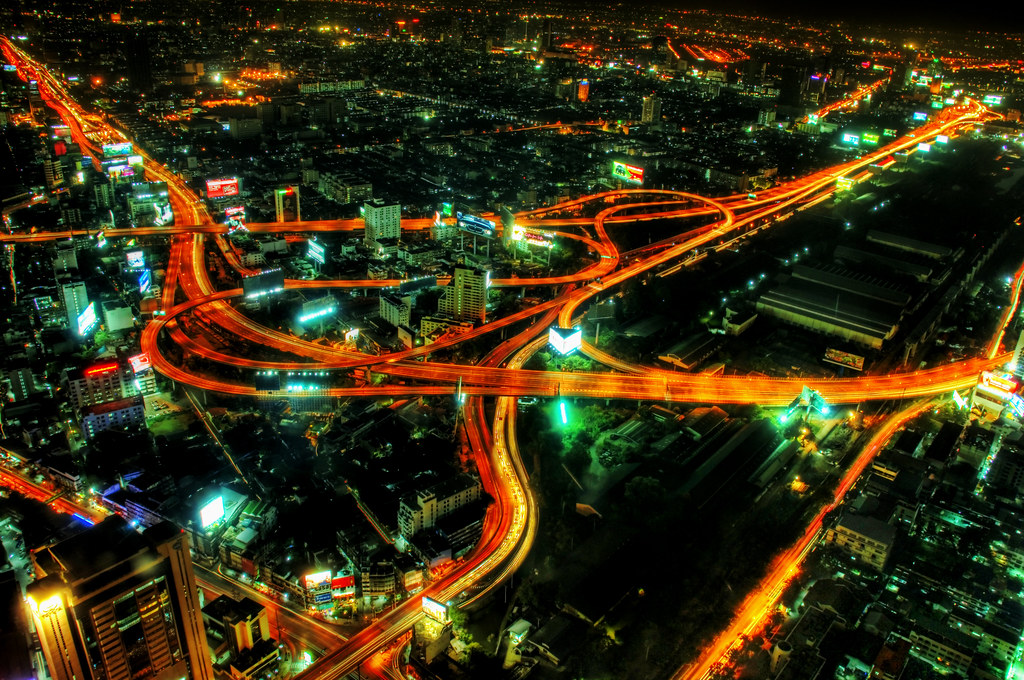
February 23rd, 2009 6:55 pmFirstly, I’m not an all out devotee to the HDR technique but this is not the place for all the HDR haters to dump their opinions. There is a lot of god awful HDR out there but there’s also a lot of great photos. Whilst I prefer more realistic tone mapping, Trey Ratcliff’s excels in his own individual approach to the technique. “The Icy Pit To Hell”, “The Holy Trinity” and his highway photos are fantastic captures which are enhanced by HDR.
Secondly, I agree with almost all tips except the “Get Rid Of Your Toy Camera”. Whilst this will mean you’ll take better pictures, a toy camera is a excellent way for people LEARNING to take photos to learn to take better ones. Especially if it’s an analogue point and shoot. Using a shitty camera will mean that people can only think about composition, not other superficial elements and learn to do things in the set up, not simply fixing things in post.
I’d also suggest budding photographers switch to full manual mode if they can. Having to manually choose apeture, shutter speed and ISO levels taught me a great deal about how photography works, which in turn made me a better photographer.
Finally, Trey, your drawings are fantastic, especially the first one. Keep it up.
paul (dex)
February 24th, 2009 5:52 amso blake, you’re saying that anyone using HDR is superficial, “fine art” will never be achieved by using it, and the beautiful results only appeal to uneducated people?
no, I didn’t ask you to quantify your criticism with insults, I asked you to put a link to your “fine art” in your comment and let us quantify ours (are we not worthy, or maybe you don’t know how to place a link?)
lala
February 24th, 2009 6:46 amHDR is to photography as Thomas Kinkade is to painting.
Amy
February 24th, 2009 1:45 pmIt looks like there’s not much left to be said, good or bad–I’m not a photographer, or an artist, but just a flickr lurker who is awed by Trey’s work. I came to this article because I was hungry to know more about how his mind works, and how it translates into his art. This article did just that, and I find it utterly fascinating. What shocked me was the complete lack of respect in the criticism (many of them, anyway…) I’m usually too busy to spend much time reading online articles, and definitely too busy to comment, but I was really appalled at what I read today. It’s obvious that Trey takes it in stride, so he needs no defense from me, but to the commenter that asked if you would say to his face what you will type anonymously, you hit the nail on the head. The ability to spout venomous judgement with no repercussions has lead to a depersonalization of the artist/author. Come on, what ever happened to the idea that you should give your fellow man respect, especially when it concerns something as subjective as art?? Keep up the good work, Trey, your travels and your vision inspire me on many levels.
Andy Allan
February 26th, 2009 6:10 amHDR Photography…
It’s a contradiction in terms!!!
HDR is NOT Photography…it’s Art but NOT Photography.
I could go on, but basically I don’t like the examples shown at all. WAY OVER THE TOP use of HDR.
I try to use as little amount of photoshop as possible in my photography. It should be as natural or as close to what you see with the naked eye as possible and HDR completely chages that effect.
paul (dex)
February 27th, 2009 4:48 amandy – your definition of natural is a picture with as little manipulation as possible, but all pictures are subject to camera limitations: the fact is that a camera can not adjust to the many levels of light in most of the scenes, the same way the eye can, and HDR is just an attempt at making details visible from more areas that otherwise would be over or under exposed
no one is pretending to create art by only using HDR, and it can certainly be misused, like any other technique, but some results are breathtaking and I, personally, like trey’s work a lot. his images inspired me and many others to start taking pictures, good or bad, and the world is richer for this
also, you may have nice images but I can’t view your flash website on windows 2000 or vista. at least you have a backbone and can articulate your reasons…
Johnny Lewis
March 1st, 2009 9:14 pmThe line Holy Commenter #98745 drew between fine art and photography is spot on.
The line Holy Commenter #98745 drew between 35mm and medium format is spot on.
The line Holy Commenter #98745 drew between film and digital is spot on.
The line Holy Commenter #98745 drew between staged and candid is spot on.
The line Holy Commenter #98745 drew between color and B/W is spot on.
The line Holy Commenter #98745 drew between darkroom and Photoshop is spot on.
The line Holy Commenter #98745 drew between market and inspiration is spot on.
The line Holy Commenter #98745 drew between fearlessness and stupidity is spot on.
Now maybe one day Holy Commenter #98745 will have a decent body of work, and someone will ask him to write about his truly awesome photography skills.
In the meantime, I’ll keep learning from Trey Ratcliff.
Carlo
March 4th, 2009 3:23 amThere was no how-to in this tutorial which was disappointing, would be great if you could do that as achieving these things are still not easy for me
Quazi Ahmed Hussain
March 4th, 2009 4:58 amI agree with u that I should get a DSLR. But same time, I’m a jobber too and cannot switch over to a full time pro photographer. It’s my hobby and I love shooting nature and wildlife. Now, using a Canon SX110 IS with satisfaction. But contemplating to get a Nikon D90 with Nikkor 18-55mm VR and 55-200 mm VR lenses.
May I request your comments on this plan?
Thank you with regards.
Quazi
Paul Schaffner
March 4th, 2009 3:10 pmInteresting views in this article. I agree that a DSLR is a nicer tool than a point-and-shoot camera, but it is really up to the photographer’s instinct and talent to draw out the best in any photo. This is the same in any field, an incredible artist can do more quality work just with talent and a pencil than a 10-year intensively trained mediocre artist with a degree and a full studio. Great drawings by the way.
I for one am not a huge fan of HDR, if used I think it should be used to draw out a more natural balance, for instance the Amish boy looks waxy and disturbing to me, at first I thought it was an apple doll. That being said there are times when it makes a shot amazing, particularly when shooting hi-tech subject matter.
In the end it’s all about personal preference. I don’t understand why people get so bent out of shape and take other’s views so personally…it’s called art people. You either like it or hate it, but if it made you feel anyway at all it has relevance. The only art that doesn’t qualify to me is art that is completely forgettable.
Firestorm
March 4th, 2009 5:17 pmlove the haters… without them, where would we be?
cool post with some excellent imagery, all of it very interesting. thanks!
Warren
March 10th, 2009 3:24 pmthanx
Heidi
March 12th, 2009 2:18 pmsorry- I think all of the images you cited look like 1000 piece puzzles
SailingThruTheCustoms
April 6th, 2009 5:26 pmCraps!
some body
April 8th, 2009 10:50 pmself serving pretentious crap. I have been a member of the HDR group on flickr since there was a little over 300 members. You weren’t one of them. The very first photo posted in that group is more realistic than anything you have ever produced. You try and act like you are the beginning and end of HDR photography but you are just a hack. Get over yourself. Smashing Magazine: why would you even publish this sh*t?
Mark
April 10th, 2009 5:10 pmTo all the losers and haters: You are all first class idiots! Have you even visited this guy’s blog, do you even know all the places he’s BEEN to existed? You probably never stepped out of your town/state. To not agree with someone’s style means letting him/her know of just that, not bash him/her like they’re garbage. Garbage is the flesh on your bones, not someone’s hard work.
I for example absolutely hate footbal (american football that is) I firmly believe you have to be a retard to enjoy it…but that doesn’t mean I bash all the fans and players, if that’s what they like it must mean something to THEM. Likewise this guy’s work must mean something to SOMEBODY, else he wouldn’t travel the entire world or make thousands on selling prints.
So to all opinionated losers, unless you know how to critique something, go back to learning how to code a webpage or whatever the f…you’re doing and stop telling other people what they like or should like!
Russ
April 15th, 2009 8:25 amGreat work Trey.
I really liked the hard work you put into this post and absolutely agree with the advice you provide.
Great photo’s!!!
Jeff Clarke
April 22nd, 2009 8:32 amI could not agree more with Paul Schaffner (post #226) “The only art that doesn’t qualify to me is art that is completely forgettable.”
THIS is what sets Trey’s work apart from most other photos. It succeeds because some people love it and want to tell the world about it. It succeeds because some people HATE it and want to tell the world about it. Love it or hate it, it has raised a strong emotional response from everyone who posted here. In essense that makes his art more “real” that many other photos out there.
Trey, keep up the great work. As someone who brushed HDR aside a couple of years ago because I wasn’t getting the results I wanted, you have inspired me to spend more time to really push myself beyond my comfort zone to produce images as striking as what you have here (and many more in your portfolio).
To anyone who thinks HDR is easy to do, you should really give it a try. I would be suprised if one of your first 50 attempts can evoke even a fraction of the emotional responses Trey’s images produce. It takes a lot of skill, talent, vision and sheer determination to push past a ho-hum HDR execution to something that is worth expressing your own opinion over.
Damon Atkinson
May 3rd, 2009 9:38 amWOW! What a whole lot of HDR bashing going on in here. One would think that no great and wonderful photographer had ever manipulated an image outside of the camera before. Many of these ‘would-be photography masters’ bashing a new and innovative post-production technique must also despise such hacks as Ansel Adams, Mann Ray, Jerry Uelsmann, and so many others because of their mastery of not just the camera and film, but also for their blasphemous manipulations of their negatives (during processing), the image being exposed to paper (burning, dodging, filtering, montaging, etc) and print processing. All of these normal and generally accepted methods of creating an image in the traditional sense of photography are not so different from the use of Photoshop today.
When I look at Adam’s images of Yosemite, I don’t see ‘realism’ – I don’t see the world in b&w – I have never seen the world with that range of contrast and sharpness. But not many people lambaste him for his mastery of the darkroom and film latitudes. The Zone System – developed by Adams – may not be as popular as it was in the 70′s and 80′s, but it is still highly relevant and very applicable to HDR photography. I do agree that there are a good many HDR images that are way too overly processed for my taste, but they may be evoking an emotion that the photographer was hoping for, or may be just trying to find the happy medium (learning). Many other HDR images look, visually stimulating, with bold, vibrant colors and textures, but are sadly boring compositionally – this does not necessarily make it a good image.
I have personally found a substantial lack of good photography – or even decent – since the explosion of digital photography took over and replaced so many of the ‘classically trained’ photographers using film. I believe there is possibly just as much really good photography out there, but the ratio of really good to really crappy has been greatly displaced.
As for the dispute between the ‘toy’ camera vs. DSLR – it had been, rightly, stated that the user is more important than the tool. A cheap, toy camera in the hands of a master photographer can, and usually always will, be far better than the most expensive, best quality camera in the hands of a hack photographer. That said, the image quality of the ‘toy’ camera vs. a professional quality DSLR in the hands of the same master photographer – there is no comparison – the images from the DSLR will always be far superior.
I find this article from Trey to be most appropriate and educational for the novice level photographer looking to become a better photographer, sure there are about 20 years worth of specific topics that he overlooks in the article, but this is only an article about HDR imaging, not a masters degree level course on photography. For what it is it is well written and explains the area of this form of art quite well. Is it for everyone? NO! Trey’s work is very good, for HDR. I’m not familiar with the general readership of Smashing Magazine (came here via another link), so I don’t know if it is just an inappropriate audience for an article about HDR or if you are all just a bunch of classical artists who think if an image doesn’t look exactly like the real world, then it is trash. If this is the case, I am sorry for you.
Joe
May 21st, 2009 1:17 amIf you browse through the comments, a lot encouraged by the article actually leave links but the bashers just leave mindless hate comments. Just goes to show that most haters are usually just losers who criticize and they haven’t even got anything to show! To all you bashers, make sure you can actually come up with something far better than the author of this article, ok?
Trey, keep up the good work! You’re the man!
Tyler
May 28th, 2009 9:01 amI hate hdr. it’s so fake and boring especially when done poorly. pay attention to the light sources and maybe your final might turn out a bit more convincing. two thumbs down buddy!
Shivanand Sharma
September 19th, 2009 10:07 pmSome of those images are too much processed. Pimping up a subject like “10 Easy Steps To Advanced Photography Skills” with HDR images is not fair. Good advise though.
Yury Vilin
November 4th, 2009 12:41 pmI think author over-exploited capabilities of an HDR. Images do have visual impact but… too cartoonish. Same for “toy camera” – overstated. Quite often compacts produce better photos than DSLR just because they are THERE and DSLR isn’t.
Best regards,
Y.V.
Russ W.
December 2nd, 2009 4:40 amOne thing I have noticed about HDR, people that have little interest in art/photography gravitate to these photos. I have photos covering my wall(screen-saver) and the ones that get the “that’s cool” comments from passerby’s are always HDR. So amazing how they grab peoples attention. The author has helped me understand why this happens. I thank him for that.
Ann Courtney
December 29th, 2009 1:07 amOK – you’ve given me great stuff to think about, but most of all to DO!!! For this I thank you.
Reatha
February 17th, 2010 6:43 pmSigh, some good points but mostly self indulgent rubbish. HDR is really over done and I found a lot of these pictures to be like fingernails on a chalkboard. Toy cameras are great by the way and it’s a bad tradesman who blames his tools.
hongwee
February 17th, 2010 7:50 pmOver-done HDR.
Vincent Rush
February 17th, 2010 9:05 pmAs a photographer and a former military photo journalist, that has been all over the world and covered the bombing of the Beruit Embassy, traveled with Bob Hope and experienced more than most photographers ever dream of, (I say all that just to establish my point of view), I’ve always said that photographers are the most critical and sometimes negative people I have ever met. Here was a person putting together a good article that I found to be full of wisdom and good practicle knowledge, and low and behold, you have the trolls come out of the dark room. Most “photographers” I meet never make any real money in the art because they are so busy pontificating and critisizing other peoples work that they never develop their own.
Bruno Postigo
March 12th, 2010 10:26 amWay too much HDR. I find the images fake, and not really eye pleasing. It’s like clown vomit…
Bench warmer
March 20th, 2010 7:45 pmAre those pictures edited?it’s very artistic but i rather prefer to do the natural way of taking pictures not merely by editing it coz’ in that way..you are able to see its beauty..i am no pro..and i’m just planning to start my photography lessons alone.. anyway..this is just my opinion..
Thanks for the tips ^^
curtis
April 20th, 2010 4:14 pmlets just max out the clarity levels in Photoshop raw and say “this photo looks good now”.
Yuck, the photos look like contrasty digital paintings rather than a photograph. . . . . . .
Ken
April 28th, 2010 11:35 amall of these pictures look so kitschy, too much of everything. i think a kid could do this with a bit of playing around with software. sorry – but this is not good photography. the amish kid’s portrait? plain ugly.
missi rabah
August 2nd, 2010 3:38 pmwaw thanx
pallav singh
January 31st, 2011 8:14 amas an amateur i find these great tricks to know.. but there is always more to photography..
will definitely like to try my hands at these..
and about dslrs…
i moved from a film slr to a superzoom bridge camera… and i too feel that serious photography needs slrs.. just my thought. but on the contrary, if carrying your dslr all the time is a hassle, the next best thing is having a superzoom in your bag.. you can surely chug it along in your bag…
shukri
February 20th, 2011 6:24 pmYet another article promoting hideous HDR? Do we really need more cheap, overbaked plastic-looking crap? What will it take to make these people realize that their photos looks fugly?
Destin
March 30th, 2011 11:27 pmWow, what a great collection of over processed, poor perspective images.
awesome101
April 3rd, 2011 5:28 pmWow!!!
I love the red highway one.
Thats sooo cool!!!
Abhishek chauhan
July 7th, 2011 3:47 amloved d amazing shorts of pictures taken by u..
hope i could learn some!!!
Aaron Shannon
August 21st, 2011 12:52 pmTo all the people leaving negative comments: One of the truly maddening things about the internet is that it allows for a suspension in civil discourse, and turns people that would otherwise know better into 5th graders. Well, one thing is for certain. We won’t be seeing YOUR work in the Smithsonian any time soon. Good luck with that wedding though.
rekha
September 10th, 2011 1:12 amthanks a lot for the article, tho’ i am not much into photography it inspires something in my soul. And those pictures are awesome and love to watch those again and again since it is not something really existing but beyond that. I am totally impressed. Good luck!
hboza
September 12th, 2011 3:10 pmgoooooooooooooooooooooooooooooooooooood
Robert
October 18th, 2011 8:46 pmWhat a load of crap HDR is and idiots like u promoting such thing to the general public while making money is deteriorating photography to the point of absurdity. Should be ashame of yourself !
Karin
October 19th, 2011 10:36 amIt’s nice to find reading material related to photography which is (actually) informative. I’m constantly working on improving my skills and as this article is truly inspiring, I wanted to leave a little word of thanks. Also, I thoroughly enjoyed your sesquipedalian albeit slightly cynical, or perhaps slightly arrogant style of writing ;)
Sunday evening is my learn to draw start date. I love that suggestion. If in a year I am amazing, I will mail you a box of cookies.
30mai
February 27th, 2012 11:20 amGreat inspirational musings/content but not reflected in the pictures used in the article are horrendous. Overblown, overdone “beginner” attempts to do HDR photography.
Daniel
March 3rd, 2012 9:32 amDude!
That was one heck of an article!! Incredibly interesting and informative! I love all the photos, but most of all, I love your writing style.
“Oh, look at that camera you have! It’s so tiny and slim and techno-looking. Look! It fits right in your pocket!”
“Oh, what’s that? You don’t want to carry a tripod? What are you, a 9-year-old?”
I got one word ….. EPIC!!
Keep it up man!
David Kayode
May 29th, 2012 2:45 pmI so much enjoy your articles and i wish that one of this days i will become one of the professionals in photography tha can be recone with in the world. I will start by following the steps provided by you and hope to make you as a friend and a mentor in photography. Thanks for this wonderful articles mr Trey Ratcliff.
Paul Abraham's
July 22nd, 2012 3:37 amThanks Trey it’s the simple things that can help new photographers take better photos. Then it’s up to us to explore and express our own artistic vision through trial and error.
James
May 22nd, 2013 8:02 amAnother quick tip: Pick one or two genres of photography and stick to them. Don’t try to get good at all types of photography. And don’t overspend on equipment, ESPECIALLY if you don’t intend to make money off of your photography. I don’t make money and just shoot as a hobby, and I willingly shoot EVERYTHING with a 50mm (equivalent) lens. Think about that for a few minutes.