Space Explosion Photoshop Tutorial
Digital space art is one of the most inventive and beautiful art genres of this era. This tutorial shows you how to create your own space scene using three stock photos and Adobe Photoshop. The majority of the effects use the brush tool, layer effects and the filter gallery. You may want to set aside an hour or two before starting this tutorial because it requires quite a bit of work to accomplish. So get those creative juices flowing and let’s get started!
Download the files
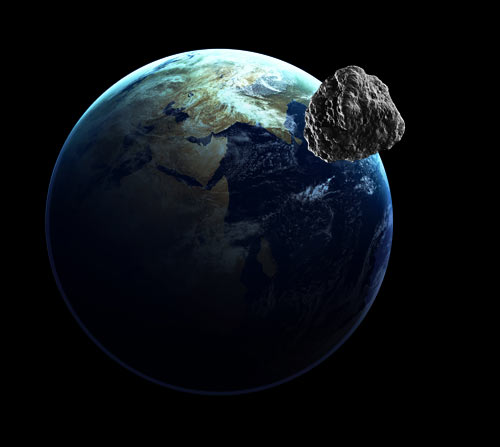
Before we begin, we need some resources to use for this tutorial. Let’s also preview the image that we will have created by the end of this tutorial. You can also download the full source files.
- Download images
- Download full Photoshop source files (.zip, PSD)
* Note: Planet and moon were found on Google Images. The rock was taken from stock.exchng.
Step 1: Placement of Planets
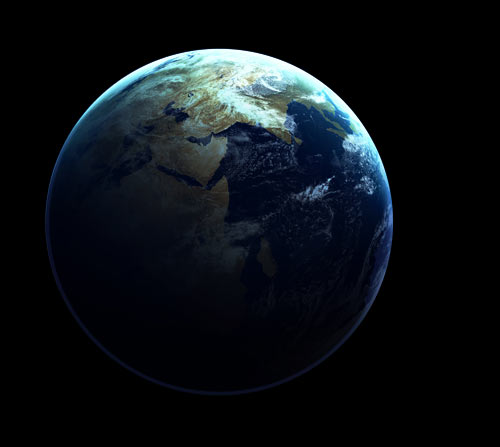
Create a new document that is 1200 x 1600px with a black background. Then, place the image of the planet in your document and move it to where you want it located.
Because the colors of the planet are a little dull, let’s modify a little. Duplicate your planet layer by right clicking it and selecting Duplicate Layer. Set the new layer’s Blending Mode to Overlay.
Go back to your original planet layer and grab your Burn Tool. Set the brush size to 300 px and make sure the Range is Midtones and the Exposure is 50%. Burn the lower left half of the planet, making sure you follow the curve of the planet as you do so.

Place the image of the moon in the upper-right area of the planet. Like we did with the planet, duplicate the moon and set the layer to Overlay.


Step 2: Creating the Environment
Before creating an environment for our space scene, you may want to look at some resources and art work done by others to get some inspiration and knowledge. PSDTUTS has a great post with some amazing artwork done by talented artists.
Make sure all of these layers are located beneath the planet layer. You may also want to put them in a group.
Creating the Coloration
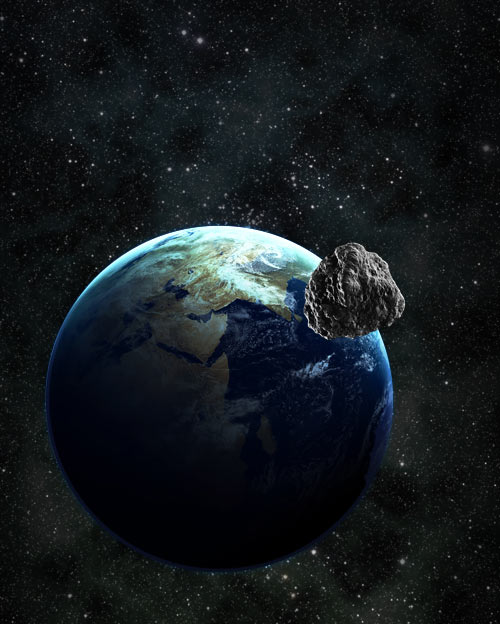
Create a new layer and fill it with White. Grab a 300 px soft brush with 75% opacity and turn Scattering on.

Erase across your layer so that there are random areas of white and gray. Then set the layer opacity to 25%.

Create a new layer. Make sure your foreground and background colors are black and white, and go to Filter > Render > Clouds to fill your document with some black and white “clouds.” Then apply Filter > Render > Difference Clouds about three or four times.
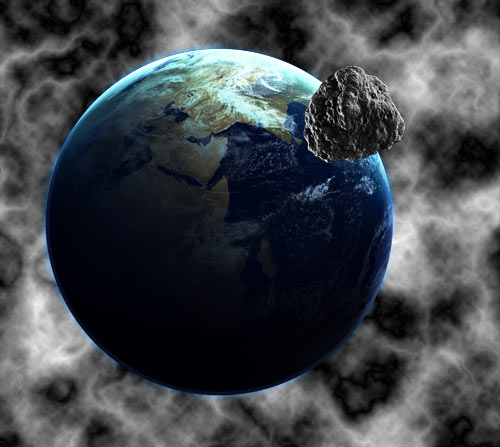
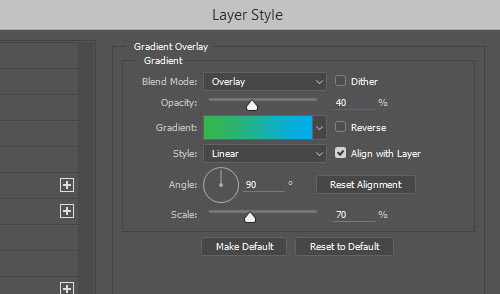
Set the blending mode to Overlay, the Fill to 75% and apply the following Gradient Overlay.

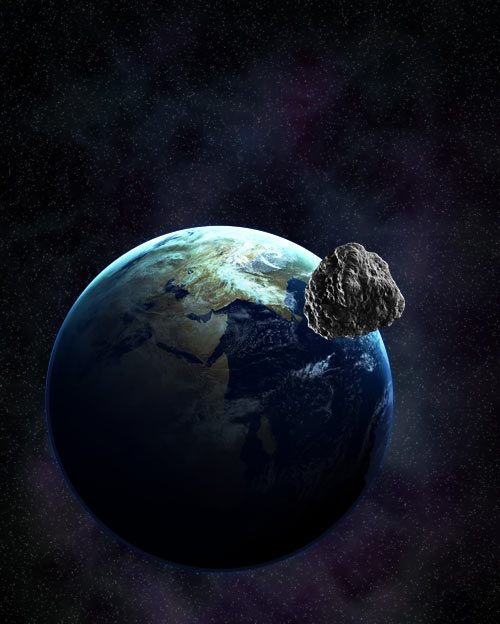
Create two new layers. On each of them, render some clouds and apply difference clouds on only one of them. Set both of them to Overlay.

Creating the Stars
Make a new layer and fill it with black. Go to Filter > Noise > Add Noise. Set the Amount to 10%, Distribution to Gaussian, and make sure Monochromatic is checked.

However, this adds way too many stars to our document. To fix this, go to Image > Adjustments > Levels. Set the left slider to 50 and the right slider to 100. This will keep only the larger stars and a few medium ones in the image. Then, set the blending mode to Screen so that only the stars show up and that the black areas of the layer are hidden. You may want to create multiple layers with this technique and lower the Opacity to create more depth.

Create a new layer and grab a white 5 px soft brush. Then change the brush settings to the following:
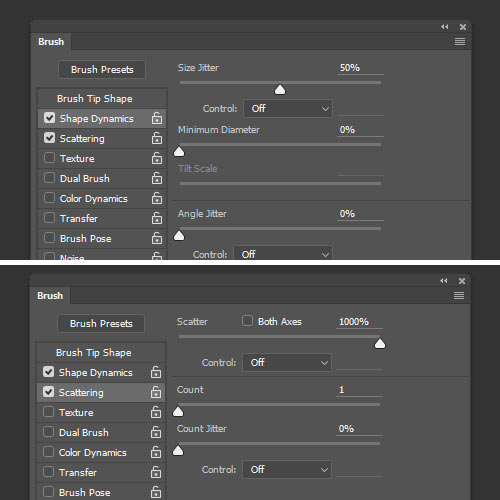


Brush areas of the new layer to add some larger stars. Don’t add too many, and try to put them in places that make them pleasing to the eye. Then add a white Outer Glow, with the blending mode set to normal.

More Coloration
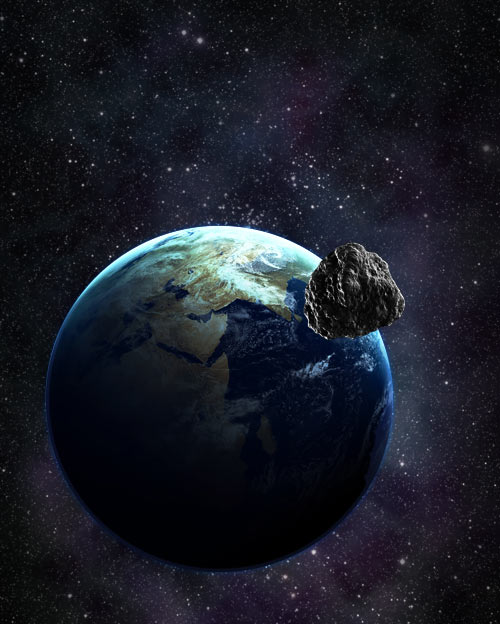
Create a new layer and fill it with a dark blue color, such as #1b1464. Grab a large 300 px soft eraser brush with 75% opacity. Turn the Scattering on and erase areas of the layer so that only certain parts are colorized. Try to leave more in the upper-right area of the layer, because this is the focal point of the graphic. Set the layer to Screen, and lower the opacity to 40%.

Repeat this process again with a different color, such as with a green, #20410a. Set this layer to 50% opacity.

Create a new layer and grab a large soft black brush, between 300 px and 800 px. Brush once or twice behind the upper-right corner of the planet. Lower the opacity to 40%, and then apply Outer Glow of the white, set to Overlay.

Color Balance
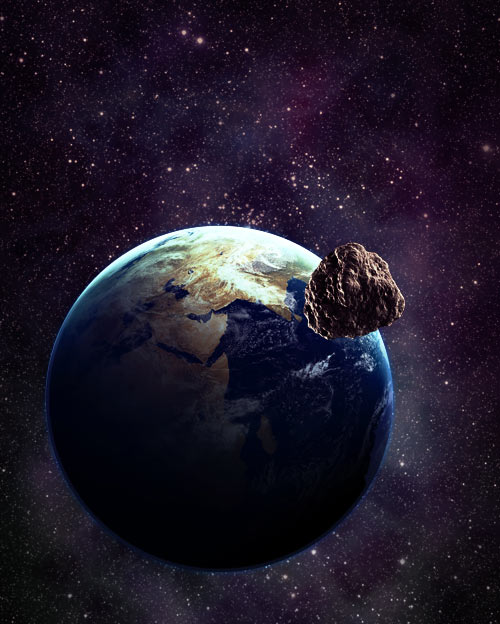
Now for the fun part. This next step brings the background environment together! Go to Layer > New Adjustment Layer > Color Balance.
Shadows:
- Cyan/Red: +20
- Magenta/Green: -3
- Yellow/Blue: +20

Midtones:
- Cyan/Red: -1
- Magenta/Green: +23
- Yellow/Blue: +31

Highlights:
- Cyan/Red: +52
- Magenta/Green: -17
- Yellow/Blue: -76

Light Bursts
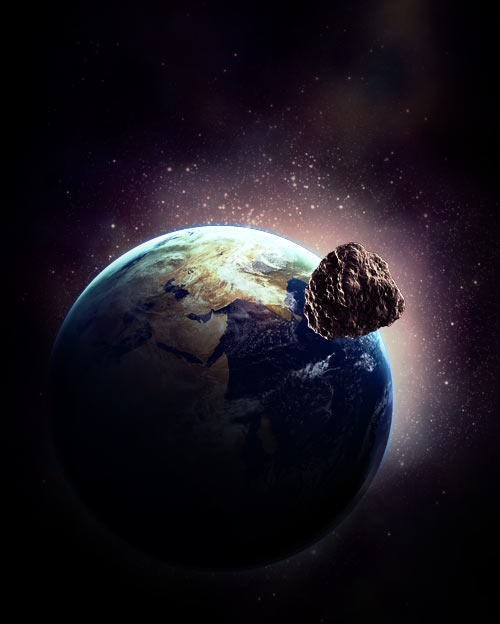
Create a new layer. Grab a 300 px soft white brush, set to Dissolve, and brush once on the layer in the upper right. Then go to
Filter > Blur > Radial Blur. Set the amount to 75, Zoom, and Best. Set the layer to Overlay. Repeat the process using a larger brush and apply it further down.


Empty Space
On a new layer, grab a 500 px black brush and brush around the outer edges to create some nice black space. Make sure the bottom-left corner has more because we want that area to be dark.

Step 3: Planet Effects
Make sure the following layers are all placed beneath the moon layer, so that they only apply to the planet. You may also want to put them in a group.
Darkening Areas
Duplicate your planet layer. On the bottom planet layer, apply a Filter > Blur > Gaussian Blur of 3 px. Then apply an Outer Glow of white, set to Overlay.


Create a new layer above your planet. Then, select your planet by Ctrl + clicking on the layer thumbnail of the planet. Fill the selection with black, and set the layer to Overlay. Then lower the opacity of the layer to 40%.
Create another new layer, and once again select your planet. Grab a 500 px soft black brush and brush around the outer edge of the planet, but leave the upper right untouched, because we want this to be the bright side of our planet.

Creating an Inner Glow
Create a new layer, and select your planet. Grab a 300 px soft blue (#00aeef) brush, and brush around the outer edge of the selection, making sure you get more blue on the upper right of the planet because this is where our bright side is.

Create a new layer and select your planet. Fill the selection with white. Drag the selection diagonally down and to the left, and delete most of the white. Then apply a Gaussian Blur of 5 px.

Then give the layer an Outer Glow of white, set to Overlay.
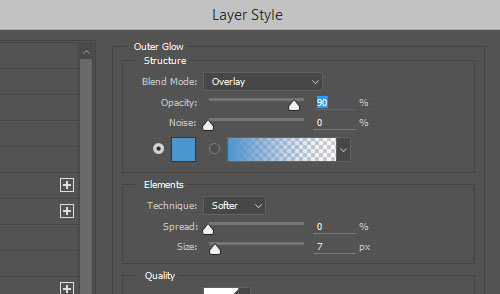

Color Balance
Once again, select your planet. Then go to Layer > New Adjustment Layer > Color Balance. You’ll notice that the color balance layer now has a mask applied to it of the selection we made.
Shadows:
- Cyan/Red: +6
- Magenta/Green: -1
- Yellow/Blue: -3

Midtones:
- Cyan/Red: -78
- Magenta/Green: 0
- Yellow/Blue: +29

Highlights:
- Cyan/Red: +47
- Magenta/Green: -8
- Yellow/Blue: -33


Glow Effects
Once again, create a new layer and select your planet. Grab a 300 px white soft brush and brush around the bottom ¾ of the planet. Try to make the brushes fit the curvature of the planet. Then set the layer to Overlay, and lower the opacity to 50%.


Create another new layer and select your planet. Using a 300 px white soft brush, brush inside the upper-right side of the planet. Then set the layer opacity to 20%.


Create another layer, similar to the last one, except create more white space on this layer. Also, change the layer to Overlay and the opacity to 50%.


Create another new layer. This time, grab a 300 px brush and a nice red-orange color (#e6602b). Select your planet and then brush an orange area underneath the moon. Change the brush color to a yellow (#fdfc92) and brush a smaller area underneath the moon. Lower the layer opacity to 50%.


On a new layer, select a 200 px black brush and then brush around the bottom ¾ of the planet. Don’t restrict the selection to the planet this time. Let some of the brush overlap the background.
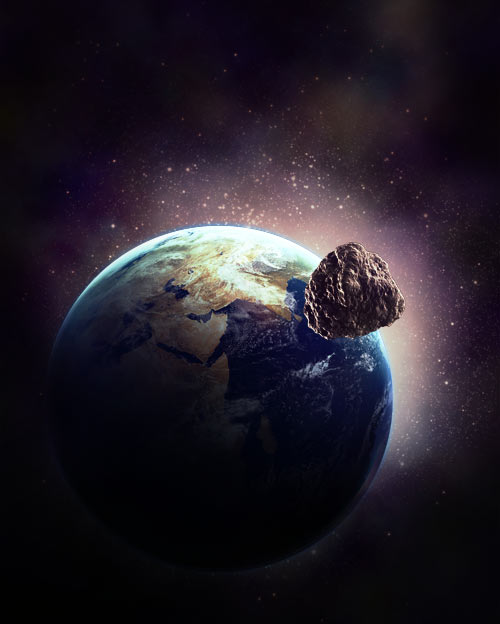
Intermission!
I would like to take this moment to congratulate you if you’ve made it this far. This is quite a long tutorial and requires a lot of dedication from you to follow. Don’t be frustrated, either, if your example doesn’t look like mine. It takes years to develop your skills in Photoshop. Keep experimenting, and find some great inspiration and resources to keep you moving along.
When working on a document of this complexity, make sure you keep all of your layers organized and labeled. Below you can see how I currently have my groups and layers organized and labeled, so that I can easily recognize them when I look back at them later. Ignore the hidden layers, those will come later.

Step 4: Moon Effects and Explosion
Make sure all of the following are located above the moon layer. You may also want to put them in a group.
Glow Effects
Remember when we used a red brush and a yellow brush to create a glow in the upper right of the planet? We are going to do the same thing to the lower edge of the moon. Grab a 200 px red-orange (#e6602b) brush, and brush around the outer edge, ¾ of the way around the moon. Repeat the same process with a 100 px yellow (#fdfc92) brush. Then lower the opacity of the layer to 20%.

Remember how we created the white glow in the upper-right area of the earth? Repeat the same process for the moon. Select the moon on a new layer, fill it with white, move the selection down some and then delete most of the white. Apply a Gaussian Blur of 1 to 2 px. Then give it an Outer Glow of white set to normal.
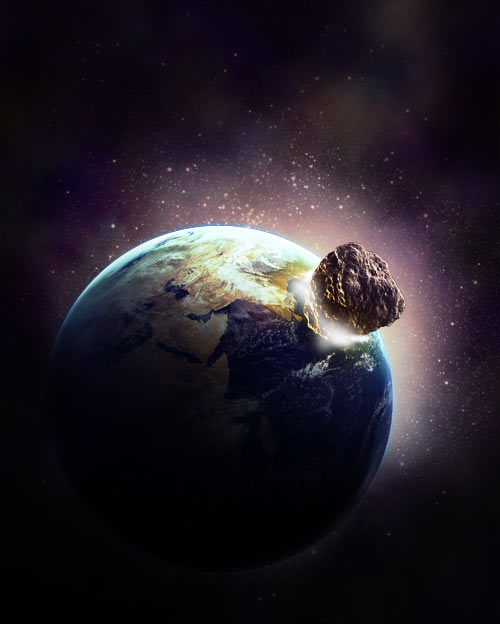

Explosion
Create a new layer and grab a 65 px white soft brush. Then brush a small area where the moon meets the planet. This layer will add to the effect that the next two layers create.

Create another new layer and keep your 65 px white brush. Brush a larger area underneath the moon. Make sure you follow the curvature of the moon as it meets the planet. Then, grab a small 3 px brush and turn Scattering to 1000% and Size Jitter to 75%. Brush some white particles around the area that you just brushed white.
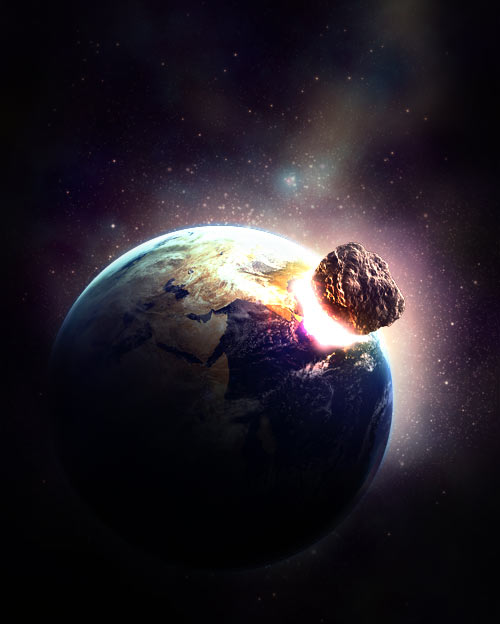
While still on this layer, apply an Outer Glow with the color #ffa800, set to Overlay.


Create a new layer and fill it with black. Then go to Filter > Render > Lens Flare. Set the Brightness to 100% and the Type to 50 to 300 mm Zoom. Move the flare so that it is positioned towards the bottom left, and then press “Okay.”

Erase most of the layer, only leaving a small area around the main part of the flare. Then position the center of the flare over the moon. Then set the layer to Linear Dodge.


Create a new layer. Use a number of soft brushes with a nice red color (#ed1e26) to create a red hotness above the moon. Then lower the opacity of the layer to around 10 to 15%.


Step 5: Creating the Asteroids
To create our asteroids, we are going to add another stock image to our document. There’s a great picture of a huge rock over at stock.xchng, so we’ll use that! Normally, you would use the pen tool to cut the rock out yourself, but I’ve done it for you to speed up the process.
Open the image, and select the white background using the Magic Wand Tool. Then go to Select > Inverse to invert your selection, so that the rock is selected. Copy and paste it into your document. Then position it over the planet, rotate it so that the light part is facing the explosion, and finally resize it to a nicer size. Then duplicate it, and set the new one to Overlay. Press Ctrl + E to merge the two layers together so your asteroid is one layer again.

Duplicate your asteroid multiple times, resize it and rotate it. Do this until you have a nice little cluster of asteroids. If any of the asteroids gets blurry, go to Filter > Sharpen > Sharpen to sharpen it up a bit.

If you have any asteroids above other asteroids, they need to cast a shadow. Select the asteroid that has a shadow cast on it. Then, on a new layer above that asteroid, use a small soft black brush to brush a shadow in.
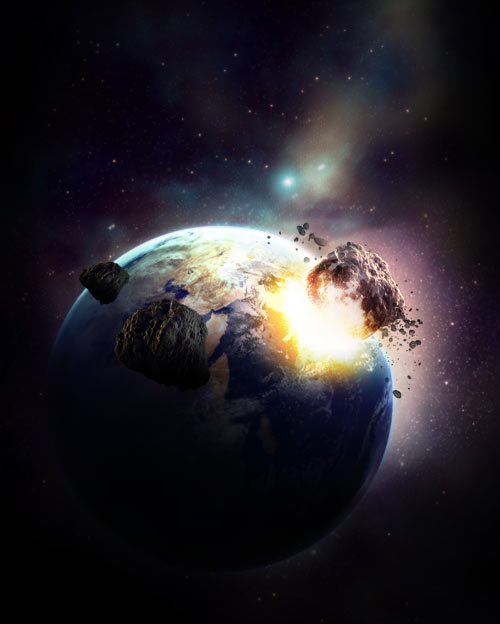
As before, use a nice orange (#e6602b) and yellow (#fdfc92) color to color the edges of the asteroids. Do this by Ctrl + clicking on the layer thumbnails and then using a large soft brush to brush the edges on a new layer. Set the layer mode to Multiply and the opacity to 50%.

Repeat the process multiple times for the other asteroids. Try to find other pictures of rocks to get some different sizes and shapes.

Step 6: Final Touches
These next steps are for really going in and chiseling out the look we want. This stage usually involves a lot of experimentation and patience to get the look you want.
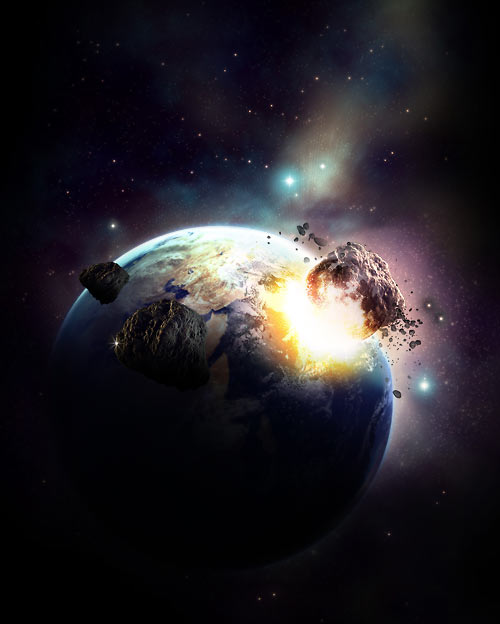
Create a new layer on the top level of your document. Go to Image > Apply Image and press “Okay” to paste a merged copy of your document onto the layer. Go to Image > Adjustments > Desaturate to make the image grayscale.

Then go to Filter > Blur > Gaussian Blur and apply a blur of 2 px. Set the layer to Overlay and lower the opacity to 50%. What we just did was make our dark colors darker and our light colors lighter, and also add a small blur between them to give it a glow.
Final Step: Pat Yourself on the Back
There we have it: our Space Explosion is complete! I don’t know about you, readers, but I’m exhausted. Normally, pieces like this take days or weeks to put together, and now that you know how to do it you can create some original pieces of your own. Below, you will find some links to works that inspired this tutorial and others that are for inspiration.
Resources
(al)


Unit1
February 22nd, 2009 6:18 amThank you. I will use this today :-)
OverZero.it
February 22nd, 2009 6:31 amVery interesting tutorial, the final result is brilliant!
Thank you.
Philler
February 22nd, 2009 7:17 amThanks for the tutorial, i’m gonna try it :)
Courtny Cotten
February 22nd, 2009 8:09 amSweet! Lots of blending modes and layer effects :)
My favorites!
AHTOIIIKA
February 22nd, 2009 11:03 amNice, Thank you.
minixan
February 22nd, 2009 11:30 amIt is not a realistic outcome. The fire may not be so great, this is not an atomic bomb.
robbie
April 20th, 2010 10:14 amyeah its like 100 times bigger
Domdom
June 27th, 2010 1:33 amlol moon>atomic bomb
if we say the moon would crash into the earth with just 500 mph the energy would be sooo great
energy=0.5*7,349 * 10^22 kg*velocity^2…. i think that would be much more than an atomic bomb
Albatross
November 29th, 2010 12:16 pmridiculously complex physics-and-mathematics-based responses FTW!!
Curt Simon Harlinghausen
February 22nd, 2009 11:31 amInteresting tutorial.
PhotoshopLover
February 22nd, 2009 11:39 amThanks Smashing!
Note to Minixan:
The point is to learn and add to your Photoshop knowledge. Just learn and appreciate!
Kwaa
February 22nd, 2009 11:43 amThanks, this is one of the reasons that i have this as my startpage.
Shy
February 22nd, 2009 12:09 pmThanks Smashing.
Derik
February 22nd, 2009 12:37 pm@minixan You remind me of Clark Griswalds father-in-law when Clark finally gets the Christmas lights working on his house and his dad responds by saying, “the little lights aren’t blinking.” Never mind that the brilliance of the lights on the house can be seen from space, and the cities backup generators have to be switched on. This is a great tutorial with some great exercises to better your photoshop skills. And the piece itself is amazing. Some people are just so hard to please.
bharathkumar
August 15th, 2010 8:38 pmthats fine to see very very nice.,………………….
hellveen
February 22nd, 2009 1:35 pmIncredible :)
Tnx
Brian Gottier
February 22nd, 2009 1:43 pmThat’s quite a tutorial.
Neevo
February 22nd, 2009 1:48 pmThank you Smashing, i love this kind of tutorials.
tuxcayc
February 22nd, 2009 1:56 pmExtense but great tutorial! Someday I’ll return here and follow the instructions, I guess that with patience and time u can get results like these.
In the art class sometimes the teacher teaches how to use Photoshop in the form of examples… but they’re so boring, I’ll send him some links of tutorials posted here… not this one haha it’s too long I guess, but there are another ones shorter and interesting too…
Bye, great tutorial again.
JOhan
February 22nd, 2009 2:01 pmlol i have never seen SM do a PS tutorial. Must be something new :)
Very nice!
vectorss
February 22nd, 2009 2:04 pmWoow incredible. Thanks
Felix Andersen
February 22nd, 2009 2:08 pmThat looks really great! Incredible result and interesting techniques used!
Mugros
February 22nd, 2009 3:39 pmOK, this tutorial is not about realisms, but still this picture has some big issues which “impact” the viewing experience.
The direction of the light mismatches on all three objects, planet, moon and asteroids. The planet is lighted from the upper right. And because the planet was originally lit directly from the front the brightness distribution in the final picture looks very unnatural. The big round cloud formation and the surface underneath are much too bright. This is because it was the brightest spot in the original.
The moons lighting seems to come more from upwards compared to the planet. The asteroids are all wrong, because they were rocks lit in the sunlight, lying on the ground. So they have reflected lighting and not only direct lighting, as one would assume in space.
And you can see that the asteroids are duplicates. It would be better not to rotate and copy, but to find another rock picture.
It is also totally wrong, that you can see the stars very good where there is a lot of light, and almost no stars or very faint stars where it is dark. Normally it is exactly the other way around.
These are things every viewer will notice because it is against the normal viewing experience.
Personally i don’t like the light bursts and the big brightened circle on the right of the planet. The center doesn’t really match anything and generally they just look unnatural.
Vikinglights
May 30th, 2010 6:46 amThis is a brilliant tutorial; this lad has spent an awful long time to prepare this. Maybe there are some visual mistakes, but so what!!!!!
If you think you can produce a better tutorial, show us!
Leave Tyler alone. The only peple who could make a scathing criticism like this is someone who was born ‘perfect’. No-one is perfect.
kuswanto
February 22nd, 2009 5:15 pmIs this smash tut or smashing magazine?? Back on track please. There are hundred of sites that offering photoshop tutorials.
Mike
February 22nd, 2009 5:19 pmhaha! this was totally random!.. there is something funny about the colours on the final image.. and the rocks kinda look like bath sponges or something.. this is definitely the weirdest smashing mag post ever..
godzalli44
February 22nd, 2009 7:07 pmgreat tutorial.
hey… i’m watching you! :-D
Jbcarey
February 23rd, 2009 12:29 amThanks for posting this monster Tutorial…. You must have spent days writing it up. Hats off to you… (even if the end result isn’t what most people don’t want from it apparently)
Tom
February 23rd, 2009 5:21 amSome amazing effects – thanks very much!
mikemike
February 23rd, 2009 5:29 amSeems like this was on PSD Tuts about 2 years ago.
Timothy
February 23rd, 2009 6:21 amGreat end product! Very nice tutorial. thanks
J Catara
February 23rd, 2009 9:55 amThis tutorial was great. Maybe the point of the tutorial gets lost . I think the point of a tutorial is to learn. There were alot of things I learned from this tutorial. Simple things that self taught people don’t quite understand. Example: Part 6 the final touches gives a great tip. Make a layer from all the layers. desaturate, blur, overlay, 50%. An easy effect to make a photo pop. I never thought of that.Thank you for writing an easy to follow and understandable tutorial.
Tyler Bramer
February 23rd, 2009 10:46 amI’m glad that some of you find good use of this tutorial. I must agree that the end product is nothing near perfection, but it serves its purpose regardless.
In the end, I just hope that this enables people to create their own unique art and to better understand how Photoshop works.
www.glossygames.com
February 23rd, 2009 10:52 amI agree with J Catara. the image itself is not bad but not that great either. While browsing thru it i did find some shortcuts and and ideas that i will keep in mind next time i use photoshop. it just seems like this effect could be accomplished with less work however.
TNTStudio
February 23rd, 2009 11:15 amAbsolutely love this article – Thank you!
tim
February 23rd, 2009 11:24 amHaha, anyone notice that earth has three hurricanes happening at the same time in a straight line?
Paul Morales
February 23rd, 2009 11:55 amGreat tutorial! I learned a lot.
Bernardo Diana
February 23rd, 2009 12:14 pmTroppo bello! Very beautiful! I’m love!!!! <3
Scott Mackenzie
February 23rd, 2009 7:34 pmThat was Epic.
Htoo Tay Zar
February 24th, 2009 1:47 amNice tut, I’ve learned a lot through this. thank you..
Marvin
February 24th, 2009 4:26 amThis is the first time that I dont like the outcome at all.. weird colors and lightning..
Intuos
February 24th, 2009 4:38 amNice! Many little tricks that are very usable in a lot of projects.
Angela
February 24th, 2009 5:20 amgreat tut,thank you very much!
Mugros
February 24th, 2009 11:40 amSome people say that the process of learning is better than the final result. I only partly agree, because beginners will make their own errors, so the tutorial should be as error free as possible.
If the tutorial wants to focus on blendings and layers, then there are easier ways to do it. This tutorial is about achieving an overall impressing effect and it fails because some basics are omitted.
Kris W.
February 24th, 2009 12:03 pmThat was an awesome tutorial! More more more more! Need more input!
Maya Tutorials
February 25th, 2009 2:49 amThanks, tutorial is amazing. I want more :)
zax
February 25th, 2009 9:28 amLarger stars scattering = 1000% still not enough? how do I fix this.
Tyler Bramer
February 25th, 2009 12:14 pmBy increasing the spacing on the brush you can create more distance between the stars.
Assa
February 26th, 2009 3:20 ami do not use photoshop ( prefer fireworks) , but some tutorials are great…
WeSayIT
February 26th, 2009 1:46 pmwow this is awsome…..steven spielberg should learn from it :D
Veer
February 27th, 2009 1:26 amThat is quite an exhausting process. I just can’t make the large stars and light bursts quite like yours. The large star is not scattered enough and the light bursts kind of just disappeared after changing to Overlay. The rest is awesome. Thanks for this fun tutorial!
necea
February 28th, 2009 5:18 amthere are too few asteroids.
jeremy
March 3rd, 2009 1:16 amIt is a really good piece of art work:) Thankyou for Your time and hope You are fine:)
Cheers.
daff
March 3rd, 2009 10:57 am#46 got the same problem, the lightburst just disappear =/ Though a great and amazing result :D
Magg
March 7th, 2009 1:10 amWoah. Nice. Must of taken you hours to make. Looks really complicated. Hope i’m up to the task.
Carl
April 8th, 2009 12:43 pmThanks for this. May I add a suggestion: Rotate that rock so that the lit side is on the right. That would look more realistic as the moon, which is crashing onto the earth, does so with an explosion (light emission), which would create a lighter side on the right of the rock rather than on its left.
pippin
April 12th, 2009 11:38 pmthanks very much – Excellent!
Template Library
April 27th, 2009 12:33 amgreat nice tutorial…its awesome..
rc
April 27th, 2009 1:43 amThank you for taking the time to teach me some of those techniques…I will apply them soon…That tutorial was a ton of fun!
Pierro
June 14th, 2009 3:24 amThank you very much for this beautiful tutorial. It helped me a lot and taught me many new techinque.
Just a small detail: the asteroid is not super realistic but still, THANK YOU!
Szymek
July 24th, 2009 4:29 amWow it’s amazing but so hard for me ;/
_______________________________
Sorry for my english.
Jen
July 27th, 2009 2:36 amWow, I am exhausted, but this was a great tutorial. Thanks so much for taking the time to post it! Of course my picture didn’t come out as good as yours, but I still learned a lot from doing this. Thanks again!
Reece
July 27th, 2009 10:30 amNice tutorial, i followed and did this solidly (for almost two hours :P) and it looks cool cheers
inez
August 4th, 2009 3:33 amthe lightburst can be made by applying an alternative method: open a new layer and go to filter/render/cloud; then filter/pixelate/mezzotint. Following to that apply the radial blur.
Now you have the lightburst all over your layer so take your large soft eraser and erase those parts of the lightburst you do not want to appear in your image.
Hope this will work for you.
Great tutorial, thx
God of game 1st
August 17th, 2009 10:18 pmreally thnx i have enjoyed it u are great
Designrfix
September 22nd, 2009 6:44 pmsmashing tut! :D
BestBlogBox
January 13th, 2010 6:50 pmCan you provide more information on similar issues, or do you have some resources you can share where with us where we can find such useful stuff? Thanks.
Medha
January 19th, 2010 1:55 amGreat tutorial, thx
jono
January 28th, 2010 3:42 amclass tutorial. really impressed with the results
George
January 28th, 2010 8:56 amlove the tutorial! found it really easy to follow thanks! :)
Im learning photoshop techinques all the time as a hobby.
check out my attempt…
http://digitalmanchester.blogspot.com/2010/01/collateral.html
feel free to leave comments xx
This guy!
April 4th, 2010 9:48 amone of the best tutorials I’ve seen on this so far, well done!
Brandon
May 26th, 2010 2:22 pmVERY AWESOME MAKE MORE TUTS MAN PLEASE :D Really man thanks
Gawain
May 27th, 2010 2:07 amHi erm im stuck at the part where you say “Drag the selection diagonally down and to the left, and delete most of the white. Then apply a Gaussian Blur of 5 px.” Mind if you explain?
Sumi
August 10th, 2010 6:56 pmI just did this now…n im really happy with the final result !! :D…thanks for the really comprehensive tutorial!!
El Burro
August 19th, 2010 8:11 pmthanks for the support your design is great hope to match the quality of design, but the talent is most important, with a little dedication I hope to achieve good designs, I also am a graphic designer dedicated more to the vectors in corel.
and now I’m interested in growing the quality of my designs in photoshop …
I have no more to be thankful for this tutorial and illustrated by Sheetl you keep your knowledge of truth thank you very much …
Guoweiuowei
September 20th, 2010 7:13 pmgood job
David
September 29th, 2010 7:55 pmHey i was just going to let you know your tutorial was amazing, i am fairly new to photoshop and it was crystal clear. I showed my Computer design teacher and she was stunned. Thank you very much for this lesson and i will contact you in the future if I have questions.
Maaz H
October 10th, 2010 3:08 amWow! I am going to keep experimenting on it…I want an icy effect to…as if the world is being destroyed by both elements
Ranron
December 1st, 2010 7:37 pmIt’s so nice!
white
January 5th, 2011 4:21 pmvery good,www.17ps8.com
Love PSD
February 20th, 2011 12:06 amGreat !! Great work man !! I don’t care with the other comment, but it’s very great. Just a man who can’t do this will say “It’s bad, it’s unusable, it’s bullshit”, but I don’t think that comment proove that they can do what this great man doing. thanks for the tut !!
grafiksoup
March 8th, 2011 2:52 amIt’s a really nice picture. Unfortunately, there are a good amount of steps left out of this tutorial and a ton that are not necessary. There are also mistakes in the brush settings as well as the instructions on how to use those brushes. If you’re a beginner forget it because of the missing steps which start about 1/4 of the way into it. If you’re intermediate you will discover some new ways to produce effects and if you’re an expert you will immediately figure out that many of the layers and effects are unnecessary – as you create them you’ll see many do not make a bit of difference at all except weigh down the file. You wind up with over 50 layers and a file that’s almost 400mb! Kind of odd for a tutorial but it’s good to do these every now and then. (except I wouldn’t make it so complicated because the average user will loose patience or grow tired of all the extra work!)
Soumya
April 8th, 2011 12:07 amThanx lot u.
Pete
October 25th, 2011 10:24 amGreat tutorial, took me a while but very satisfied with the results :)
ali
November 6th, 2011 3:14 amYou’re tutorial was probably one of the best ive seen of photoshops.
I even added my own shooting star (:
take a look ;;
http://alikool07.deviantart.com/#/d4f6zr4