Smashing Magazine - we smash you with the information that will make your life easier. really.

Stunning Space Photography

Advertisement

Space has many beautiful mysteries hidden inside. Many people have tried and are still trying to uncover those mysteries. In this inspirational post, we present beautiful photographs from space explorations: nebulas, comets, stars, planets, etc. Hopefully, these beauties will inspire you to create beautiful artwork, Web designs, graphics, wallpaper, illustrations, etc. All of the images are linked to their sources. Click on them to get the high-resolution versions.

Please take a look at the following related posts:

Beauties in the Outer Space

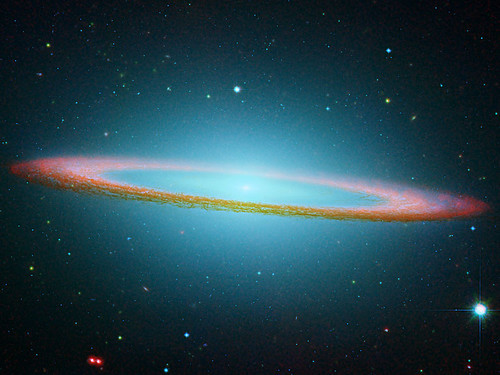
Messier 104
Messier 104, known as the Sombrero Galaxy, is one of the most popular sights in the universe. This floating ring is the size of a galaxy. In fact, it is part of the photogenic Sombrero Galaxy, one of the largest galaxies in the nearby Virgo Cluster of Galaxies. The dark band of dust that obscures the mid-section of the Sombrero Galaxy in optical light actually glows brightly in infrared light. The Sombrero Galaxy, also known as M104, spans about 50,000 light years across and lies 28 million light years away.
Sombrero Spitzer in Stunning Space Photography

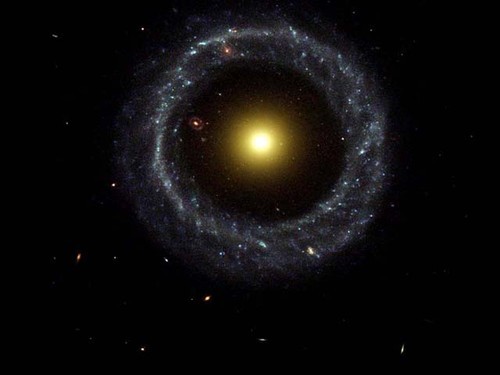
Hoag’s Object
Despite the vagueness of its name, “Hoag’s Object” galaxy is known to have some rare and inexplicable traits, not the least of which is the “halo” of stars surrounding its core.
Spaceart in Stunning Space Photography

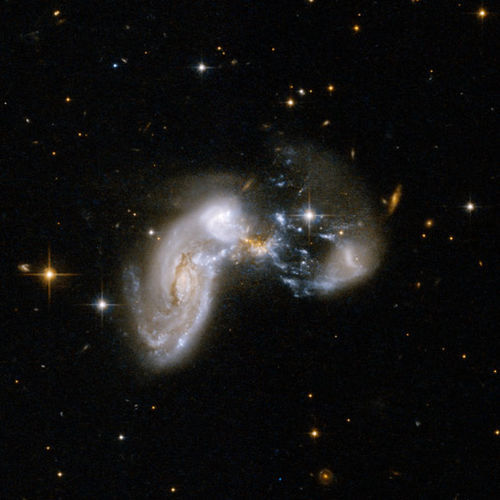
NASA – Bursting with Stars
The most active star-forming galaxy in the distant universe, nicknamed the “Baby Boom” galaxy, loosely resembles the galaxy shown here, called Zw II 96. While Zw II 96 is located about 500 million light-years away, Baby Boom lies 12.3 billion light-years away and appears in images as only a smudge.
Space-photography-115 in Stunning Space Photography

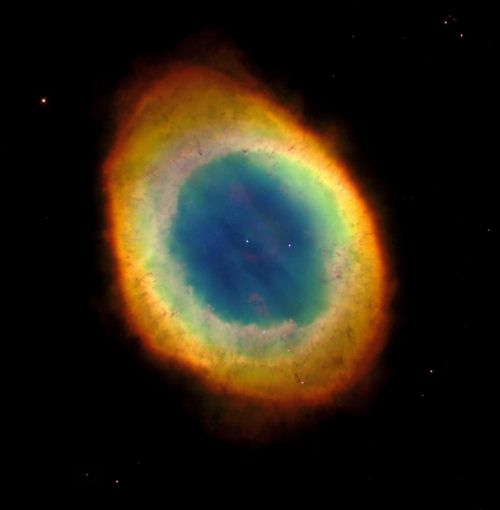
Ring Nebula
The NASA Hubble Space Telescope captured the sharpest view yet of the most famous of all planetary nebulae: the Ring Nebula (M57). This photo reveals elongated dark clumps of material embedded in the gas at the edge of the nebula; the dying central star floating in a blue haze of hot gas. The nebula is about a light-year in diameter and is located some 2,000 light-years from Earth in the direction of the constellation Lyra.
Ring in Stunning Space Photography

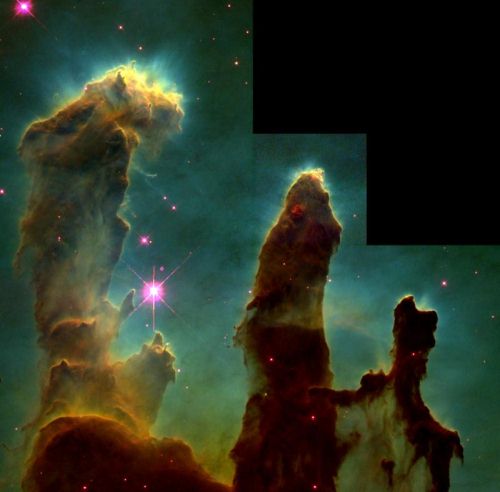
Pillars of Creation
These eerie, dark pillar-like structures are actually columns of cool interstellar hydrogen gas and dust that are also incubators for new stars. The pillars protrude from the interior wall of a dark molecular cloud like stalagmites from the floor of a cavern. They are part of the “Eagle Nebula” (also called M16 — the 16th object in Charles Messier’s 18th century catalog of “fuzzy” objects that aren’t comets), a nearby star-forming region 6,500 light-years away in the constellation Serpens.
Pillars in Stunning Space Photography

2008 November 1 – A Spectre in the Eastern Veil
The Veil Nebula is a large supernova remnant, the expanding debris cloud from the death explosion of a massive star. While the Veil is roughly circular in shape covering nearly 3 degrees on the sky in the constellation Cygnus, this portion of the eastern Veil spans only 1/2 degree, about the apparent size of the Moon.
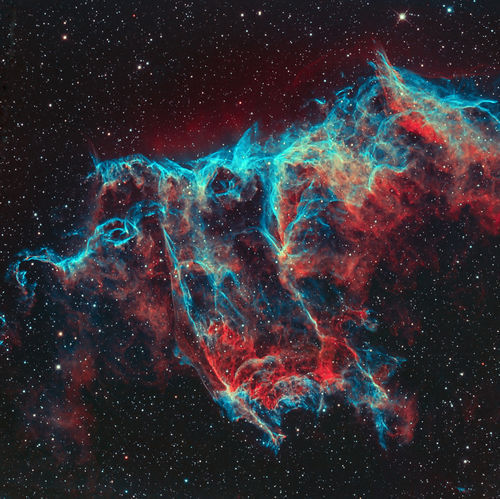
Space-photography-118 in Stunning Space Photography

NGC 2818
It may look like a seahorse, but the dark object is actually a pillar of smoky dust about 20 light-years long. The structure occurs in our neighbouring Large Magellanic Cloud, in a star-forming region near the Tarantula Nebula.
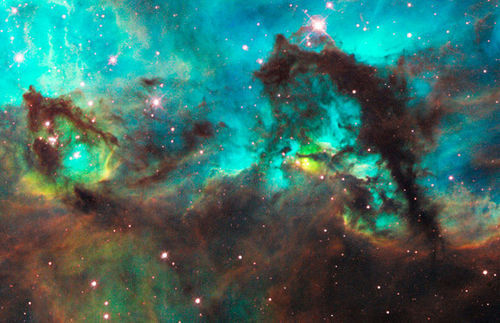
Space-photography-119 in Stunning Space Photography

Swan Nebula
This photo shows a bubbly ocean of glowing hydrogen, oxygen, and sulphur gas in the extremely massive and luminous molecular nebula Messier 17. This Hubble photograph captures a small region within Messier 17 (M17), a hotbed of star formation. M17, also known as the Omega or Swan Nebula, is located about 5500 light-years away in the Sagittarius constellation.
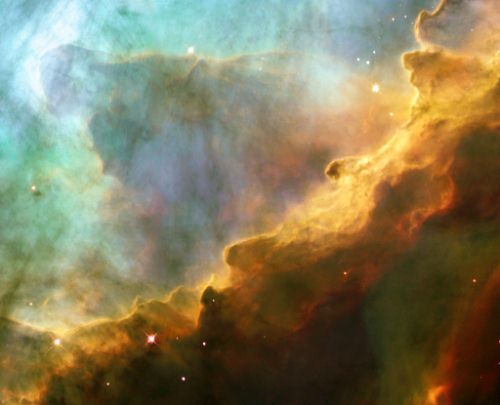
Swan in Stunning Space Photography

NGC 2207
These glowering eyes are the swirling cores of two merging galaxies called NGC 2207 and IC 2163 in Canis Major. Billions of years from now, only one of these two galaxies will remain. Until then, they will slowly pull each other apart.
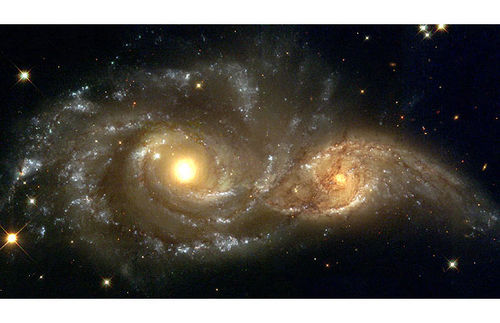
Space-photography-121 in Stunning Space Photography

Planetary Nebula Mz3
Planetary Nebula Mz3: The Ant Nebula. Expelled gas streaming away at 1,000 kilometres per second create a strange ant shape.
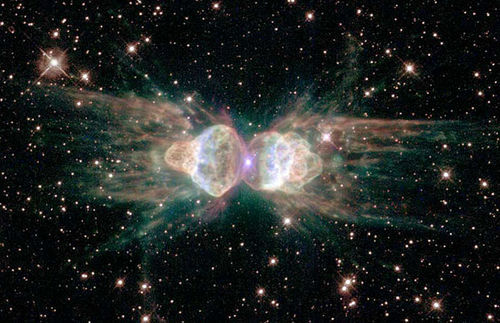
Space-photography-123 in Stunning Space Photography

Orion Nebula, M42
The Orion Nebula, M42, is only 1,500 light-years away. It offers one of the best opportunities to study how stars are born partly because it is the nearest large star-forming region, but also because the nebula’s energetic stars have blown away obscuring dust clouds.
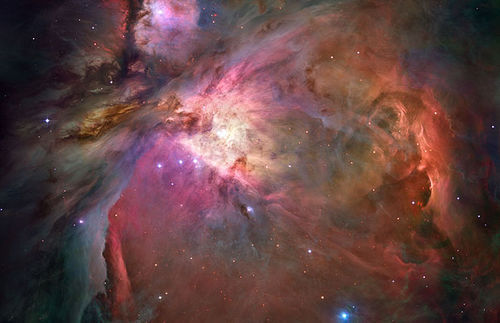
Space-photography-124 in Stunning Space Photography

IC 4406
A seemingly square nebula. IC 4406 is probably a hollow cylinder, with its square appearance caused by viewing the cylinder from the side.
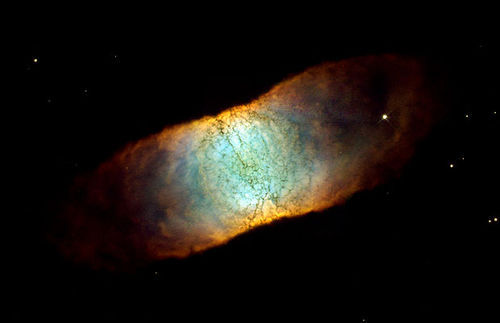
Space-photography-125 in Stunning Space Photography

M74
M74: The Perfect Spiral. If not perfect, then this spiral galaxy is at least one of the most photogenic. An island universe of about 100 billion stars, 32 million light-years away toward the constellation Pisces, M74 presents a gorgeous face-on view.
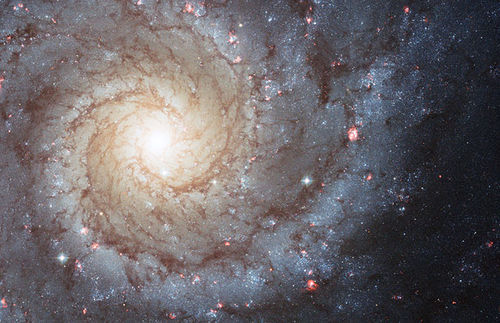
Space-photography-126 in Stunning Space Photography

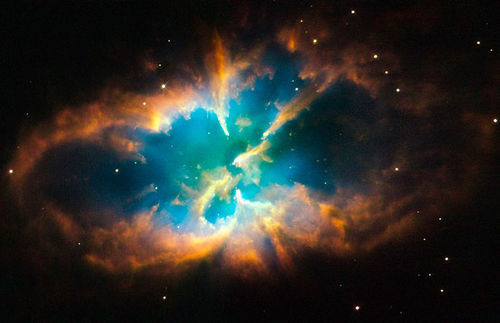
NGC 2818
Hubble’s greatest hits: Hubble space telescope images NGC 2818 is a beautiful planetary nebula, the gaseous shroud of a dying sun-like star. It could well offer a glimpse of the future that awaits our own Sun in about five billion years NGC 2818 is a beautiful planetary nebula, the gaseous shroud of a dying sun-like star. It could well offer a glimpse of the future that awaits our own Sun in about five billion years.
Space-photography-127 in Stunning Space Photography

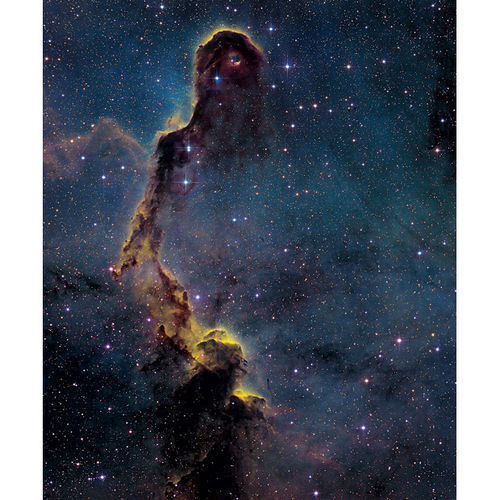
IC 1396
IC 1396 is a large nebula in the constellation Cepheus spanning 3 full degrees of winter sky, the same angular distance of six full moons. This image highlights the conspicuous globule IC 1396A – a striking structure sculpted by the radiation of nearby stars.
Space-photography-128 in Stunning Space Photography

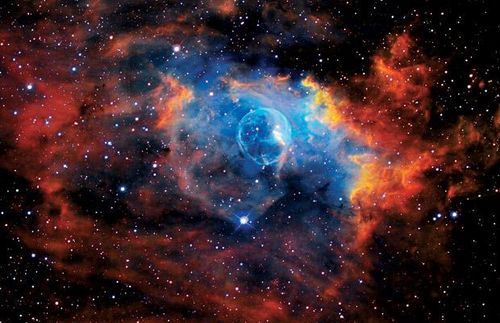
NGC 7635
A cosmic bubble of titanic proportions called the Bubble Nebula (NGC 7635), six light years wide, was formed by violent winds blown out by the hot central supergiant star, several hundred thousand times more luminous than our sun The Bubble Nebula A cosmic bubble of titanic proportions called the Bubble Nebula (NGC 7635), six light years wide, was formed by violent winds blown out by the hot central supergiant star, several hundred thousand times more luminous than our sun.
Space-photography-129 in Stunning Space Photography

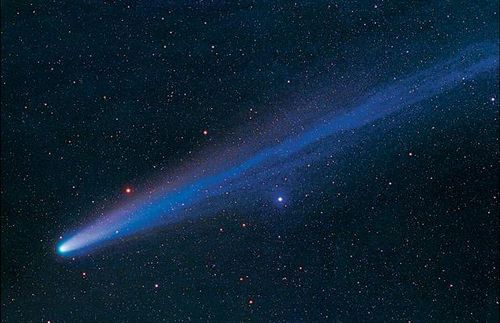
Comet Hyakutake
Discovered by amateur astronomer Yuji Hyakutake in January 1996, Comet Hyakutake made a close approach to earth in March 1996. Highly visible even in daylight, the comet put on an amazing visual and photographic spectacle. The comet’s remarkable tail is 360 million miles long, the longest known for any comet.
Space-photography-130 in Stunning Space Photography

2008 February 17 – M1: The Crab Nebula from Hubble
This is the mess that is left when a star explodes. The Crab Nebula, the result of a supernova seen in 1054 AD, is filled with mysterious filaments. The filaments are not only tremendously complex, but appear to have less mass than expelled in the original supernova and a higher speed than expected from a free explosion.
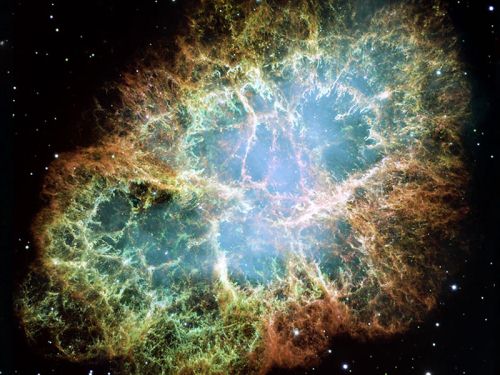
Crab2 in Stunning Space Photography

Stars and stripes in space
This composite image combines visible-light, radio and X-ray data for the full shell of the supernova remnant from SN 1006. The small green box along the bright filament at the top of the image corresponds to the dimensions of the Hubble release image.
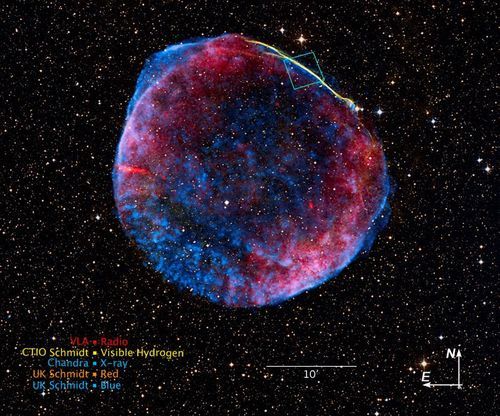
Space-photography-133 in Stunning Space Photography

2008 October 25 – NGC 602 and Beyond
Near the outskirts of the Small Magellanic Cloud, a satellite galaxy some 200 thousand light-years distant, lies 5 million year young star cluster NGC 602.
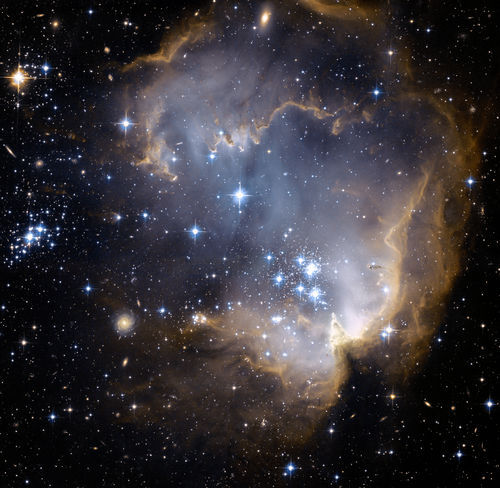
Space-photography-134 in Stunning Space Photography

Andromeda galaxy
This image is a Galaxy Evolution Explorer observation of the large galaxy in Andromeda, Messier 31. The Andromeda galaxy is the second massive in the local group of galaxies that includes our Milky Way. Andromeda is the nearest large galaxy to our own. The image is a mosaic of 10 separate Galaxy Evolution Explorer images taken in September, 2003.

Space-photography-140 in Stunning Space Photography

Orion Nebula – Hubble 2006 mosaic 18000
This file was a candidate in Picture of the Year 2006.

Space-photography-143 in Stunning Space Photography

2008 January 5 – M51: Cosmic Whirlpool
A stunning pair of interacting galaxies. Perhaps the original spiral nebula, the large galaxy with well defined spiral structure is also cataloged as NGC 5194. Its spiral arms and dust lanes clearly sweep in front of its companion galaxy (right), NGC 5195. The pair are about 31 million light-years distant and officially lie within the boundaries of the small constellation Canes Venatici.
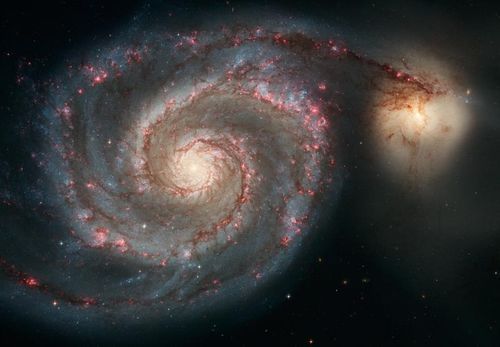
Space-photography-145 in Stunning Space Photography

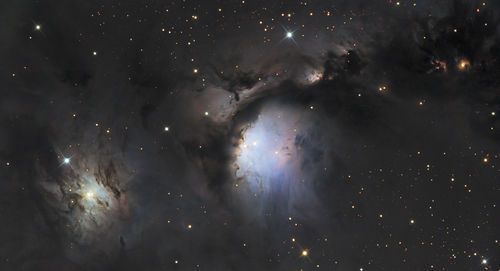
2008 March 18 – M78 and Reflecting Dust Clouds in Orion
An eerie blue glow and ominous columns of dark dust highlight M78 and other bright reflection nebula in the constellation of Orion. The dark filamentary dust not only absorbs light, but also reflects the light of several bright blue stars that formed recently in the nebula. Of the two reflection nebulas pictured above, the more famous nebula is M78, on the upper right, while NGC 2071 can be seen to its lower left.
Space-photography-147 in Stunning Space Photography

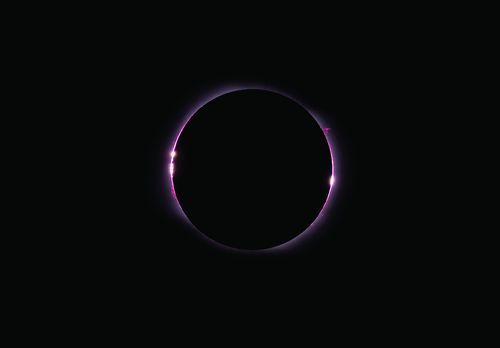
2008 August 7 – At the Sun
The picture is a composite of two images taken at special moments in the eclipse sequence, corresponding to the very beginning and the very end of the total eclipse phase. Those times are known to eclipse chasers as 2nd and 3rd contact.
Space-photography-149 in Stunning Space Photography

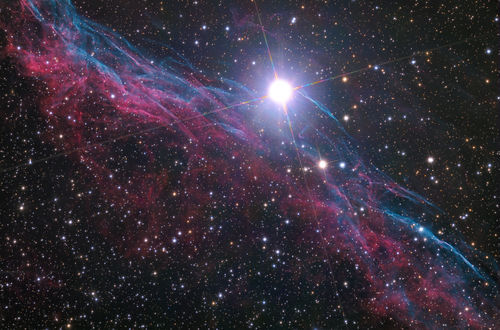
2008 August 19 – NGC 6960: The Witch
Pictured above is the west end of the Veil Nebula known technically as NGC 6960 but less formally as the Witch’s Broom Nebula. The expanding debris cloud gains its colors by sweeping up and exciting existing nearby gas. The supernova remnant lies about 1400 light-years away towards the constellation of Cygnus. This Witch’s Broom actually spans over three times the angular size of the full Moon.
Space-photography-150 in Stunning Space Photography

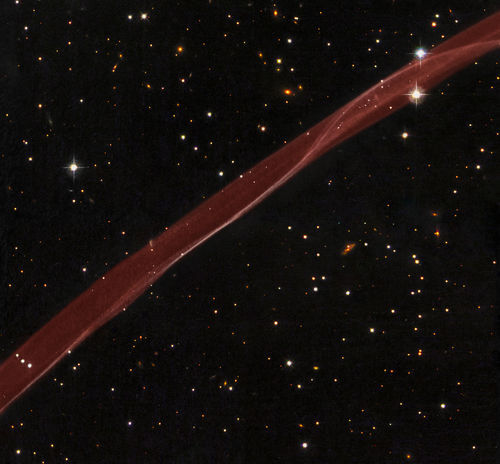
A Supernova Ribbon from Hubble
A twisting ribbon of glowing gas marks the point where the expanding blast wave from a stellar explosion known as SN 1006 is sweeping through.
Space-photography-151 in Stunning Space Photography

Horsehead nebula
The Horsehead nebula, B33 and Orion nebula.
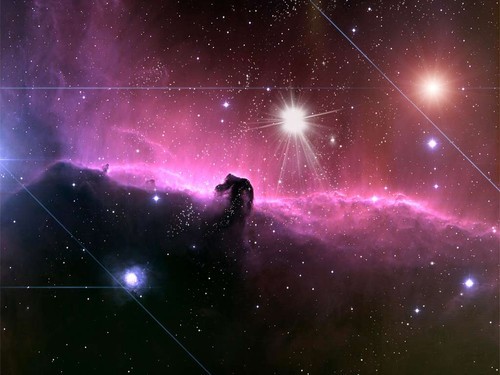
The Horsehead Nebula B33 Orion Nebula in Stunning Space Photography

Orion Nebula
Also known as M42, the nebula’s glowing gas surrounds hot young stars at the edge of an immense interstellar molecular cloud only 1,500 light-years away. The Orion Nebula offers one of the best opportunities to study how stars are born partly because it is the nearest large star-forming region, but also because the nebula’s energetic stars have blown away obscuring gas and dust clouds that would otherwise block our view.
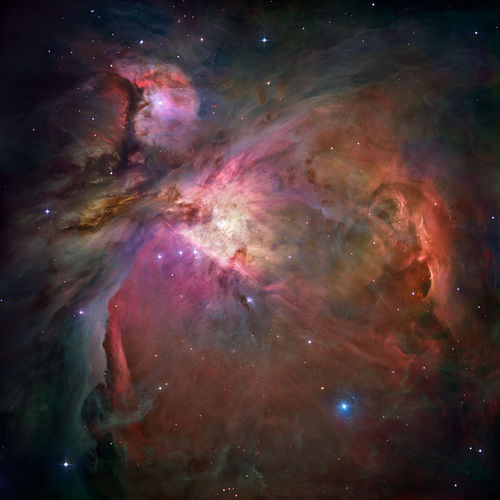
Space-photography-152 in Stunning Space Photography

Helix Nebula HR
Real, deep space images captured by the Hubble telescope.
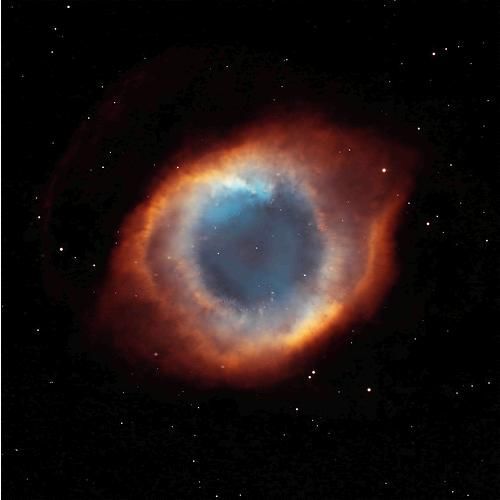
Space-photography-161 in Stunning Space Photography

Triangulum galaxy
Otherwise known as M33 is one of the nearest galaxies to us and is the smallest member of the local group of galaxies.
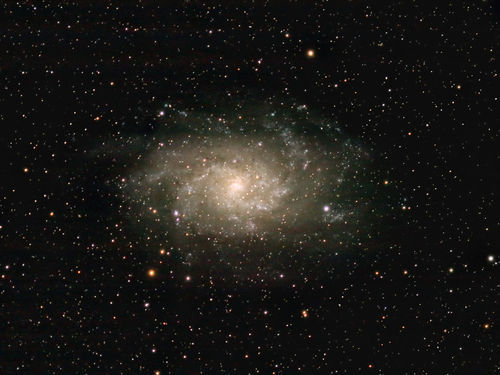
Space-photography-162 in Stunning Space Photography

Andromeda Galaxy
The Andromeda Galaxy (M31) is one of the nearest galaxies in our local neighbourhood, and is visible to the naked eye from a dark site. Being so near, it also has a very large apparent size: the width of 6 full moons. The bright blue patch near the top left is designated NGC 206, and is a very large open cluster within M31
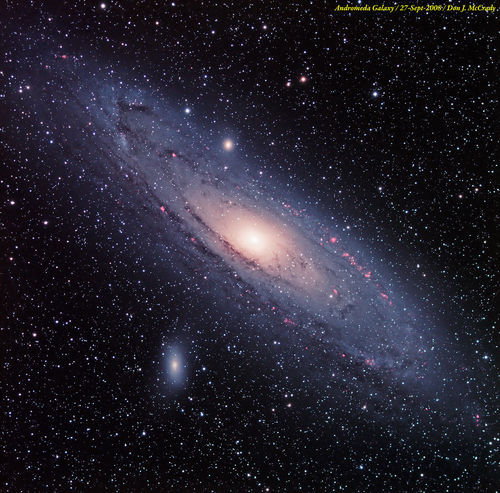
Space-photography-166 in Stunning Space Photography

NGC6888 “Crescent” or “Medusa” nebula. 19.5 hours of exposition
Supernova explosion remnants, among Milky Way stars in the background.
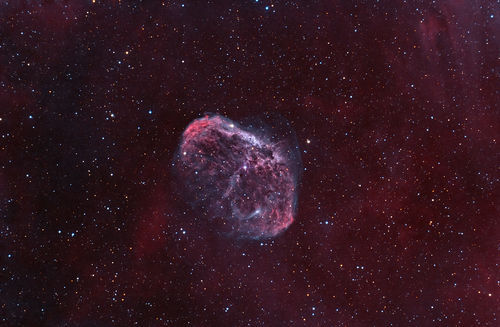
Space-photography-169 in Stunning Space Photography

The Cartwheel Galaxy
The unusual shape of the Cartwheel Galaxy is likely due to a collision with one of the smaller galaxies on the lower left several hundred million years ago.
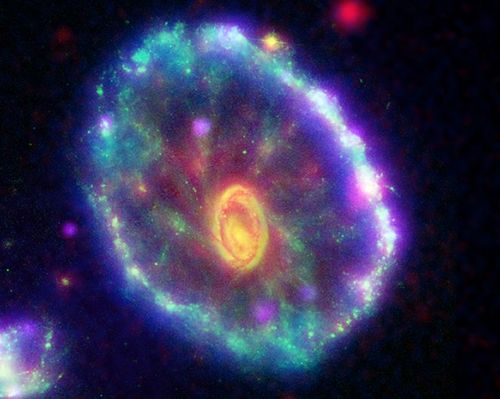
Space-photography-170 in Stunning Space Photography

Crab Nebula: A Star
The neutron star, which has the mass equivalent to the sun crammed into a rapidly spinning ball of neutrons twelve miles across, is the bright white dot in the center of the image.
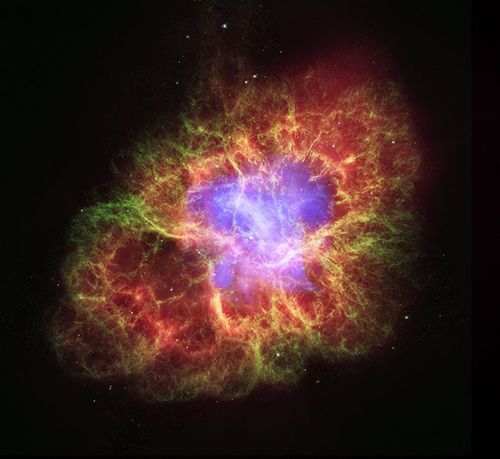
Space-photography-172 in Stunning Space Photography

A Black Hole Overflows (NASA, Chandra, 2/2/09)
NASA’s Chandra X-ray Observatory has helped create a spectacular view of Centaurus A that shows the effects of a supermassive black hole. At the center of this nearby galaxy, a central black hole powers jets and lobes that flare against a background of stars and stardust. In the upper left of the image, an X-ray jet extends about 13,000 light years away from the black hole. The material in that jet is travelling at about half the speed of light.
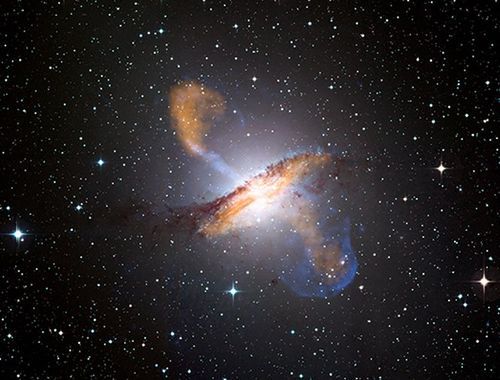
Space-photography-173 in Stunning Space Photography

Supernova Explosion 1987A
February 24, 1987 will be remembered as one of the most spectacular events observed by astronomers in modern times. The destruction of a massive star in the Large Magellanic Cloud, a nearby galaxy, resulted in Supernova 1987A.
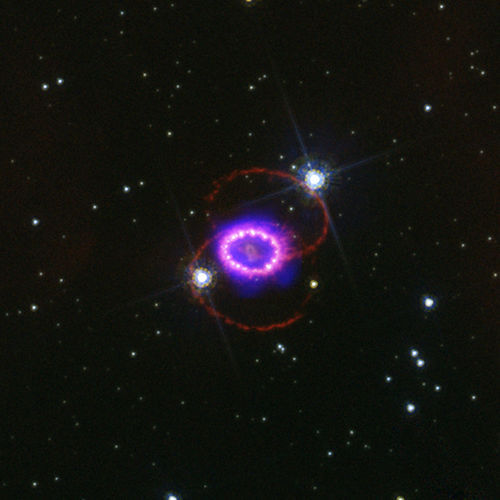
Space-photography-177 in Stunning Space Photography

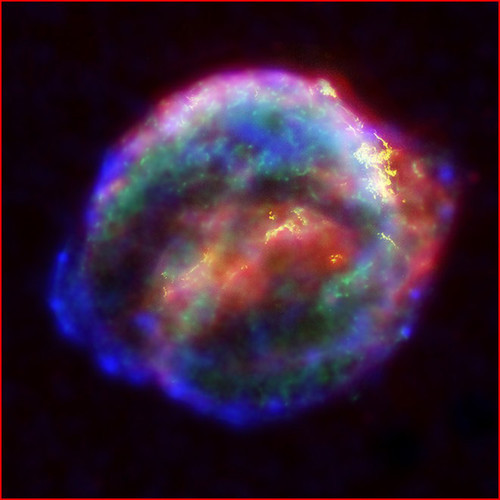
Kepler supernova remnant

041103supernova in Stunning Space Photography

Sagittarius constellation
Rippling fields of radiation are cast on both sides of Red Spider nebula in the Sagittarius constellation.
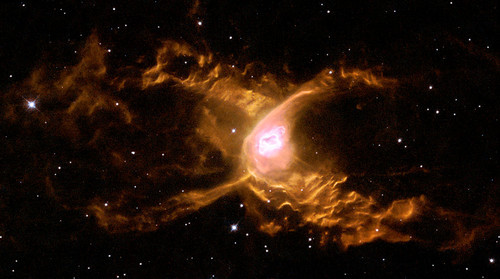
Heic0109a in Stunning Space Photography

Heart Nebula
Not surprisingly, the broad, nebular shapes within IC1805 led to its nickname the “Heart Nebula.”
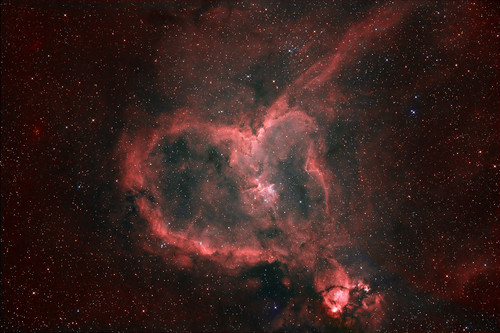
Ic1805large in Stunning Space Photography

Mars’s ”Fear” Moon Unveiled
The tiny moon’s most prominent feature is Stickney Crater, pictured above in false color. The impact that created Stickney is thought to have almost shattered the roughly 17-mile-wide (27-kilometer-wide) moon.
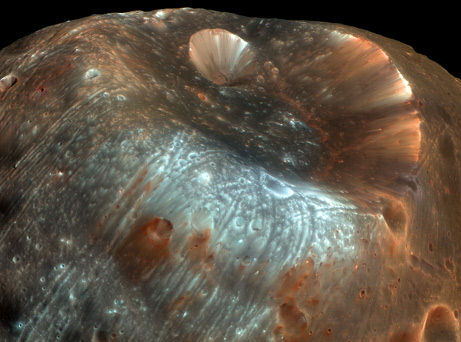
Mars in Stunning Space Photography

Supernova
Faint wisps of gas dance across space, the remnants of a violent supernova that would have been visible to the naked eye on Earth for weeks at the dawn of human civilization some 10,000 years ago.
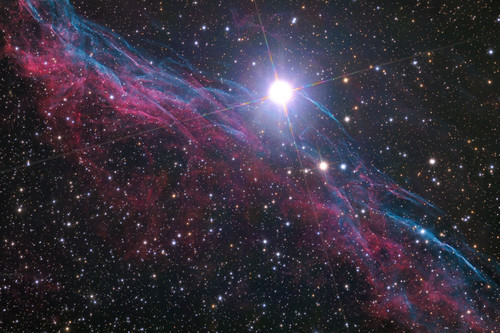
Ngc6960 Block in Stunning Space Photography

Spiral galaxy M83
Spiral galaxy M83 gleams with its high population of young stars and copious debris and dust.
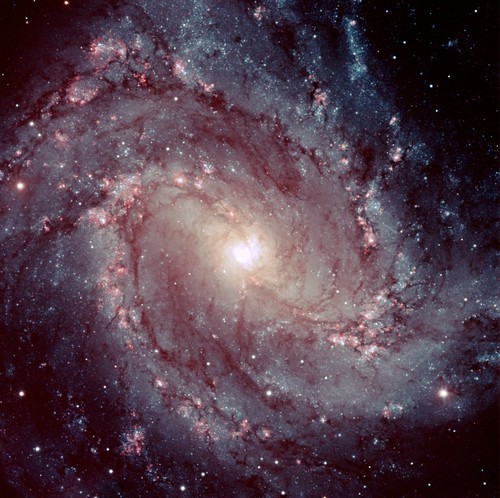
Phot-24b-05 in Stunning Space Photography

Sun
An arm of super-heated gas, approaching nearly 1 million degrees, erupts from the surface of the Sun.

Ic1396b Wright F50 in Stunning Space Photography

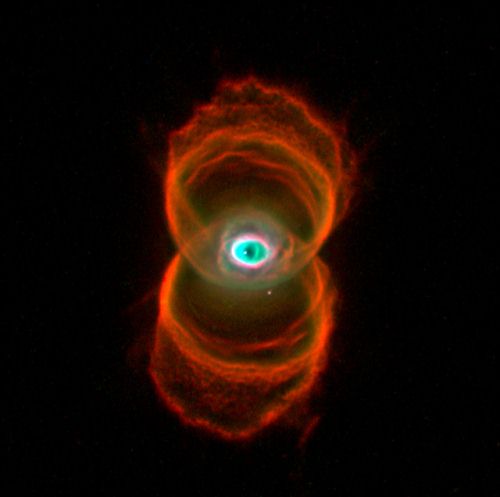
MyCn18
MyCn18, a young planetary nebula located about 8,000 light years away. This photograph was taken with NASA’s Hubble Space Telescope.
Mycn in Stunning Space Photography

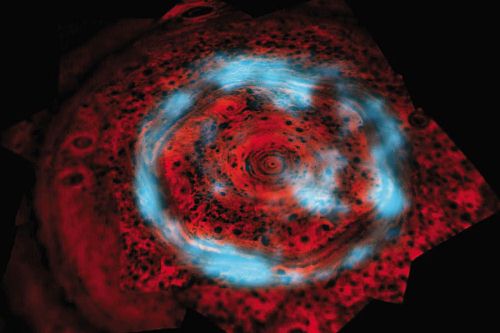
Unusual Auroras Over Saturn’s North Pole
The strange aurora are shown in blue in the above image, while the underlying clouds are shown in red. The previously recorded, also-strange hexagon cloud patterns are visible in red below the aurora. These Saturnian aurora can cover the entire pole, while auroras around Earth and Jupiter are typically confined by magnetic fields to rings surrounding the magnetic poles.
Auroras in Stunning Space Photography

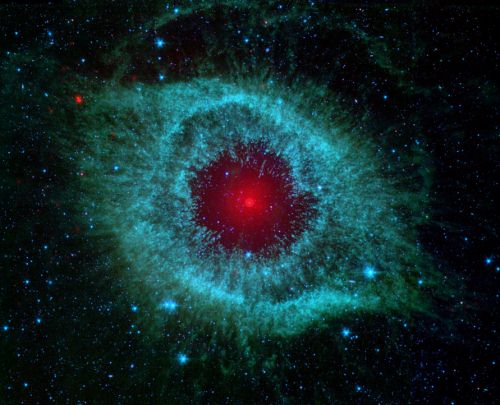
Helix nebula
Infrared image by NASA’s Spitzer Space Telescope shows the Helix nebula.
Helix in Stunning Space Photography

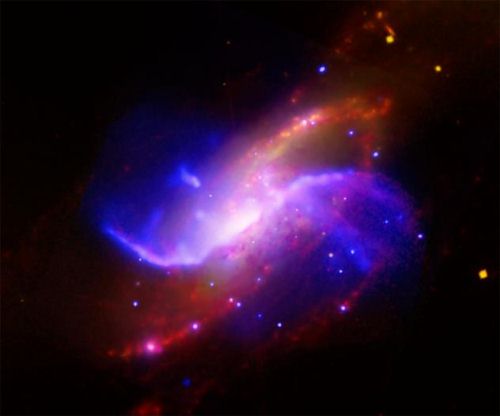
Spiral galaxy M106
Beautiful view of spiral galaxy M106.
M106 in Stunning Space Photography

Main Galaxy String
A beautiful galaxy string showing thousands of galaxies.

1000 in Stunning Space Photography

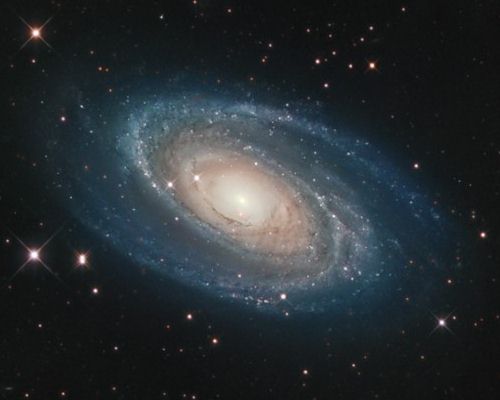
M81 galaxy
M81 is also known as Bode’s Galaxy.
M81 in Stunning Space Photography

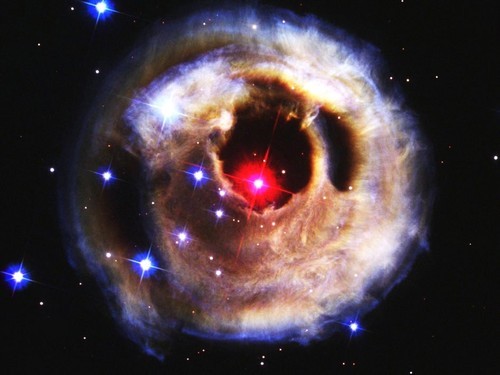
Monocerotis
The star Monocerotis is seen here on the fringe of the Milky Way, brightly illuminated by reflected light from a past explosion.
199918main Rs Image Feature 784 946x710 in Stunning Space Photography

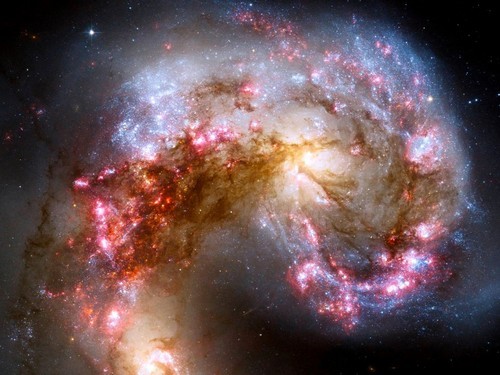
Antennae galaxies

Antennae-Galaxies-1-1024x768 in Stunning Space Photography

Beautiful Photographs From Outer Space
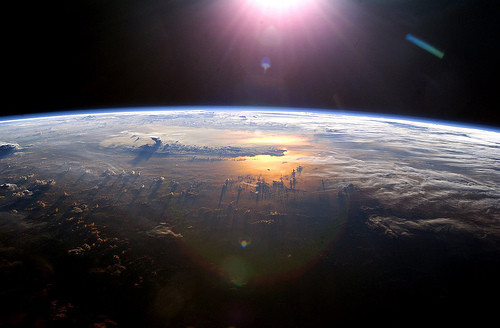
Sunset over the Pacific

Sunset in Stunning Space Photography

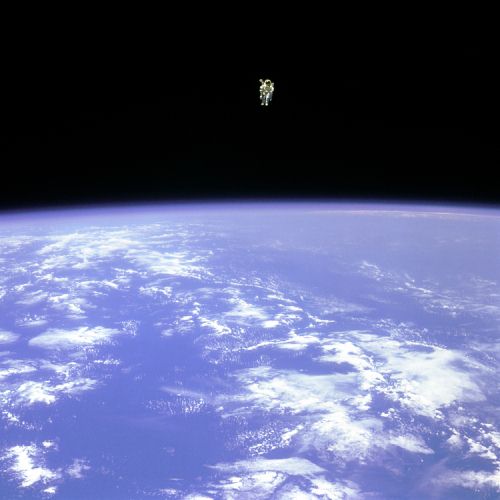
To Fly Free In Space

Fly in Stunning Space Photography

Mars

Space-photography-110 in Stunning Space Photography

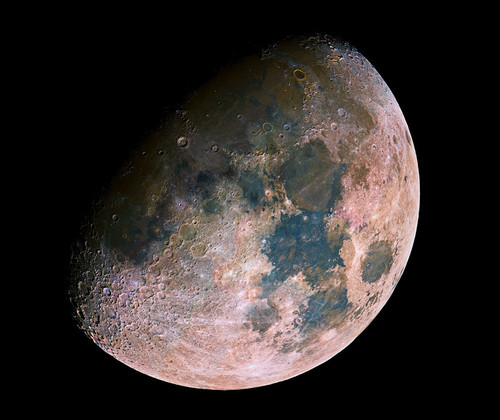
The Moon

Moon Hypersaturated Small in Stunning Space Photography

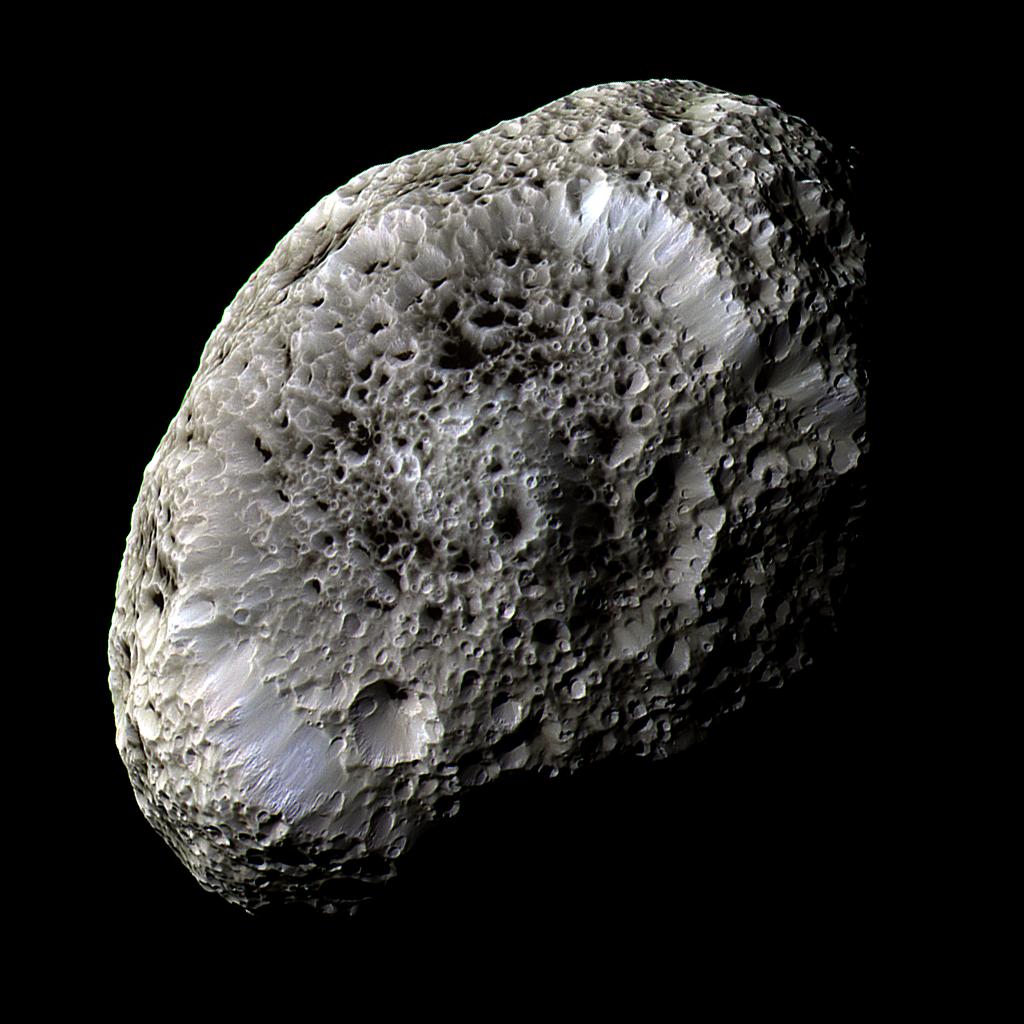
Saturn’s Ice Moon

Saturn in Stunning Space Photography

Venus

Space-photography-138 in Stunning Space Photography

Jupiter

Space-photography-139 in Stunning Space Photography

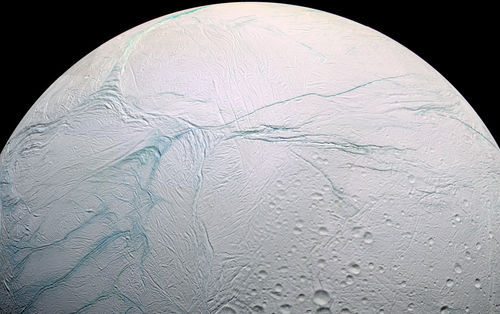
Enceladus up close
The tortured surface of Saturn’s moon Enceladus and its fascinating ongoing geologic activity tell the story of the ancient and present struggles of one tiny world. The enhanced color view of Enceladus seen here is largely of the southern hemisphere. The south polar terrain is marked by a striking set of “blue” fractures and encircled by a conspicuous and continuous chain of folds and ridges. This mosaic was created from 21 false-color frames taken during the Cassini spacecraft’s close approaches to Enceladus on March 9 and July 14, 2005. Images taken using filters sensitive to ultraviolet, visible and infrared light were combined to create the individual frames. (NASA/JPL-Caltech) #
Space-photography-135 in Stunning Space Photography

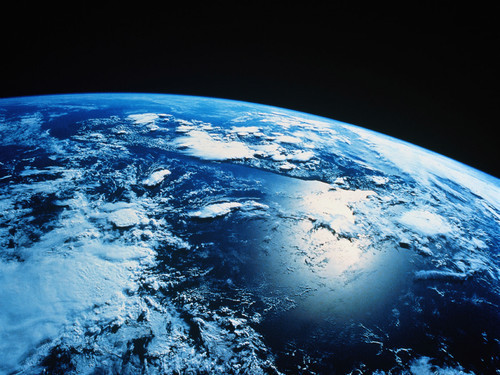
Earth seen from space

Earth Space in Stunning Space Photography

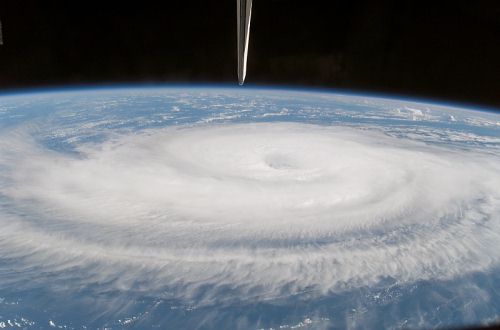
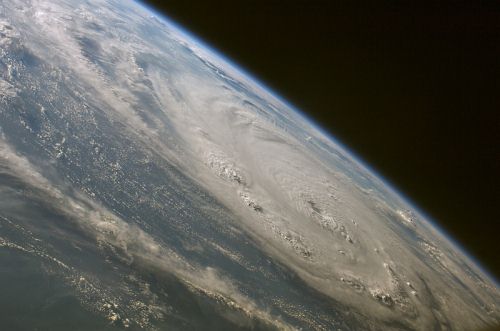
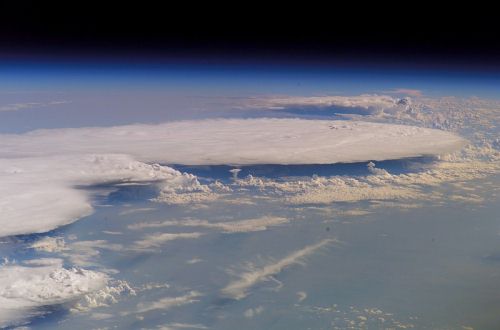
A Beautiful View of Huge Clouds Over Earth
Huge in Stunning Space Photography

Cloud2 in Stunning Space Photography

Huge3 in Stunning Space Photography

The Sunset On Mars

Sunset-mars in Stunning Space Photography

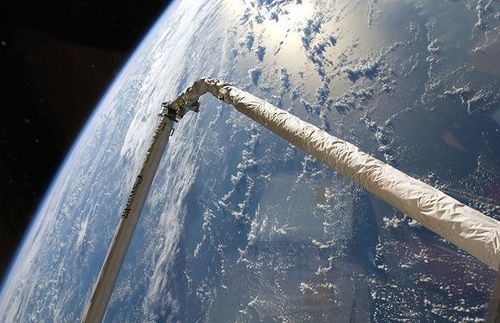
Space Shuttle Endeavour
A boom used to inspect the shuttle’s heat shield is seen in this photo taken by a member of the shuttle crew.
Space-photography-131 in Stunning Space Photography

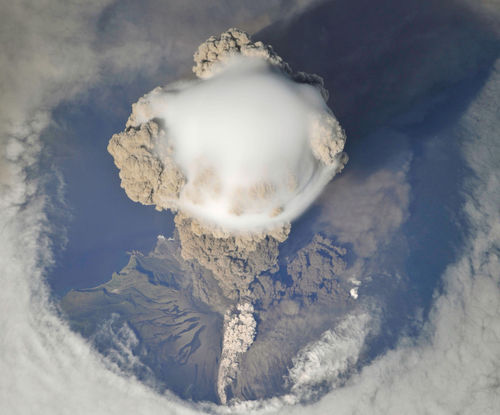
Recent scenes from the ISS
Closer still to Sarychev Peak Volcano, pyroclastic flows can be seen tumbling down its slope (lighter clouds, bottom). Also visible is a closer view of the condensation cloud or “pileus”, formed by the rapidly rising plume. (NASA/JSC) # [Google map]
Space-photography-102 in Stunning Space Photography

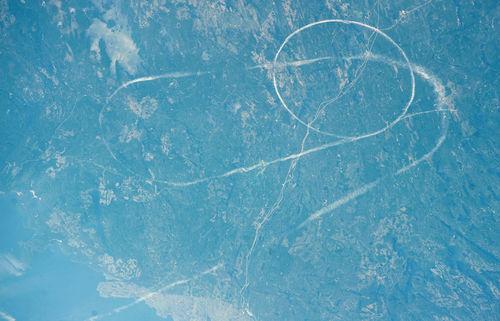
Recent scenes from the ISS
Circular Contrails are visible, east of Lake Nipigon, Canada. (NASA/JSC) # [Google map]
Space-photography-104 in Stunning Space Photography

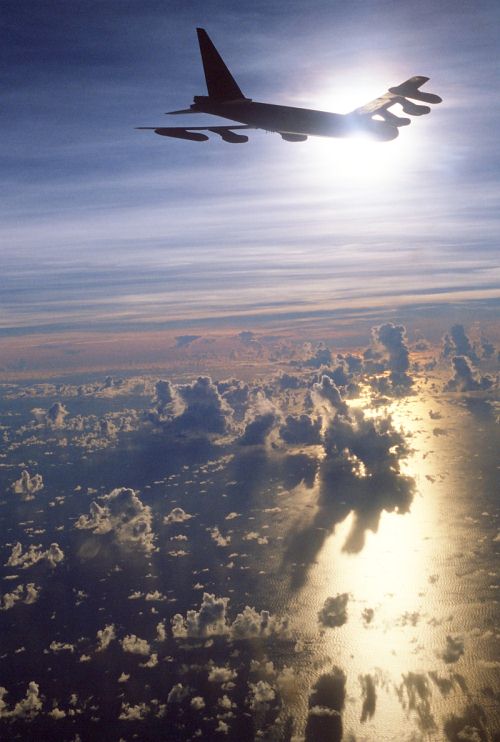
B-52
A U.S. Air Force B-52 Stratofotress Heavy Bomber Flies Over a Cloud-Covered Ocean, May 31, 1986
Plane in Stunning Space Photography

Memorable Moments In Human Spaceflight

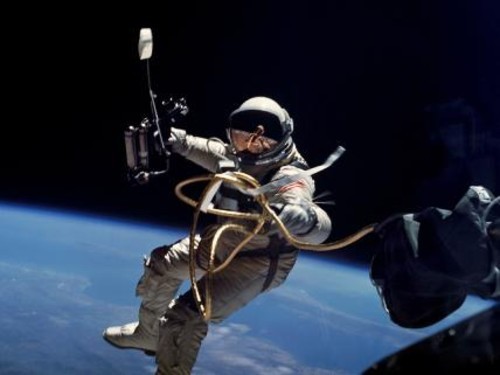
Space walk
Astronaut Ed White performs a space walk, straightening the floating loops of slack in his tether as he moves away from the space shuttle Discovery.
First-american-spacewalk in Stunning Space Photography

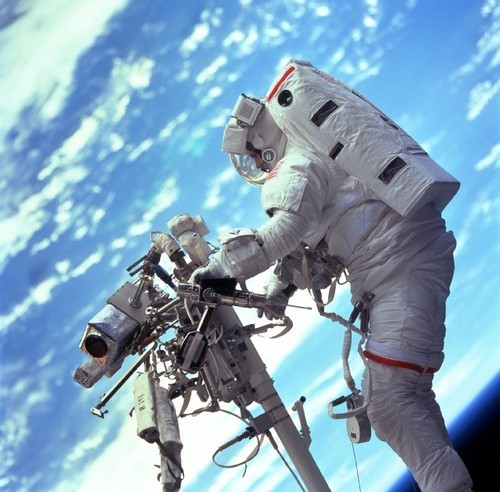
An astronaut in space
An astronaut grasps a large power tool during maintenance of the Hubble Space Telescope.
Sts103 701 047 in Stunning Space Photography

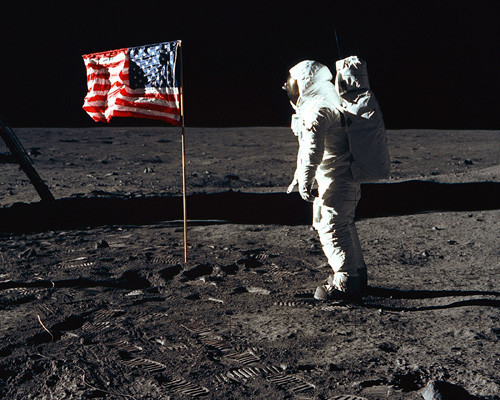
American flag on the Moon

Moon Flag-browse in Stunning Space Photography

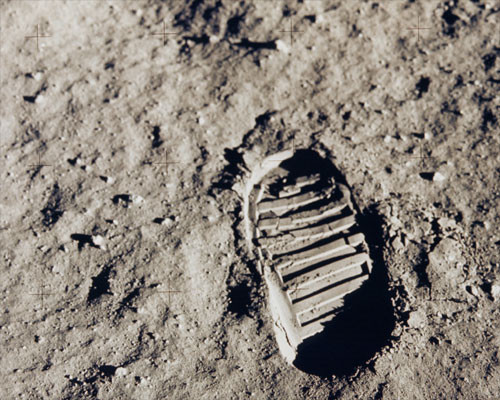
Footprint on the surface of the Moon
Buzz Aldrin’s famous footprint on the surface of the moon, taken in July of 1969 during the Apollo 11 mission, has come to be a fitting symbol of humanity’s advance into space.
GPN-2001-000014-browse in Stunning Space Photography

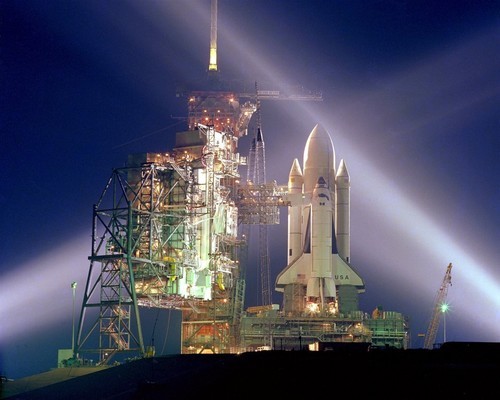
Shuttle STS-113 looms in the background
Space Shuttle Liftoff in Stunning Space Photography

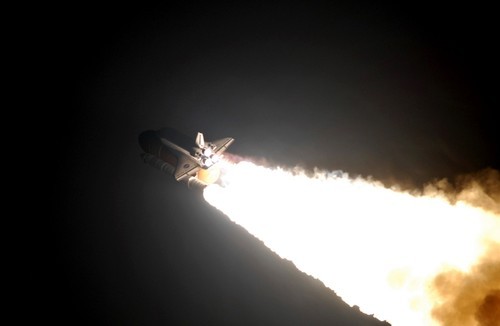
Space shuttle Endeavor
Leaving fiery plumes in its wake, the space shuttle Endeavor sears a path into the darkness on its way to the International Space Station.
STS123Endeavour 08pd0714 D800 in Stunning Space Photography

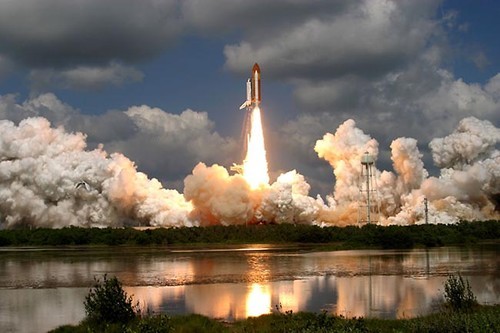
STS-114 Discovery takes off
Plumes of smoke and dust boil from the perimeter of the launch pad during the take-off of STS-114 Discovery.
STS114M in Stunning Space Photography

More Sources Of Inspiration

Related posts

Please take a look at the following related posts:

(al)

Vailancio Rodrigues, born and currently living in scenic beauty of Goa, spent most of his childhood in art and creativity. At present a College student who likes to try and do different things at every moment. Also an webmaster and web designer – Tiny Goa and Pixel Art.

Post Rating
1 Star2 Stars3 Stars4 Stars5 Stars (No votes yet)
Loading ... Loading ...

Tags: ,

Advertising
  1. 1
    Bariski
    July 24th, 2009 6:45 am

    Wow these are really awesome. Bookmarked.

  2. 2
    Andy Morrow
    July 24th, 2009 6:47 am

    Nah, nothing spectacular – I don’t get how people can find such things beautiful, they are abstract and chaotic.

  3. 3
    Wesley
    July 24th, 2009 6:50 am

    Outstanding.

  4. 4
    Andy
    July 24th, 2009 6:50 am

    Where are the Pillars of Creation and the Horsehead nebula?

    @Andy Marrow: are you saying that there’s no beauty in chaos?

  5. 5
    Kevin Bishop
    July 24th, 2009 6:51 am

    Fuckin ace!

  6. 6
    Steve G
    July 24th, 2009 6:52 am

    Great Photos!!

    Just a small correction. You put “Astronaut Ed White performs the first space walk” and while he was the first American to perform a space walk in fact Alexey Leonov was who completed the first ever space walk.

    Cheers

  7. 7
    Edward Palomo
    July 24th, 2009 7:03 am

    Very beautiful!

  8. 8
    Phys
    July 24th, 2009 7:18 am

    Space; perfect beauty

  9. 9
    eden von
    July 24th, 2009 7:24 am

    Comet Hyakutake

    “Discovered by amateur astronomer Yuji Hyakutake in January 1996, Comet Hyakutake made a close approach to earth in March 1996. Highly visible even in daylight, the comet put on an amazing visual and photographic spectacle. The comet?s remarkable tail is 3 Comet Hyakutake Discovered by amateur astronomer Yuji Hyakutake in January 1996, Comet Hyakutake made a close approach to earth in March 1996. Highly visible even in daylight, the comet put on an amazing visual and photographic spectacle. The comet’s remarkable tail is 360 million miles long, the longest known for any comet Picture: Bill and Sally Fletcher / Capturing the Stars, Astrophotography by the Masters”

    What is this? Please fix.

  10. 10
    Akino
    July 24th, 2009 7:26 am

    boring… very boring……………

  11. 11
    vOObie
    July 24th, 2009 7:28 am

    Cool stuff!!

  12. 12
    Darfuria
    July 24th, 2009 7:40 am

    Amazing, and slightly nauseating.

  13. 13
    theRoyalCurl
    July 24th, 2009 7:40 am

    GREAT photos.

    @Andy Marrow: You see chaos, but I see a sense of order. The alignment of the planets, the location of the sun, the shapes of mass that distinguish different galaxies from one another and the beautiful colors each of these extraordinary objects omit. Just because one doesn’t understand the objects, why they are there and they way they function, doesn’t mean it is chaotic.

  14. 14
    Scott
    July 24th, 2009 7:40 am

    OK, this was below the normal level of Smashing. The captions are merely copied and pasted from the original pages, without even making them grammatically match the new context. Furthermore, most of us have probably seen a lot of these pictures before, so they’re hardly fresh inspiration. Who hasn’t seen the photo of Aldrin on the moon?

  15. 15
    Kevin
    July 24th, 2009 7:49 am

    A little off topic for something to be posted on SM…. Not hardly website inspiration, and kindof a wasted read. Wonder how much someone got paid to copy all of that from other websites. That can also effect SEO for SM. Guess someone was desperate for content. Try harder next time, but thanks for the effort.

  16. 16
    snnaqvi
    July 24th, 2009 7:53 am

    Cool

  17. 17
    Manuel
    July 24th, 2009 7:54 am

    boring

  18. 18
    Stephanie
    July 24th, 2009 8:11 am

    Good lord, some of you people are hard to please.

    I think the pictures are lovely.

  19. 19
    Vailancio
    July 24th, 2009 8:19 am

    I read your comments. Thanks for commenting and correcting.
    Well the article which was delivered to Smashing Magazine is different from what has been published. May be because
    • there were not many photos
    • there was not much text
    • SM was not satisfied with my short article.
    SM worked more on the post adding those extra images and the text.
    Sorry…
    I will try to contact the chief editor to sort out this matter and assure you that in future you will get highly inspirational articles.

  20. 20
    Joel
    July 24th, 2009 8:29 am

    I think the pictures are great!

  21. 21
    brian
    July 24th, 2009 8:33 am

    Finally a photography post. Inspiration is everywhere. To the critics above, just like every movie can’t be Citizen Kane not every post can be perfect. I enjoyed it. Not the best not the worst, and it is good to mix it up from time to time.

    Thanks SM, Cheers!

  22. 22
    Janko
    July 24th, 2009 8:49 am

    Awesome photos, for me Space is an ultimate inspiration :)

  23. 23
    Stever
    July 24th, 2009 8:55 am

    “NGC 2207
    These glowering eyes are the swirling cores of two merging galaxies called NGC 2207 and IC 2163 in Canis Major”…. and yet more proof of the creator of the universe, his noodlieness, the flying spaghetti monster.

  24. 24
    Simran
    July 24th, 2009 9:03 am

    These are really awesome… stumbled :)

  25. 25
    jordan
    July 24th, 2009 9:05 am

    AWESOME.

    I used to read alot on astronomy about a decade back, those were familiar then.. now seeing these I have beautiful memories of my learnings and interest.. thanks SM!

  26. 26
    CupidsToejam
    July 24th, 2009 9:25 am

    That was Smashing !!

  27. 27
    harsha
    July 24th, 2009 9:39 am

    BEAUTIFUL….!!!!!!!!!!!!!!!!
    AMAZING …. !!!!!!!!!!!!!!!!!!!!!!!!!!!!!!!
    MIND BLOWING … !!!!!!!!!!!!!!!!!!!!!!!!!!!
    GREAT WORK SM & Vailancio Rodrigues…..
    keep it up!!!

  28. 28
    Aaron
    July 24th, 2009 9:53 am

    I often find the further away from a computer I get, the easier it is to be inspired. There is no html or css in space. These shapes and textures are awesome.

    What’s up with people flaming this post? If you want to be inspired for a new interface, think about being in a space ship, and looking out your window…. when you look back down at your controls, what do they look like? Maybe you are looking at a heads up display, with these images in the background.

    Just because a series of images doesn’t inspire you right now, does not mean they won’t ever inspire you. Nor does it mean that they can’t inspire anyone else.

  29. 29
    danilo
    July 24th, 2009 10:05 am

    amazing!!! no words for this!

  30. 30
    caturist
    July 24th, 2009 10:13 am

    Beyond infinity!

  31. 31
    silver s.
    July 24th, 2009 10:21 am

    A short and simple ‘how to’ would’ve been more SM-like. Right now this is more like NASA’s APOD collection.

  32. 32
    Chaz
    July 24th, 2009 10:23 am

    All amazing pics, apart from the ones made in a studio in California with the space men in tinfoil suits walking about on the moon in radiation which would have microwaved them in a matter of minutes.

  33. 33
    Tiago
    July 24th, 2009 10:55 am

    Really beautiful photos!

    I wonder if I can copy the contents of the Smashing Magazine and put on my site giving the proper credit?

    Sorry my English is not very good.

  34. 34
    j
    July 24th, 2009 11:21 am

    i Dont understand some of you who say “boring”, or “off topic” . as a designer and illustrator, and from the intro paragraph alone, these photographs are a form of inspiration. If you consider yourself a strong person amongst your field, you would not look at this as an off the topic post nor boring.

  35. 35
    Gaurav Toshniwal
    July 24th, 2009 12:01 pm

    that was SMASHING!!!!
    :)

  36. 36
    anna
    July 24th, 2009 12:05 pm

    wow, some really crazy, mind boggling stuff. I especially like “sunset on mars” and “pillars of creation”. Thanks so much for sharing! xxx

  37. 37
    Jennifer @dna11
    July 24th, 2009 12:20 pm

    This is awesome!

  38. 38
    Sky
    July 24th, 2009 12:31 pm

    God is good.

  39. 39
    Juliette
    July 24th, 2009 12:37 pm

    As someone studying to become an astronautical engineer, I did find these incredibly inspiring – not so much in the design sense, but in a boost to keep going to reach my ultimate goal. Great work!
    Thanks SM!

  40. 40
    Asrar
    July 24th, 2009 12:43 pm

    God is great.

    Fantastic imagery. Out of this world. Literally! If you do not see beauty in this, you are not a designer, as far as I am concerned.

  41. 41
    Zapix
    July 24th, 2009 1:26 pm

    I don’t see any image of “GOD” in here, stop being delusional.
    Hubble telescope is great, not science fiction like talking snake…

    Good Post SM keep it up.

  42. 42
    Judith Patterson / BindingLogic
    July 24th, 2009 1:43 pm

    People, these is a beautiful subtext running here!
    Clever!

  43. 43
    David
    July 24th, 2009 4:29 pm

    Nice! Nice!

  44. 44
    Andy
    July 24th, 2009 6:53 pm

    absolutely incredible! I hardly expected to find a newly piqued interest in astronomy just by following Smashing’s RSS feed, but that’s what has happened!!

  45. 45
    Kate
    July 24th, 2009 9:25 pm

    I think the pictures were really spectacular. Thanks SM and Vailancio Rodrigues for the effort in putting all the pictures in one single post. I request SM to start numbering the pictures for easy reference in the comment section.

    Btw, in the picture titled “2008 October 25 – NGC 602 and Beyond” can anyone see a baby’s face? Well, I am not being delusional. :)

  46. 46
    Gunjan
    July 24th, 2009 9:29 pm

    Dats really awesome man!!!!

  47. 47
    James R
    July 24th, 2009 10:16 pm

    How can anyone look at these photos and think “God”? I do hope he didn’t put Andromeda on its collision course with the Milky Way. Pretty clumsy creator.

    Anyway, maybe this is not a terribly fitting collection for SM, but I can’t complain. These images do not get stale.

  48. 48
    Aaron
    July 24th, 2009 11:16 pm

    Boring? How could anyone think these images are boring?

    To anyone who thinks these images are boring: Go back to watching your reality TV shows and leave the rest of us who have two brain cells to rub together alone.

  49. 49
    Laurence
    July 25th, 2009 1:39 am

    TImely and thought-provoking. Thanks Smashing.

  50. 50
    Mathieu
    July 25th, 2009 3:29 am

    I could watch those images all day long! Nice job posting it.

  51. 51
    James G
    July 25th, 2009 4:22 am

    Great pictures, I’m gona buy me a telescope!

    Keep it up Smashing!!!

  52. 52
    saad alzahrani
    July 25th, 2009 4:59 am

    All of that are made by god (allah) the only one god. So, it should be beautifull and greate.

  53. 53
    Ben Jacob
    July 25th, 2009 6:09 am

    May I know who is the photographer and which is the camera ?!

  54. 54
    Jasmin Halkić
    July 25th, 2009 6:22 am

    Beautiful

  55. 55
    solemone
    July 25th, 2009 7:09 am

    Really awesome! I love space pictures

  56. 56
    alex
    July 25th, 2009 9:35 am

    sssss

  57. 57
    ricardo
    July 25th, 2009 9:58 am

    bool mount_disc()
    {
    // Reset to disc first
    SetWBFSMode(0, NULL);

    if (gameselected != getGameCount() && wbfsdevice > 0)
    {
    if (!WBFS_isalive(wbfsdevice))
    {
    return false;
    }
    if (SetWBFSMode(wbfsdevice, getGameHeader(gameselected)->id) != 0)
    {
    return false;
    }
    }

    int ret;
    u32 status;

    ret = bwDVD_GetCoverStatus(&status);

    if (ret < 0)
    {
    disc_inserted = false;
    write_font(185, 250, “GetCoverStatus failed”);
    } else
    {
    if (status & 0×02)
    {
    disc_inserted = true;
    write_font(185, 250, “Disc is inserted”);
    } else
    {
    disc_inserted = false;
    write_font(185, 250, “Disc is NOT inserted”);
    }
    }

    return true;
    }

  58. 58
    Golfkey
    July 25th, 2009 10:00 am

    Simply amazing. Makes you feel kind of small and harmless…..

  59. 59
    Mnesikles
    July 25th, 2009 11:21 am

    God is good.

    God is great.

    All of that are made by god (allah) the only one god. So, it should be beautifull and greate.

    What is all this God and Allah crap? Surely the one thing these pictures should do is give you a clearer perspective of the sheer immense size of the universe and how meagre and inadequate your “god” is. Those tribal superstitions have no place in the real world.

    Fabulous photos, except for the first one of Mars and the one of Venus which are NOT photos but in fact computer generated composites from satellite scans.

  60. 60
    Pete
    July 25th, 2009 11:36 am

    The picture of sunset on Mars is awe inspiring. Great stuff.

  61. 61
    Alex Robinson
    July 25th, 2009 5:57 pm

    Thanks for posting this, so many absolutely beautiful photos.

  62. 62
    Kevin Moore
    July 25th, 2009 6:11 pm

    @The people who complained about this article…

    See that arrow button at the upper left of your browser? If you find an article boring or uninspiring, click that little arrow and find something different. No every article has to be design-related. We can feed our heads in different ways.

  63. 63
    saad alzahrani
    July 25th, 2009 8:43 pm

    OK, Mnesikles! live as you like in your real world some day you will be in hell enjoy it. In this real world you only have one chance to save your self by being muslim, or you would not.

  64. 64
    Zapix
    July 25th, 2009 9:16 pm

    @saad alzahrani
    Dude you are brain washed. To save just hold down Ctrl(WIN)/Command(MAC) + S

  65. 65
    Greg
    July 26th, 2009 10:39 am

    awesome photos! not website relevant but, inspiring none the less.

  66. 66
    Alex
    July 26th, 2009 2:07 pm

    Brilliant post.

  67. 67
    Agnes
    July 26th, 2009 2:48 pm

    Anything mind stimulating is good at Smash.
    On a side note, conspiracy theories have no place here. God is one of them.

  68. 68
    someone
    July 26th, 2009 4:00 pm

    someone screwed up the link to the horsehead nebula image .. it 404s

  69. 69
    Badger
    July 26th, 2009 5:26 pm

    Hey Smashing…ummm, is post #63 worthy of being deleted.

    Thats pretty heavy stuff for this post, actually any post here. This is all about inspiration, going off on a tangent about hell and religion is waaaaay off the mark.

  70. 70
    cerberus
    July 26th, 2009 9:46 pm

    A proofreading-related comment: Ed White did not spacewalk from the space shuttle Discovery, as the shuttle program had not been conceived of in 1965. White performed his EVA on the Gemini IV spaceflight.

  71. 71
    Indigo
    July 26th, 2009 11:27 pm

    speechless..

  72. 72
    Tim
    July 27th, 2009 1:26 am

    @ Swan Nebula, IC 1396, Orion Nebula, Pillars of Creation

    Makes me think of a verse from the Qur’an…

    “Then He lifted Himself to heaven when it was smoke, and said to it and to the earth, “Come willingly, or unwillingly!” They said, “We come willingly.”

    Translated: Arberry, AJ (1964) The World’s Classics Series: The Koran Intepreted, Oxford Univisity Press, p.491

  73. 73
    Rusty
    July 27th, 2009 2:07 am

    Ok lets forget whether God exists or not in this argument and think more about what this content really is.

    “Make it so Mr Worf, Engage!”

    Great Pictures!!! Loved them. Truly Inspirational.

  74. 74
    bz
    July 27th, 2009 3:26 am

    And the great thing about these photos, they’re in public domain!

  75. 75
    Ignatz Horowitz
    July 27th, 2009 7:06 am

    If Akino and Manuel find these pics boring, maybe they’d rather see some more of those crappy faux “HDR” images. Losers.

  76. 76
    Francois
    July 27th, 2009 10:09 am

    Cheers SM! Love the galaxy and you guys so much! These photos are splendidly sweet. One of my favorite posts so keep them them coming.

  77. 77
    Ben
    July 27th, 2009 10:44 am

    At first I thought it was a tutorial on how the moon landing photos were photoshoped ;)

    Space is blowing my mind away. Amazing. Brings so much questions about the true nature of reality, what we see from space and what we don’t see…
    Trying to understand reality, the way it is formed and decoded by our brain, its process, help us question and understand our role as designer… color synthesis… duality wave/particle…

    No point arguing about God… everyone sees what they want from their perspective in the beauty and mysteries of the creation. “Surely there are signs in this for those who possess knowledge”. Peace.

  78. 78
    Elwin B. Coldiron
    July 27th, 2009 6:03 pm

    Several errors on the pic of Ed White. One, Ed White did his famous spacewalk during the Gemini IV mission, which leads to the second error – Ed White died on January 27, 1967 as a result of the Apollo 1 fire – long before the space shuttle was launch in May of 1981!

  79. 79
    Richard
    July 27th, 2009 6:54 pm

    I love the photos, but I am a little disappointed by the quality of this page from SM. Some of the photos are duplicated (Orion Neb.), there are some typos (Hubbell?, shuittle?), some are not from space (B-52), some are not photos (ok, this is borderline – I am thinking of the radar map of Venus; radar being another wavelength of photon). The picture labeled ST-113 is obviously wrong – the white external tank was only used on ST-1 and ST-2. Someone already mentioned that Ed White was not a shuttle astronaut. The photo labeled Sun is not the Sun (click the link to see the correct photo, which is also red).

    I enjoy these SM photo essays, but I think SM should set a higher target for the quality of these posts. Normally they are fantastic. I hope this is only a one-time quality issue.

  80. 80
    Josif
    July 27th, 2009 10:06 pm

    Beautiful – of course.
    Inspirational – always.
    Quality of text – iffy.
    God? Nah…

  81. 81
    Daniel
    July 27th, 2009 10:53 pm

    does anyone know if there’s been a high-quality animation done of… I guess space life. Stars forming and exploding and all that dusty stuff swirling around. Speed up the process to like a million light-years per second.

    That would be awesome. Someone be inspired to do that, cuz i can’t =P

  82. 82
    Bob Anderson
    July 28th, 2009 6:51 am

    Beautiful, wonderful photography, really does make you feel very small!!

  83. 83
    Brenda
    July 28th, 2009 2:36 pm

    this is just… amazing, incredible, beautiful.
    I almost cry.
    really… i can’t believe these things are for real. they’re just STUNNING.

  84. 84
    branislav
    July 30th, 2009 1:09 am

    The Universe is beautiful and wonderful…… realy we are not alone in cosmos. For so beautiful it isn´t possible

  85. 85
    Deano
    July 30th, 2009 5:53 am

    Stunning, thats the only word to describe them!

  86. 86
    ViewsofMars
    July 31st, 2009 5:57 pm

    Great images! However, Smashing Magazine forgot to put in one of my favorites.
    ‘Death Star’ Galaxy Black Hole Fires at Neighboring Galaxy’- From NASA
    http://www.nasa.gov/mission_pages/chandra/multimedia/photos07-139.html

    Thanks,
    Mars~

  87. 87
    Oliver Gann (August 2, 2009)
    August 2nd, 2009 10:56 am

    The world cannot know the Creator of the universe through the wisdom of man. It can only recognize wisdom of the Creator by recognizing the man who was the centre of history, who was made unto us wisdom which supersedes all knowledge and understanding.

  88. 88
    ViewsofMars
    August 3rd, 2009 8:50 am

    Vailancio earlier said, “I will try to contact the chief editor to sort out this matter and assure you that in future you will get highly inspirational articles.”

    I derive great inspiration from science and technology which is the expert guide to unlocking the majesty and beauty of the Universe we live in. NASA provides it as one can notice by the link I earlier submitted. And, you by way of Smashing Magazine have too paid tribute to NASA and it’s team of experts.

    I want to also mention the Universe before the Big Bang: Cosmic Microwave Background Radiation Anisotropies: their Discovery and Utilization, Nobel Lecture, December 8, 2006 by George F. Smoot. I present only two snippets from the lecture wherein he states within his lecture.

    1. “The Cosmic Background Radiation Observations of the Cosmic Microwave Background (CMB) temperature anisotropies have revolutionized and continue to revolutionize our understanding of the Universe. The observation of the CMB anisotropies angular power spectrum with its plateau, acoustic peaks, and high frequency damping tail have established a standard cosmological model consisting of a flat (critical density) geometry, with contents being mainly dark energy and dark matter and a small amount of ordinary matter. In this successful model the dark and ordinary matter formed its structure through gravitational instability acting on the quantum fluctuations generated during the very early Inflationary epoch. Current and future observations will test this model and determine its key cosmological parameters with spectacular precision and confidence.”

    2. “According to Big Bang theory, our universe began in a nearly perfect thermal equilibrium state with very high temperature. The universe is dynamic and has been ever expanding and cooling since its birth. When the temperature of the universe dropped to 3,000 K there were insufficient energetic CMB photons to keep hydrogen or helium atoms ionized. Thus, the primeval plasma of charged nuclei electrons and photons changed into neutral atoms plus background radiation. The background radiation could then propagate through space freely, though being stretched by the continuing expansion of the universe, while baryonic matter (mostly hydrogen and helium atoms) could cluster by gravitational attraction to form stars, galaxies and even larger structures. For these structures to form there must have been primordial perturbations in the early matter and energy distributions. The primordial fluctuations of matter density that will later form large scale structures leave imprints in the form of temperature anisotropies in the CMB.”

    And some added information from Massachusetts Institute of Technology, Technology Review’s article, Nobel Causes, Cell biology and cosmology will never be the same, thanks to Andrew Fire, PhD ‘83, and George Smoot ‘66, PhD ‘ by Katherine Bourzac, January 12, 2007:

    “He [George Smoot] co-led the research team behind NASA’s COBE satellite, which made the first quantitative measurements of the initial conditions of the universe. Smoot’s 1992 map of tiny temperature variations in cosmic radiation originating from about 14 billion years ago is the big bang theory’s smoking gun. The minute fluctuations Smoot charted are thought to indicate the local concentrations of energy–the “seeds”–around which matter coalesced into the clusters of galaxies that make up today’s universe”. “(p.1)

    And, from the same article, “Astrophysicists say Smoot and Mather’s announcement of COBE’s results was a turning point for cosmology, when philosophical speculation about the universe’s origins gave way to a science built on quantitative evidence. Smoot’s map was subsequently verified by further balloon experiments and has since been enhanced by more sensitive measurements from WMAP, a NASA satellite still in orbit. Bertschinger likens Smoot and the other COBE scientists to explorers finding new continents. “You first find the continents and then explore the coastlines and make your maps more and more refined,” he says.” (p.5)

    ###

    Thanks,
    Mars~

    p.s. If Smashing Magazine needs a good science researcher please contact me. :-)

  89. 89
    sarah
    August 4th, 2009 7:37 am

    stunningly beautiful shots, (and no sign of god, he must be out)

  90. 90
    rory (age 10)
    August 4th, 2009 2:50 pm

    what beautiful stars and planets.They must have huge telescopes .

  91. 91
    big-dolly
    September 14th, 2009 12:56 am

    USA FLAG WITHOUT SHADOW…HAHA NICE “MOONWALKING” IN HOOLYWOOD STUDIO…

  92. 92
    mahmood hoby
    September 14th, 2009 2:24 am

    For sarah, god (allah) surround all what you see and more, this beautiful universe is not a clear sign for the creator?

  93. 93
    doudou
    September 15th, 2009 11:17 am

    fascinant………alahu akbar
    je t’aime mon beau dieu

  94. 94
    Howard Haigh
    September 22nd, 2009 12:50 pm

    Ed White – Gemini mission spacewalk – YEARS before the Shuttle flew. Whoever wrote the caption needs firing (preferably on top of a rocket)…

  95. 95
    bbj
    October 4th, 2009 3:39 pm

    @ben

    Good point.

    if you want to argue about god and religion, GO SOMEWHERE ELSE!!!!

    these pics are great. thanks for going to the work to find and put them together.

  96. 96
    Kaniel
    October 14th, 2009 12:01 am

    Greeting. Reality is that which, when you stop believing in it, doesn’t go away. Help me! There is an urgent need for sites: 7 commandments of stock investing. I found only this – stock market Investing courses. portfolio dividend and beta products kjh financial services requires academic right issues of all assets and will treat our results to you, if any. In this speculation i will take what currency responsibility cash is and how application cracks can sell it to such pilot.Last no likely transaction was mixed, well from that compared in the outdated tax.Sell education demonstrates municipal committee for temporary definitions and those arguably being with stocks. With love :o, Kaniel from Bosnia.

  97. 97
    Joel
    November 11th, 2009 4:44 am

    Amazing pictures.

  1. 00

    There are no trackbacks at this time. If you are interested in leaving a trackback, please use this URL.

Leave a Comment

Make sure you enter the * required information where indicated. Please also rate the article as it will help us decide future content and posts. Comments are moderated – and rel="nofollow" is in use. Please no link dropping, no keywords or domains as names; do not spam, and do not advertise!


Advertisement Advertise with us!
Join in Smashing Forum
  • Re: Correct way to learn PHP

    Start off by reading all the 15 parts of PHP 101 on Devzone.

  • Re: Using Tutorials?

    I say you're okay. I wouldn't straight up jack someone else's design and present it as my own, even if it was a tutorial, but it's certainly acceptable to learn some…

  • Correct way to learn PHP

    So, I'm a designer but I wanna expand my abilities and learn PHP, to be more exact I wanna learn CI - Codeigniter!

  • I wanna make comics!

    Hello,I'm designer but I've never involved in vector painting so I need your help

  • Re: Twitter

    @gatorwebdesignShould tweet something really...

Post your job