Making Your Mark On The Web Is Easier Than You Think
We who work on the Web live in wonderful times. In the past, we did of lot of trial-and-error learning, and the biggest hurdle was getting people to understand what we were on about. Over time, companies like Google, Yahoo, Skype, Facebook and Twitter managed to get the geeky Web into the living rooms of regular people and into the headlines of the mainstream press.
Now more than ever are there opportunities on the Web for you, as a professional, to be seen and to be found. I am a professional Web spokesperson for a large company, and I spoke at 27 conferences in 14 countries last year. I write for several magazines and blogs and have published a few books. When people ask me how I got to where I am now, my standard answer is: by releasing stuff on the Web and by listening and reacting to feedback. And you can do the same.
There are numerous ways to become known on the Web (or at least to reach out to like-minded people):
- Use social networking tools.
This is where the people are. - Write a (micro) blog.
Even if it’s just a scratch pad for your thoughts. This is how mine started. - Attend unconferences.
Everyone who goes is already a presenter, which makes it easy to begin. - Attend and speak at conferences.
Even if it means just asking questions. Conferences are where people find you. - Partner and build alliances.
If you can’t do everything on your own, find someone who completes the set of skills needed. - Comment on other people’s work.
People will find you inspiring if you ask the right questions. - Build on other people’s work.
Can something do almost exactly what you need but not quite? And it’s open source? Fix it for your specific purposes and release it for others who have the same needs. - Release free code, designs or templates.
Nothing gets you noticed more than giving out goodies. - Listen and prioritize.
We already have information overload on the Web; you can be a curator.
Let’s discuss the practical applications of each point.
Use Social Networking Tools
Social networks have the unsurprising yet beneficial feature of being social: you can actually meet people who share the same interests as you. You might stumble over one or another expert who you’d never reach by email or by contacting them through their blog. I, for example, am happy to answer a quick tweet — and maybe even use it as inspiration for a blog post — but I find myself unable, unfortunately, to answer long emails that bring up a lot of issues from people asking me to fix their code.
Social networks are great for sharing successes and ideas. Upload sketches of your products to Flickr, share an office outing on Facebook (only the photos you could show your mother, of course) or create a screencast of some of your tricks and upload them to YouTube. Whatever you put out there can potentially be sent onward by millions of people. If your productions can be found only on your website, most people won’t ever see them.
Be yourself on social networks. Write a truthful bio and list your name, location, interests and other ways to find you on the Web. I get a lot of traffic from my Twitter profile and that wouldn’t be the case if I just had a cartoon dog there and didn’t list my name.
Write a (Micro) Blog
On a blog, you can quickly share thoughts, finds, photos, anything. Not every blog has to be the refined and inspiring output of a Web expert. In the same way, a blog should not become an endless stream of boring anecdotes (like sharing the joys of having bought a new doormat this morning). My own blog, wait-till-i.com, has always been a personal scratch pad if nothing else. If I manage to code something that has always annoyed me in a new way, I’ll write a quick post. If I find someone else who has written something cool, I do the same and give my commentary on it.
Keep in mind that if you host yourself, you’ll have to update regularly and battle spam. If all you want is to jot down interesting things from time to time, just use a service like Tumblr, Soup.io or hosted WordPress.
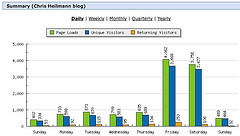
A lot of people fall into the trap of using their blog as a playground: they try out every cool CSS trick and design idea they’ve ever had and redesign it every three weeks. This is tempting, but this kind of fame is fleeting; months down the line, you’ll probably realize that falling short on content was a mistake. My blog looks minimal indeed, and I do everything one could possibly do wrong in terms of SEO, but it still had a Google Page Rank of 8, and I made good money with ads. I wrote about interesting things and people linked to my blog. If your content is interesting, your blog will show up in RSS readers and in people’s updates in social networks or shared bookmarks. You need good, sensible titles and well-structured content. Looks are not that important.
Staying up to date is important. Don’t write treaties and novels; instead, update often and regularly, and you will have a crowd of followers in no time.
Attend Unconferences
Unconferences (including BarCamp and others like it) are wonderful forums for practicing your public speaking. The cool thing about BarCamps is that everyone who goes has to give a presentation, host a discussion round or do something similar — it won’t just be you up there.
This can be a huge opportunity to speak to people and get a sense of what works for them and what doesn’t. There is no such thing as a failed talk at a BarCamp — just ones that work well and others that are less interesting. Nobody pays to see you, so nothing can be a major disappointment; and because everyone has to speak, there is no incentive to harshly criticize others. There is just no showing off.
If you get a chance to help organize a BarCamp, even better; you’ll get to network early on. Organizing events takes all kinds of people, not just hard-core developers and rock star designers.
Attend and Speak at Conferences
Attend conferences whenever you can. They are priceless opportunities to network and to get to know people who you read about “in the flesh.” It’s a great feeling to ask a question of someone you’ve learned from and respect, and it shows them their work is appreciated.
Don’t get bogged down taking notes; that’s the job of the organizers. Instead, chat a lot, give out cards or — even better — swap Twitter handles. Go with the flow of the conference; if it’s time for beer, then it’s time for beer and chatter, not time to discuss highly technical matters.
Use the time during the talks and after the conference to your advantage: tweet about the talks and what you liked about them using the official hash tag, and publish a “Conference XYZ in my view” blog post as soon as possible. Immediately after a conference, there is much discussion among those who attended, but sometimes even more among those who didn’t. You could be the person who tells the latter group what they missed, and they just might remember you for it.
Keep your eyes peeled for chances to submit proposals for conferences. Clever conference organizers offer a “B” track — alternatives to the main speakers — and that could be your chance to get a foot in the door. There is always a need for fresh speakers, so don’t be shy.
Partner and Build Alliances
If you want to crack a certain problem but you’re not sure exactly how to do it, put it out as a question. A designer and a developer working together on a demo product or article is always better than a single person trying to do everything (and feeling out of their element). Duos can be highly successful, and even if the team is formed just for a one-off, collaboration lets you deliver products while getting to know the working styles of others.
Another useful way to collaborate is to form working groups. The WaSP task forces, for example, work that way and have been immensely successful. Other developers come together under local banners, which can bring collective fame to all involved. The UK-based Britpack is an example of that, as are the Multipack or the Webkrauts in Germany.
Organize some local meet-ups and go from there. This will help you meet like-minded people, and it will help them get to know you.
Comment on the Work of Others
Leaving comments on blog posts is a great way to become known, especially when you leave articulate comments that add to the conversation or explain the subject matter further. There’s no point posting if you’re going to suck up or divert the discussion. And there are enough comments that propose solutions to CSS problems. (“Just use jQuery. Worked for me.”)
Mull over the content of the post and try to think beyond it. Decent comments include:
- “Great article. You can see that in action at XYZ.”
- “Would that also work as a solution to the problem we see at XYZ?”
- “ABC had a similar solution at XYZ, but it lacked feature X, which this solution fixes.”
You get the idea: show people other resources that back up the current solution, or point out problems in the proposed solution that need fixing and build your own.
You could also leave comments that verify or disagree with other comments that have stirred discussion. Being known as someone who prevents flame-wars or steers them to more productive channels is a good thing.
Build on the Work of Others
The wonderful thing about Web development these days is that you can easily build on what other people have done. A lot of hard work gets released as source code or as Creative Commons content.
Instead of writing your own solutions to solve problems that other people have nearly solved, extend their work to do the one thing it’s missing on your terms. Why not extend someone else’s ideas and localize them to your market? This could entail translating and changing some features (removing those that don’t apply and adding those that are needed), but it’s probably worth it. When the Yahoo User Interface Library team created its fonts.css file, it found 12px Arial to be a great readable baseline for Web typography. The Yahoo team in Hong Kong found that 12px Chinese glyphs were too small to read, so they adapted. The YUI team — based in Sunnyvale, California — would never have encountered this issue themselves, so having a local team fix it and feed back the information helped everybody involved.
There is no shame in using other people’s work. All you need to do is learn what it does and then make it better. Understanding the work you’re building on is important; if you leave everything to magic and your extensions break later, your reputation will be tarnished — especially if you can’t explain why it happened.
One problem I encountered when I released some code was that I omitted functionality that was flashy but inaccessible; people started overriding my code to make the solution flashy again. My advice, then, is: before you “fix” code, read the documentation and consider the rationale behind its structure and functionality. The original author probably had good reason to do what he or she did. Using open-source resources is as much about respecting the authors as it is about making your work easier.
Release Free Code, Designs or Templates
Once you’ve seen how easy it is to create great products by building on the skills and research of others, take part: release your products and let others have a go. This is the beauty of the Creative Commons Share-Alike license: you give stuff out but people have to mention you, and they are allowed to release your content only under the same terms and conditions.
So, go ahead: upload your code to GitHub or Google Code; put your photos on Flickr; put your designs and templates on showcase websites like deviantART. By doing this, you reach people where they already hang out, rather than hoping for them to stumble across your work by chance. Most of my contracts for paid work have come from people who found and were impressed by free things that I released.
Listen and Prioritize
A lot of content is on the Web, and keeping up to date on current happenings can be a full-time job. So, even if you don’t want to add to the already buzzing stream of information, you can make your mark by being a good content curator or librarian.
Librarians rock. They don’t know the content of all the books in the library, but they know exactly where everything is and can give you what you need in seconds. You could be that person.
Maintain a good number of RSS feeds, and bookmark them with clear simple notes and proper tags. Use social bookmarking to do the same with content that doesn’t come via RSS feeds. I follow a few people who do nothing but this and they do a splendid job.
One very successful feature of my blog is my “Things that made me happy this morning” column. In it, I list links that I found in my RSS reader and got me excited or prompted a chuckle. I do the same on the official Yahoo Developer Network blog with the Tech Thursday feature. None of this takes much time because I check a lot of websites daily anyway — but I do take time to put them in a list and write a few words about each. It helps me organize my bookmarks, and the world thanks me for it.
Summary
These are just a few ideas you can use to get yourself noticed on the Web. Most are free or fairly inexpensive, so before you spend a lot of money on a social media expert or SEO consultant, have a go on your own. Before you know it, you’ll find yourself enjoying being a known Web citizen. A lot of what I wrote about here is also available in “check box”-style advice in my free Developer Evangelism Handbook.
Don’t hesitate to comment and tell us your tricks, too!
(al)


Tony
July 2nd, 2010 1:55 amGreat article! :)
Vincent Gabriel
July 2nd, 2010 1:57 amGreat read.
Äurica Bogosavljev
July 2nd, 2010 2:10 amGreat tips!
Thanks for this.
Mathias Bynens
July 2nd, 2010 2:15 amGreat article. You can see that in action at http://www.smashingmagazine.com/2010/07/02/making-your-mark-on-the-web-is-easier-than-you-think/
Andy Kinsey
July 2nd, 2010 2:16 amGood stuff (@andykinsey)
@oliconner
July 2nd, 2010 2:22 amSometimes I find the prospect of making a Name for myself online really daunting, but I’m finding that the more I put in the more I’m getting out. These tips are great because they are open and can
be applied to all fields of online life! Thanks.
Wendell Fernandes
July 2nd, 2010 2:38 amI guess one last thing missing here is – Save money to invest in all mentioned above :) It all works fine, however, it all works easier when you invest some finances into your network.
Navneet
July 2nd, 2010 2:53 amGr8…..
Thanks
@robboerman
July 2nd, 2010 3:23 amGreat article. Nice to see people taking time to enlighten others about how they got where they got. Also the hands-on style of your tips instead if the usual academic style “you need a social marketing strategy” blahblah.
Keep up the good stuff!
Rob
div
July 2nd, 2010 3:35 amUseful tips which will definitely work… I do most of them but still needs to do the rest.
Thanks for sharing.
arnold
July 2nd, 2010 3:35 amthanks man for the inspiration…
Mike Sullivan
July 2nd, 2010 4:12 amWell organized “expression” on the topic. Useful as a guide for my learning curve as a novice to the space. Thanks
Jessie
July 2nd, 2010 4:14 amwow
another useless article. WE DO NOT WANT TO READ WANNA BE AUTHOR’S USELESS ARTICLES. Editors please please read this article in a calm place. Do you really think this is a kind of article that can be published in smashingmagazine.
come on
Chris Heilmann
July 2nd, 2010 4:22 amHello Jessie,
thank you for your comment. Care to enlighten us about how this article is useless and how it could be done better? What would you expect it to be? What other article do you enjoy instead? Do you work for another magazine and have a track record of editing articles and picking the real winners?
Apparently the editors here thought it would be a good article and commissioned me to write it – I want to make sure we don’t waste our time and get constructive and useful feedback of real writers.
Michel Bozgounov
July 2nd, 2010 5:07 am@Jessie:
Write a better one and link to it, instead of posting your useless rants here! ;-)
@Chris:
Your article is good, inspiring, and I find it useful! Just to let you know… :)
Jeremy Benaim
July 2nd, 2010 5:07 am“Founded in September 2006, Smashing Magazine delivers useful and innovative information to Web designers and developers.”
source : http://www.smashingmagazine.com/about/
In my opinion, and I’m not the only one, this article delivers useful informations…so Jessie, seriously, why do you find it useless ?
And it seems like you didn’t read it, and probably you should…to avoid leave comments like this one…
Andy Ford
July 2nd, 2010 4:41 pm@Jessie: I DO NOT WANT TO TELL YOU HOW MUCH OF AN ASSHAT YOU ARE. OH OOPS I JUST DID. KTHXBAI
@Christian Heilmann: Nicely done. I think many web designers & developers (and web design/development blogs) get carried away with the latest techniques, tools, and software and forget that getting yourself out there and making connections is just as important as the latest trick that only works in last night’s webkit nightly build.
Jessie
July 2nd, 2010 10:19 pm@Andy nice mouth you got there…
You said this is a “nicely done” article.
Can you please tell me what did you learn that you didn’t know before.
If you are trying to make money from internet, and if this article contains information that you didn’t know or even guessed before, that means you are too idiot to use internet. omg please find another job.
But hey on the other-hand this is new kind of men, right??
Saying “very nice article” to every post. I read comments and you do that too please. Read Phil’s comments, if you have that version 0.1 brain you will understand :)
but i doubt that
Chris Heilmann
July 3rd, 2010 3:46 amThis is not about making money on the internet. Never was.
Chris Heilmann
July 3rd, 2010 3:47 amThis is not about making money on the internet – never was. Might be a side effect though.
Andy Ford
July 4th, 2010 11:55 amAll hail Jessie! The smartest person ever.
No
July 2nd, 2010 7:27 pm@Chris, @Michel, @Jeremy & @Andy great to see such engagement with the community but please do not feed the trolls, seriously there’s enough of them here as it is. http://en.wikipedia.org/wiki/Troll_(Internet)
JackTT
July 7th, 2010 9:50 amTrolling aside, I do get his point.
I’ve been frequenting Smashing for about 6 months now (this being the first comment that I have posted) and it’s hard not to notice the pointless comments (“great article”, “good read” etc.) on every article posted that fail to add any substance to the topic being discussed.
As for the article itself, I find it doesn’t offer much in terms of upgrading or advancing what I already know. Maybe I’ve just grown tired of reading “how to [insert popular web 2.0 term]” articles that do a poor job of elaborating on each topic/trend.
Specifically, I would enjoy a forward thinking article that questions current web practices and provides grounds for questioning and (possible) rebuttals in the comments section. I think it adds much more of a community feel then the typical “good article” type comments and would allow for real growth within the network.
Just my 2 cents.
Oliver Stretton
July 2nd, 2010 4:27 amThis is a brilliant article, I think it collects together a lot of handy tips which I am sure in the future will be extremely helpful. Thanks
Jack
July 2nd, 2010 4:27 amChristian Hellmann, do you like mayonnaise?
See what I did there?
On a serious note, awesome article.
Chris Heilmann
July 2nd, 2010 4:30 amOnly if I can spread it on the lawn (see if you can find that reference)
Jack
July 3rd, 2010 3:51 amOh, I get it. Harry Heilmann was a baseball player nicknamed ‘the slug’. And, slugs spread slime on lawns.
I actually have no idea, sorry. ;)
Alexander Dawson
July 2nd, 2010 4:47 amExcellent article Chris, I would also add that contributing to sites other than your own can help you make a mark on the industry. With places like Smashing Magazine allowing guest authors and writers to put across useful topics, and forums aimed at the web design community already having a lot of impact, producing high quality content externally can get you recognised fairly quickly. And let’s not forget how podcasting / screen-casting is changing the face of education, producing free useful content always seems to be a winner!
Y3K
July 2nd, 2010 5:08 amAwesome post!
Love it.
DIGITALLUSH
July 2nd, 2010 5:52 amI really appreciate this article, Chris. Thank you for sharing. I couldn’t agree more on the comment mentioned above concerning it depends on how much you put into it – if you look at something like facebook, your activity goes down if you’re not ‘around’ very much. As soon as you pop back in and start posting and being active, you start to notice a lot more feedback from people. I think this can be applied to everything from facebook, to blogging to even our social lives.
I am very interested in sharing tutorials etc. but maybe an article more in depth about this idea of sharing information into the community – maybe someone could interview some people who do this already like Andrew Kremer from video co pilot or …his name eludes me from CSS Tuts?
Anyways, ignore the flames – your time and efforts are appreciated.
Vitaly Friedman
July 2nd, 2010 11:45 pmThat’s a very nice idea, let me save it for future reference and see what can be done!
Matt Haff
July 2nd, 2010 5:55 amI love how after all that you still get a ton of “Great Article” comments! Even better is when someone used your example of “You can see that in action…”
What I can add to it… Use twitter as more than just a way to announce your latest blog post! The web super stars are much more likely to engage in conversation with you if you reach out to them over Twitter… I find it a great place to learn and observe others out there and to further my knowledge of web design.
Twitter: @CWSites
Amy Haywood
July 4th, 2010 5:41 am@Matt Excellent point about Twitter. To support that: Chris Brogan suggests promoting other people 12x to every 1 self-promotional tweet. (50 Power Twitter Tips – http://blog.oneforty.com/post/705880575/chris-brogans-50-power-twitter-tips)
Ricardo Rocha
July 2nd, 2010 7:08 am“Great Article” comment comes first.
Well, I think it’s a good article, a useful one that is, some people feel the need to exchange ideas with other designers (good ones), and this article shows some ways to accomplish that. Also can show some people that Social Networks is not only about movies or girls or jokes. Cant understand the bad comment from Jessie, but who knows, keep up the good work Christian Heilmann.
“Build on the Work of Others” did remind me the Picasso expression “good artists copy, great artists steal”.
Cliff
July 2nd, 2010 7:10 amGreat article, as everyone has mentioned. These pointers help build a strong community as well, when we continue to build off of other peoples work and leave helpful comments etc.
And @matt. I totally agree. If everyone only used twitter for self promotion, it would kill the service. A great networking tool that shouldn’t be abused.
YZW
July 2nd, 2010 7:27 amThank you. It remind me you have to always working on it and looking forward to the future.
Max Luzuriaga
July 2nd, 2010 8:02 amGreat article! I’m just starting out as a web designer, and the web industry to me is a daunting place. For now, I’m just dedicating myself to learning as much as I can before diving in.
Charlie Patel
July 2nd, 2010 8:29 amI like the fact that these are all applicable and actionable to every user, rather than limited suggestions only the few tech-savvy or financially equipped can put in motion. Good stuff Chris.
Fernando de SĂĄ
July 2nd, 2010 8:30 amonly… Great!!
Thanks
Chris
July 2nd, 2010 9:26 amOr you could do a viral video like this one. Because everyone is a social media expert. LOL http://www.youtube.com/watch?v=exmwSxv7XJI
marcus
July 2nd, 2010 9:27 amdude,
i am building sites for ten years, own company and working with well known clients from eastern europe – and i can tell you it’s not that simple as you wrote.
Today’s web is business – for success you need good backgound and a lot of money OR you can be fuck’n genius and have stunning ideas.
So, think twice where would you be without yahoo
Chris Heilmann
July 2nd, 2010 4:20 pmThanks, that hurt. I’ve written my books in my freetime and most of the things that got me to where I am now where not Yahoo related. Only someone who has never worked in a large company can have such an attitude – not many companies actually allow you to do outside work like me writing for this blog. So reducing me to someone piggy-backing on the name of my employer made my work from 1997 to 2006 totally worthless. If you really think that joining a large company will get you known then you are sadly mistaken.
Floris
July 2nd, 2010 9:29 amYou mention you get good traffic for having a micro blog .. I wonder if the audience simply doesn’t think it’s a porn site. What’s the bounce rate and how long do visitors stay on the site? ” wait until I come ” …. I am a guy, so my mind is dirty enough, I would not expect a micro blog ;)
Chris
July 2nd, 2010 9:48 amYou forgot the most important item of all. Create a great product or service. People do business with companies that create great things. If you’re going to talk the talk, you better walk the walk. There are no shortcuts to success.
Chris Heilmann
July 2nd, 2010 4:22 pmWho ever claimed that this is about building a company? Getting yourself known gets you better clients and is a way into better employment. If you start a company then you have a different agenda and should follow other ways of promotion.
Jonathan Inman
July 2nd, 2010 10:06 amThanks for the straightforward tips and advice. I like that they aren’t “get rich quick” gimmicks. Work hard, help others and don’t be afraid to stick out.
Manu Parashar
July 2nd, 2010 11:08 amThanks Christian, that’s a great article
Aravind
July 2nd, 2010 12:30 pmGreat Article.
cancel bubble
July 2nd, 2010 12:45 pm36th!
BTW, I’m making my mark (lulz) by being a good content curator or librarian: cancelbubble.com
Bharat KV
July 2nd, 2010 1:15 pmNice of you sharing such valuable experiences… Well-written and well composed…
As you say today the opportunities are quite open… all we need to do is be in the right place at the right time and do the right thing…!!
Enk.
July 2nd, 2010 1:29 pmGreat read.. really interesting article and yeah useful too.
Thanks for sharing ! :)
Zizzamia
July 2nd, 2010 3:18 pmI really like how you live the web!
DK
July 2nd, 2010 3:52 pmChristian,
Thanks for this. I’m a Gen X’er so not as used to the Internet for connecting as younger folks. So here’s my question. What do you think, honestly: is the old-school, face-to-face approach to networking and “making it” dead?
Cheers,
@dipikakohli
Chris Heilmann
July 2nd, 2010 4:24 pmFace to face is very important still, but you also need to ensure you follow up online. I leave every conference with about 50 business cards and seriously have no time to type them in – so if you get mine, send me an email – or even better – just do it live with your mobiles.
Will put more together on this subject and tweet you then.
Phill
July 2nd, 2010 4:37 pmBoring, poorly constructed and pointless. I sometimes wonder if the people that read these articles even read them before replying, what’s so great about it?
“Attend and speak at conferences” – Never mind learning how to speak in public, what to speak about or how to present yourself. How about listing some conferences, experiences with them and how first timers could learn more about them first?
This just seems to be a ‘look at me’ post, it’s really lame, there is no guts of the article and you just reiterate on the social-circle-jerk that the internet has become again and again, a bunch of wannabe trendsetters tweeting crap to each other.
“Build on the Work of Others” – so as the title suggests are we making the mark or are we making the mark using somebody elses work? It’s like, do this, go here, learn this – but in the end just copy somebody else then take the credit for it when you’ve changed it enough.
Then there’s this comment from a user: “Nice of you sharing such valuable experiences” – what experiences? He even refereed to conferences as ‘Conference X-Y-Z’.
Seriously, these articles are getting worse and worse from this same author.
George Egonut
July 2nd, 2010 5:55 pmThe points he made are pretty clear.
Attending and speaking at conferences: many people never even give this a second thought, as they think it’s for the big-shots who have a couple hundred thousand people following their blog. He’s informing you that you don’t need to be that person: just someone with something to say that others might want to hear
Building on the work of others: ever hear of a little thing called Linux? You probably wouldn’t be interested. It’s just of bunch of wannabe trendsetters (like Canonical (Ubuntu) and Red Hat) who took credit for what is really this guy Linus Torvald’s work.
It’s true, he could have told you how to learn how to speak properly in order to do so at a conference. He could have told you how to find said conferences. He could have told you how to use those confusing buttons on Google’s home page to find websites with said information, and how to turn on your computer and bring up that hard-to-find site.
Smashing could also end every post with a little tutorial about how to leave a comment, including links to inline spell-checkers and some grammar tutorials. Alas, there’s only so much space.
Seriously, I’d like to just see one naysayer (the same folks that reply month after to month to the desktop wallpapers with “meh, my grandma do betters lolz”) stop wasting their time with grammatically-deficient whining and write an article as good as what they claim the one they’re crying about should be.
Phill
July 2nd, 2010 6:09 pmParagraph 1: Such as? You’re as bad as him.
P2: Right, so this is a Linux site now, I could have sworn it was about web design / technologies. Let’s not let the correct subject matter get in the way of inadvertently insulting somebody though.
P3: Typical, refer to google. In that case don’t even have SM, we can find all the relevant information on google. Oh wait a minute, google would bring up this site, with the same article, with no information relating to what he is talking about.
P4: Well it’s clear the only comment anyone wants here is a positive one regardless if the article is utter drivel, there’s a good way of testing this. Post any opinion you have that can be taken as negative and a troll like you will pop up, guaranteed.
P5: I don’t write articles, I don’t try to, so I don’t have to be good at it. I read them, I look for USEFUL and INFORMED articles that have SUBSTANCE. If a pilot crashes a plane and everyone calls him a bad pilot, do they have to be able to fly the plane to have that opinion? Get a clue and stop defending useless crap, then come back when you have an argument.
O'Ryan
July 2nd, 2010 8:14 pm@Phill bahahaha!
first you say:
“are we making the mark or are we making the mark using somebody elses work? Itâs like, do this, go here, learn this â but in the end just copy somebody else then take the credit for it when youâve changed it enough.”
then you say:
“I donât write articles, I donât try to, so I donât have to be good at it. I read them, I look for USEFUL and INFORMED articles that have SUBSTANCE.”
Hmm… to me that sounds like your looking to “Build on the work of others”
And actually, Linux is technology a web designer should probably have knowledge of especially since a good percentage of your projects will be hosted in the environment.
You seem to try and sound like an expert… strange because I have definitely heard of Chris… But Phill, hmm… nope doesn’t ring a bell. I would say Chris has made his mark on the web. Not only that but he is gracious enough to share the expertise he has garnered over the years. I would say out of the two of you Chris is the only one qualified to share on this topic.
So Phill, nice try but, you just come across as a big cry baby that can’t seem to stop crying about how his free meal wasn’t up to his expectations.
Phill
July 2nd, 2010 10:05 pmUh yeh, if you actually want to read that first bit of your post it refers to how he contradicted himself using his opinions. Keywords here *his* and *opinions* – so if I want to read articles to better myself (without stealing other peoples work) then I will.
The site isn’t LINUX specific. Jesus fucking christ.
It just goes to show how many immature little children plague these design sites. As for being qualified to talk about a topic, it also just goes to show how narrow minded you are. You can convince yourself that useless articles such as these help you in some way all you like, because when your 40 and still designing pet store websites for $20 a pop you’ll realize how originality and educating yourself properly on these topics would have helped.
O'Ryan
July 8th, 2010 2:15 pmOooh Noo Phill you caught me!
haha you’re correct that this site is not Linux specific, but, I will type it again since you must not know how to read, Linux is a very useful technology to know if your a web designer. Not that you must know it or that you should, but that it IS USEFUL. Imagine a site about web design mentioning Linux!!! What are they thinking!
I love that you prove my points by reverting to profanity and petty insults.
Phill: “It just goes to show how many immature little children plague these design sites.”
well… you said it not me.
And don’t you worry your little self about my future, I live quite well, solely off of my creatively educated since of design.
JackTT
July 9th, 2010 11:23 amPhil is 100% correct.
+1,000,000,000 for “there is no guts of the article and you just reiterate on the social-circle-jerk that the internet has become again and again, a bunch of wannabe trendsetters tweeting crap to each other.”
edited: not worth the time…
Reev
July 2nd, 2010 7:31 pmHope to read more articles from you Christian! Great job.
Hastimal Shah
July 2nd, 2010 8:11 pmGreat Tips…
Thanks a lot, waiting for more articles from you..
Weakchild
July 2nd, 2010 10:45 pmAwesome article Chris!
This really inspired me to start creating stuff that I’d share with the community….The same message that Seth Godin talks about in “Linchpin” and Gary Vaynerchuck in “Crush It”..
I used to have the selfish mindset of holding on to stuff for myself, that sharing will only diminish my competitive edge, but now I’m more psyched about being part of a community that freely exchanges ideas and creations.
Laurentiu Danu
July 3rd, 2010 1:41 amI agree with you Christian: “making your mark on the web is easier” and the most important of all is personal branding.
But becoming recognized by the community as a professional requires a huge amount of work and a good marketing plan.
Greetings from Romania and waiting for more articles from you.
Pinal
July 3rd, 2010 2:12 amGreat Artical… Really helpful
Greg Babula
July 3rd, 2010 5:09 amI would love to attend all these conferences, but the good ones are ridiculously expensive!
kunle olayinka
July 3rd, 2010 7:43 amNice article i really like this.
Brujo II
July 3rd, 2010 9:39 amGreat read. Practical and useful ideas too.
GUS the Gamer
July 3rd, 2010 9:53 amPlease no link dropping, no keywords or domains as names; do not spam, and do not advertise, don’t breathe!
Luis
July 3rd, 2010 1:47 pmThis article it really convinced me, specially because surprisingly I met Christian recently in “La Red Innova” in Madrid. Great article!
peter
July 3rd, 2010 9:27 pmThanks for this interesting and useful information.
wAp
July 3rd, 2010 11:18 pmThis Aritcal guide us to several fields which we have to make our quick attention
Christopher Mansfield
July 4th, 2010 1:17 amA good summary, thanks very much !
karl escritt
July 4th, 2010 1:22 pmGreat, some really excellent advice. Just took a look at the London barcamp, thanks for pointing this out.
Mohsinfancy
July 4th, 2010 9:25 pmGreat article.. its True that its easy to mark your presence on the web..
Their is no need to make your website we can use different services like face book, twitter, blogger etc to mark you presence. .. i personal writes blog and recently i lunch my website .i am a pakistani graphic designer. working freelance to i have to be present on the web all time Check: mohsinfancy.com/
Momekh
July 5th, 2010 3:44 amHey, the link to your blog wait-till-i.com is not working. The page just opens up and that’s that.
But very ‘inspiring’ post. It just boils down to ‘action’, doesn’t it. Hmmm…
Good luck,
M.
- the original blogstarta (blogstarta.com)
Chris Heilmann
July 6th, 2010 3:35 amThat was a cache issue. Fixed now :)
Katerina
July 5th, 2010 4:14 amVery usefull article !
Maik Wagner
July 5th, 2010 5:45 amInspiring as always! It was overdue to read something like that. And it worked. Commented and barcamp visited in just two days… Alter Evangelist, Du 8>)
ujwol
July 5th, 2010 8:14 amgreat article
Mirko Bonadei
July 5th, 2010 11:24 amGreat Article.
We are very lucky to live our lives in the Internet era.
Chris
July 6th, 2010 10:14 am@chris Reread please – I said “Create a great product or service.” In order for us to make a living, we all create and sell a product or service whether it is tangible or intangible through an individual or corporate channel.
All I am saying is to make sure you can walk the walk before you talk the talk. Just like anything in life, you can\’t have one without the other.
If I\’m wrong, then I apologize. I don\’t think the majority of us aspire to be evangelists or speakers.
Chris
July 6th, 2010 11:02 amIn addition, it\’s probably important to leave your “self” out of your own articles. It sounds a little too much like you are tooting your own horn. You will find a nice article explaining it here: http://bit.ly/aCv1lY
Tevi Hirschhorn
July 6th, 2010 2:14 pmToo true – many web folk forget the importance of real-world marketing. Business people, too, often think that once they\’ve paid for a website, the money should start rolling in. Getting known essentially boils down to just meeting new people, however you can pull that off.
Thanks for tips – I\’d not thought of unconferences.
As far as the people who are whining about \”working off of the work of others,\” there are a few really great free, open-source, web programs such as WordPress, Drupal, and the like. Creating a plugin or module, or a theme, and the like, and giving it away is a great way to give to the community and gain recognition.
Quit your whining and try to learn from others.
Simon
July 7th, 2010 8:27 amThanks for giving out this helpful information. Will look into working on your suggestions :)
Tom Something
July 7th, 2010 12:44 pmThere are so many articles these days written by web professionals who simply pat themselves on the back while pretending to offer assistance to budding developers. It’s refreshing to see an article like this, that is genuine and helpful. Thank you for sharing your insight.
James Carter
July 7th, 2010 1:12 pmWhere do you find the time?
Ganesh Arjun
July 7th, 2010 7:24 pmThank you..
Vivek
July 8th, 2010 3:58 amits a very interesting and informative article..
ll try to implement it wherever require.
-cheers
Vivek Sonavane
Francia
July 8th, 2010 8:47 amVery good, thanks for the advice :) from Francia in Jamaica
hold card
July 8th, 2010 7:58 pmVery well written and easy to understand for such tech stuff. Thank you! Yes, I agree with the prior reader, where do you find the time! Have a fantastic evening! Thank you for your help. Much appreciated from a still confused beginner blogger.
Chris Heilmann
July 9th, 2010 3:56 amI find the time mainly by not having a TV and writing on trains and other public transport :)
Sani Rai
July 11th, 2010 12:16 amNice article….very informative…just what I was lookin for…
fabian alcantara
July 11th, 2010 6:56 pmTalk about great timing. I was actually looking at some items on this topic.
Sumit Kumar
July 13th, 2010 2:40 amThanks for writing very usefull article. This will help us to grow. I like to read these kind of articles which is usefull and innovative.
Looking for Great Article again in the future.
Sumit (HSK)
Ruge
July 13th, 2010 2:51 amAs someone who at this moment is thinking of ways to make a mark on the internet this is the perfect article to get me going. I just needed someone to remind me of the great tools there are!
Carolina
July 18th, 2010 9:45 pmHi, it was a really good feedback article.. i just recently graduated from graphic design and… things have not really worked out the way i thought they would… still I’m not giving up, so thanks for the tips.. thumbs up!
Mohammad Nadeem
July 19th, 2010 5:34 amgreat post
………
Josh Aronoff
July 19th, 2010 9:56 amwhat i’ve found to work lately, is to just continue to produce (writing, patterns, art, etc.) and also just promoting on stumbleupon, twitter and facebook.
I’ve noticed that to stop worry about stuff, and it pretty much takes care of itself.
satyam
July 21st, 2010 12:29 amit is really good and thanks for the tips..Satyam
Eduardo Dx
July 25th, 2010 4:45 pmGreat! I summed it up pretty well.
In a few words is just participating actively on a comunity.
Thanks!
Eduardo Dx
July 25th, 2010 4:46 pmGreat! You summed it up pretty well.
In a few words is just participating actively on a comunity.
Thanks!
Jude Osborn
August 2nd, 2010 9:21 amExcellent article. You inspired me to get back to micro blogging — an art I lost a few years ago for some reason.
Schedule
October 29th, 2010 9:42 pmYou you could change the page subject Making Your Mark On The Web Is Easier Than You Think – Smashing Magazine to more catching for your webpage you write. I liked the blog post yet.

RobbyDesigns
February 10th, 2011 9:35 pmThis has to be the best article I’ve ever read on SmashingMag, fantastic tips I will take on board, thanks millions.
Gaurav Mishra
September 6th, 2011 11:36 pm“ABC XYZ….. ”
:-D
nice examples
baidu
September 7th, 2011 9:08 pmThis is a great job on this article. Information like this should be shared. Im impressed by your views and would love to see more of this content. Thank you for your intelligently written content.