Does The Future Of The Internet Have Room For Web Designers?

Advertisement

Update (27.09.2010): this article caused quite a heated debate in the design community. Please read the rebuttal of this article, called I Want To Be A Web Designer When I Grow Up here, at Smashing Magazine.

— Vitaly Friedman, editor-in-chief of Smashing Magazine

It seems that new posts about what the Internet has in store for us down the road pop up every week or two. Some propose that the Internet will deliver more of the same, but different somehow (it’s usually ambiguous just how), while others propose such radical changes that it’s hard to believe they could ever happen. And the truth is, none of us really know what will happen with the Internet in 10 or 15 years.

After all, it was only a little more than 15 years ago that Clifford Stoll wrote the now-infamous “The Internet? Bah!” post (subtitled: “Hype Alert, Why Cyberspace Isn’t, and Will Never Be, Nirvana”). In that post he detailed why a lot of things just wouldn’t happen online but most of which are now commonplace.

As web designers and developers, what the future holds for the Internet is imperative for our livelihoods. If the Internet has radical changes in store for us, we need to understand how they might effect what we do to earn a living and what we’ll need to do to adapt and keep pace — if that’s even possible.

The Future is Content and Data

Look at your mobile phone. If you’re like most tech-savvy consumers, you’ve likely got a smartphone of the Apple or Android variety (or maybe a Blackberry, especially if you’re working in the corporate world). Most of us use our smartphones on a near-constant basis doing everything from checking email to working on projects to entertaining ourselves. How much of all that do you do in your phone’s browser?

The answer is probably “not much”.

We use an app to check email. We use the Facebook app for status updates. We use Twidroid or TweetDeck or the official Twitter app for tweeting. We use a YouTube app to watch videos. We use the Pandora or Last.fm apps for streaming music.
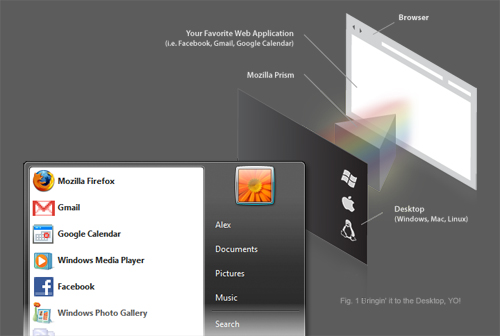

Mozilla Prism is an application that lets users split web applications out of their browser and run them directly on their desktop. Is this the future of mobile applications?

It’s likely a similar scenario on our desktop or laptop computer. We use apps for a lot of our common Internet-based activities. We even have options to create our own apps with single-site browsers (like Fluid or Prism). And Google’s Chrome OS is just around the corner with devices already planned to use the web-based OS.

Content is king and design is becoming less relevant – we’re already seeing this with mobile themes

Look at how many WordPress sites use one of less than a handful of standard mobile themes. It doesn’t matter what the site looks like in a standard browser; open it up in your mobile browser and you’re often greeted with a page that looks exactly like the last 10 sites you visited.

This is because for most users, design is irrelevant. That’s not to say they don’t appreciate good design. Many of them do (and many of them don’t). But they’re on a website because of the content. They don’t care about visual design, and they don’t care about interaction designer that much, either: as long as the design doesn’t give them a headache or interfere with their ability to find what they want, they don’t really care how exactly it looks like or how exactly it is working. The most widely-used mobile themes offer the content in an optimized format for mobile viewing. That makes users happy.

It is not just apps that reduce the need to visit a website

It’s not just apps that will pull data directly, without the need for an actual website. Devices are making real headway in this manner. We have cars now that can pull information from the Internet for you. Soon devices for Google TV will be out in the marketplace, pulling video content from the Internet without the need to visit a website.
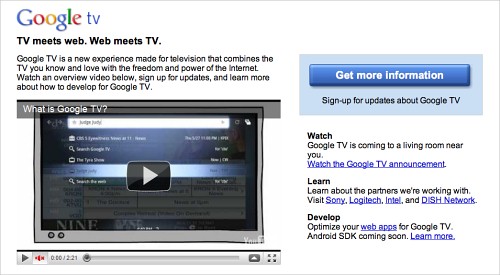
Google TV
Soon devices for Google TV will be out in the marketplace, pulling video content from the Internet without the need to visit a website.

It’s likely that more devices will add Internet integration in the near future. At some point we’ll probably have refrigerators that automatically generate shopping lists for us (including any available coupons and where the best prices can be found that week): based on previous shopping habits; what we currently have; and our average usage rates for different foods. This is just one example of how online data and content will become infinitely more important than the designs surrounding that content.

Content Will Be Funneled Through a Handful of Sources

It’s impractical to have apps for every website we visit. Most of us visit hundreds or thousands of websites every year. What’s more likely to happen is that most of our content will be delivered through aggregators.

Who will these aggregators be?

Currently, there are three big players on the Internet that are likely to continue to be the primary content delivery platforms. Who are they? Twitter, Facebook and Google. Think about where you spend most of your time online and you’re likely going to find that those are the sites you visit most often. This market share is only going to increase.

Facebook is already trying to be the Internet

Look at how much content is now aggregated through Facebook. They have pages for virtually every topic under the sun (most of which have canned content taken directly from Wikipedia). Post a YouTube video to Facebook and your friends can watch it right there, without ever leaving Facebook. Even third-party applications like Networked Blogs stick pretty closely to the Facebook environment.
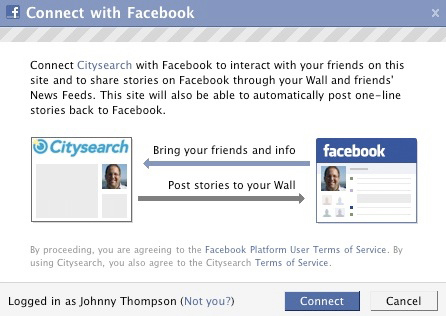
Facebook apps
Post a YouTube video to Facebook and your friends can watch it right there, without ever leaving Facebook. Even third-party applications like Networked Blogs stick pretty closely to the Facebook environment.

Besides that, look at the gaming environment that’s cropped up on Facebook. I’ve lost track of how many updates in my news feed are directly related to games like Farmville or Mafia Wars. Facebook has grown into such a complete online ecosystem that many users might never find a reason to leave. Facebook shows no signs of slowing down either. They’re expanding their business and their reach – a trend that’s likely to continue for as long as they can sustain it.

Google wants everything to go through them

Google already has its hands in virtually everything online. It has two operating systems (Chrome OS and Android), its own browser, web applications that allow you to do a lot of things that used to be limited to desktop applications and the most-used search engine in the world put it in a pretty solid position to continue to be a major stakeholder in the future Internet.

Google is also one of the more forward thinking and active participants in Internet policy and technology. It has a vested interest in how the Internet shapes up in coming years and will push to shape that Internet in a way that benefits its business model. I can see a future where Google doesn’t just offer a list of search engine results, but actually shows you the content you’re looking for without ever leaving their sites.
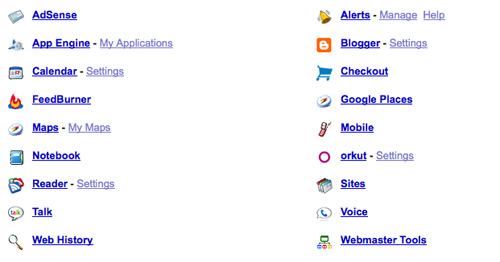
If you look at Google’s complete product offering, it’s easy to see that it wants to be the primary online destination for most people (or maybe even all people). Google is firmly positioned in blogging, video, search, business applications, webmaster tools, ecommerce and even phone services – expect its reach to expand even more.

Is there room for other services?

There are always going to be innovative startups online. Most will fall by the wayside soon after they’re started or are absorbed into other established companies. A select few will go on to become major influencers online. It’s unclear at the moment where there’s room for new companies and services online. The idea of more location-based services (going beyond FourSquare, et al) is probably the most promising as well as services that go beyond normal Internet activities and integrate into daily life more.

Function Will Prevail over Form

If everyone is accessing web content through an app rather than a browser, then no one will care what a website looks like. The way it functions and the content it delivers will become the paramount concerns to users. There will be no more balancing of form and function on a website; function will override form.

Form will retain a place in the design of apps. In all likelihood, content will be open to the extent that APIs will be developed that anyone can then use in application development – so the form in which an app displays that data will become what separates the good from the bad, the great from the mediocre.

There are Advantages…

There are some big advantages to this kind of model where apps and a small number of content aggregators deliver and control most of the content online. One issue is bandwidth. If there’s no design being transferred to a device (because the application on the device already includes all the design elements), that saves bandwidth. As more and more activities are done online, we’re going to have to consider infrastructure costs. Lower bandwidth use per site will result in more bandwidth available.

Another advantage is that there’s more potential for user control. Users can define their preferences on their device and see content in the way they want. This especially has positive implications when it comes to accessibility. Those who need special settings because of a disability will no longer have issues with unviewable content.

Technical advantages

Let’s face it: the technologies upon which the Internet is built aren’t the most efficient ones available. Part of this has to do with building upon infrastructure that isn’t as good as it could be. The Internet has to be backwards-compatible over very long periods of time. We can’t just suddenly change things, even if it is to make things work better in the future, if it causes half the sites out there to no longer function.

With a content-based Internet that uses device-side applications for displaying data and performing tasks, we can create more efficient applications. We won’t need to make sure each application can handle a huge variety of content and processes (as browsers currently have to do), because we’ll know exactly the kinds of data that application will need to process.

What Does It Mean for Users?

Practically, users will have a more integrated experience with the content they view and the services they use online. The Internet will become even more a part of everyday life, incorporated to such an extent that it’s seamless. It’s already happening in bits and pieces.

Again, look at your phone. You probably use apps or widgets for things like checking the weather or generating a shopping list. These apps will become more integrated and will work better with the data available online. For example, you could use that shopping list to automatically find the best prices on products, either online or at your local stores. In all likelihood, that data would be aggregated through a service like Google Base.

One profile fits all

An online profile will become even more important for users. Rather than setting up every device or service you have, you’ll simply authorize the device to grab your profile and preference information from the web. Security and privacy experts will have a field day with this, but most consumers will opt to use it anyway if it means the difference between going through a two-hour manual setup process or clicking a button and authorizing it to set everything up automatically.

What Does It Mean for the Web Design Industry?

So what does this all boil down to? If the web becomes app-based and content-based, where do web designers fit in — if at all? The bad news is that if the Internet starts relying much more heavily on access via app rather than browser, there’s going to be a lot less demand for web designers. Companies won’t see the point in hiring someone to create an entirely bespoke website when they can just use a template and then feed all their content to Google and Facebook and Twitter.

Developers, on the other hand, will likely see a boom in business. A lot of money will be exchanging hands for apps that work better than current offerings and apps that might be able to undermine the big players. Of course, all these apps also need design work, but it will be a lot less demand than there is now for website design. It’s likely a lot of designers will need to expand their offerings to cater to content creation rather than just web design.

Websites aren’t going to go away any time soon. It’s likely that there will be a bigger market for templates and themes as companies stop paying for custom designs. And there will be certain kinds of sites (like portfolios or art projects) that will always want to be designed.

Multimedia content will also still have a strong market. Those who can produce high-quality videos and even web-based apps (for things like Chrome OS) will have a strong business for years to come.

Who Wins in All This?

If there’s a definite winner in this possible future Internet, it is the content creators. If the only thing that sets one company or organization apart from their competition, then those who can create high-quality content will be in high demand. The thousands of dollars that a company used to be spent on website design will be funneled into website content instead.

Users will also benefit as they’ll have a more integrated, customized experience. Their version of the Internet will be tailored specifically to them, based on their own wants and needs. They’ll get content in the manner they prefer and find most usable.

Application developers will also likely win in all this. While the APIs and the data available will be pretty standardized, the manner in which it’s displayed will become a battleground of creativity. Innovation here will be key, doing something different and better than what everyone else is doing is the only way an app will stand out.

Update

Update (26.09.2010): We’ve got quite many negative responses for this article, like Web Designers Won’t Die Out, They Will Transition. At Smashing Magazine, we are aiming for strong, high quality articles and after reading the article we do think that it raises some valid points, and now in retrospect we understand why the title and the content may appear to be aggressive. We also can see where the accusation of trying to be sensationalist comes from. But it was never the intention of the article.

We are trying to do our best to provide only relevant and high qualilty content, but apparently sometimes we see our things differently than our readers do. We do appreciate constructive criticism like the above post on Drawar. And we are listening to what you are saying. And we will certainly keep it in mind for our future articles.

Update (27.09.2010): this article caused quite a heated debate in the design community. Please read the rebuttal of this article, called I Want To Be A Web Designer When I Grow Up here, at Smashing Magazine.

— Vitaly Friedman, editor-in-chief of Smashing Magazine

(afb)

Cameron Chapman is a professional Web and graphic designer with over 6 years of experience. She writes for a number of blogs, including her own, Cameron Chapman On Writing. She’s also the author of The Smashing Idea Book: From Inspiration to Application.

  1. 201

    This is one of the most submissive articles I’ve read in my life. Not everyone is willing to roll over and die for monopolistic giants like Google and Facebook.

    The author writes like a lobbyist for the said giants rather than as an objective observer appraising the trajectory of the internet.

    +3
  2. 202

    Cameron, it is an interesting concept. However your experience of 6 years is still not enough to take your opinion too seriously. Website templates will never be the choice for any company who wants to create their own brand, so the idea that people will just start using templates shows your lack of knowledge with marketing and branding, not to mention the importance of individualism within your business. Can you really see McDonald’s, Burger King, and Windy’s all using the same website but their own content? Take it from someone who has been doing this work for 15 years, and this year has been my busiest, that “web designers” will not be going anywhere. In fact, seeing that you are not a web designer you show a lack of knowledge in what we do. We are not all pixel pushers. Perhaps your article would be better received making the distinction between a self proclaimed web designer who purchased FrontPage on sale, and then those of us who only write code in notebook without a program.

    FrontPage owners went out of business 5 years ago, but those of us who do quality work will always have a place in the industry. And this industry will grow as companies realize they do not want to be template oriented and they want a professional web designer, not a hobbyist. I can not tell you how many clients just this year have hired me to take the website their cousin did for free and make it a professional website.

    I think you have a gap in your knowledge and experience within the web design industry and the future needs, but with only 6 years experience it is understandable. iTunes was predicted to shut down the music industry by now, yet people are leaving iTunes now and going back to the music stores. Do not count your chickens before they hatch, and any designer who is jumping on your bandwagon and thinking about designing bulk templates will find themselves selling their designs on a template website for a .10 cent commission per download.

    We need more qualified web designers, those will be what the demand is for in the near future. Uncle Bobby and his $100 FrontPage websites will be a thing of the past. There is a God! Now if Microsoft can render valid HTML I will be in developer heaven.

    +5
  3. 203

    Art won’t die and web designers won’t die :)

    +2
  4. 204

    New career? Well maybe like the function over ruling form principle, we see we can be reversed into a better role in the same career.

    In the physical world we make an architectural plan BEFORE we build a house.

    In web history, we built a house BEFORE we planned it.

    Then 10 years went buy, and every one has the gas peddle to the floor from that mode (a large population with tech slums which will collapse) so, hit the brakes, and look at the map:

    What we learn is ironic and bass-ackwards, but actually hopeful:

    NEW!: In the VIRTUAL world we make an architectural plan BEFORE we build a house we LEARNED.

    See? We have been laying brick and breaking back, when we are the architects.

    So, shift gears and hat, give the hard hat a break, and now sell the plan.
    In concept form, up to any level of detail and size, and let someone else build it, or your contractor in the new mindset I’m talking:
    Planning with ACCURATE, unbiased, broad and free information! It is potentially worth millions, hundreds of thousands, tens of thousands and thousands of dollars, not to mention time, and effort, to so many potential future Internet “home” owners.

    Sell the plans, not the house, because in the net world this article describes, the plan is worth far more, because the house, has become invisible, worthless in many forms constructed today, and even completely demolished.

    Planning docs are easy (just 4 pages, can save thousands), artistic, and in analysis, planning and architectural forms of nearly infinite opportunity of simplicity OR complexity. Sell “paper” with info on it, in any form, like an architect today, sells plans. (A revolution/2)

    The house it appears, is in a slow deconstruction, so many can benefit from it, if you can sell the paradigm. No more mouse callouses!

    +1
  5. 205

    Web design isn’t just about making colourful illustrations and web 2.0 buttons. It’s about layout, structure, navigation, branding for your audience, usability, blah blah. And it would be foolish to think mobiles and web apps don’t need designers. With so many iphones and other smartphones around I could actually imagine the need to design purely for mobile decreasing over time.

    The internet will not turn in to a mass of data accessed only by apps. Huge dynamic sites and web apps aren’t the only thing on the internet.
    I can see it as more likely that websites will have to be available in many forms.

    And since when has the internet NOT been content driven. Content has been king since day 1 and thats never changed.

    0
  6. 206

    Chris Blizzard

    October 4th, 2010 1:47 am

    Whilst I agree with many of the comments saying that there will always be a place for the designer. Someone has to design the interface used for the information, no matter where the information is viewed. And even if the information is viewed almost anywhere, people will still want to have their own site. because it gives you a feeling of ownership. Would you start a blog like this if you weren’t going to have any kind of say over how it’s distributed? Where you have no control over any advertising being placed in the info? either because you want it there to make money or if you don’t want it there. either way works because either way you still have no control.

    I also see the need for these other distribution channels. Without my RSS reader, I would have to go to many sites every day to check them. If I’m honest, if I had to do that, I wouldn’t bother with most, and would miss a lot of useful information.

    There is also a site I like, which I use in my reader, and on mobile, but I refuse to visit the site in the regular way, because the design is hard to use. It’s a shame because it’s a photography blog (which shall go un-named) which would be nice to view pictures on a larger screen, and in context.

    0
  7. 207

    The biggest fallacy is to consider design and content as separate. In everything, matter, form, and function are inseparable.

    Wasn’t haphazardly laid out content with blue links the only thing on websites a few years back? That was also ‘designed’ albeit badly, just like there’s good content and not-so-good content. Same with design. That’s when that bad ‘web design’ evolved into the much better web design that we come across today, because the improvement was needed and fulfilled a purpose. Similarly, function or html and other programming languages have also evolved for the better. So if content stays and improves, function stays and improves, then form also stays and improves, by default.

    Also, the article assumes “no one will care what a website looks like” absolutely disregarding the fact that form is paramount in creating distinction in the minds of the viewers. That’s where branding comes in. If everything is a sea of content, whether on mobiles or not, people won’t remember what is what provided by who. Now of course businesses don’t want that, do they? Unless, google and facebook are all that we use which is far fetched. Besides, monopolies don’t last, do they?

    Users need visual variety for recognition and comprehension, and form provides that. Visual recognition is especially important in web/screen based devices because that is the primary interface for interaction between human and the gadget. Hence, graphics are a necessary part whether less or more in appeal and amount.

    As long as there’s a need for creation, there will be a need for designers, regardless of the platform or arena.

    I can write a whole article on this! :)

    +3
  8. 208

    Daniel Schutzsmith

    October 5th, 2010 4:33 am

    15 years. 15 years, thats how long I’ve been a “web designer”. But do I call myself a web designer? No. Why? Because a true designer doesn’t settle on one platform, one tool, or one methodology.

    There are many naive statements in this article and many commenters have already done well to point them out.

    The only thing that I would like to add is that, with all the ups and downs I’ve seen in this industry (almost since real “web design” began), I can tell you that as long as you stick to the true nature of what design is (def. visually solving a complex problem or process), then you’ll always be needed.

    +1
  9. 209

    Bravely and well written. dont listen that stupid people, cant think out of the box. looking forward for more.

    -4
  10. 210

    Great article and so many valid points offered in the subsequent comments. I would feel somewhat threatened if I positioned myself solely as a ‘web designer’. If you are a designer your role is to put order on chaos, to put a user friendly face on data and content and to add value to the presentation of information in the form of aesthetic appeal. If you believe you are a designer you have nothing to fear as your skills as a visual communicator will always be required… app interfaces, informational graphics, etc. I can conclude that the term ‘web designer’ is dead… at last.

    0
  11. 211

    Wow! I had to scroll for a looong time to get to the bottom of this thread. I can tell this is quite an emotional thing for all of us who do web design, but I agree with Consumer Slave. There will always be room for custom made, made with love and passion, touched by a human hand products – no matter what they are: clothes, food or websites. How much room – that is the question that I don’t think anyone can answer, but it is in our human’s nature to want, to need something that is made by a human, not cloned from a template. As long we we remain humans, there will always be a need for that human touch.

    0
  12. 212

    I don’t know, I may be a day late and a dollar short, but most “web designers” I know are refugees of the print design and desktop publishing industry who are now scrapping their Dreamweaver installs in favor of a CMS and text editor. This is only about a dozen people but it seems to be spreading.

    0
  13. 213
  14. 214

    thanks for crushing my dreams

    +2
  15. 215

    “in my opinion” the word “web-designer” has mutate quite a lot in the last 5 years. Now days, our web designers are also designing web apps which were not so popular on the past.
    Of course, there are lots of areas for “design” such as GUI designer, CMS designers and such but how do you properly define a “web designer”? what does a web designer do? – there are tons of answers.
    When you hire “web designer”, the profession name its not even close enough to provide information of the person’s capabilities or knowledges. The word “web designer” itself cannot be presented as an static word or profession definition. It’s just like saying that you are a programmer. Its just not enough.
    I think that it doesn’t matter how high it’s the technology we apply on the web, web designers will always be required (did you ever saw a website without a single line of css?). Based on the GUI report (available at isynapps.com?url=download) done by a German company in October, most of end users still placing design and usability as one of the most important factor when deploying apps (ria) and websites.
    so, “my conclusion” is that (regarding the content of this article which makes a lot of sense if you think of “web-designer” as a guy who only makes design for web-sites and nothing else), as long as apps and dynamic websites are required, web-designers who are constantly updating their knowledge to keep up with the edge technology will also be required.

    +2
  16. 216

    Businesses will always need their own unique design and domain name to differentiate themselves from the rest. It gives users the chance to see all the unique options they have. There is infinite freedom with web browsers on how to present and display your content, thats the great thing about it. The concept of web browsers and a unique domain name are vital. Changing this concept would be a big mistake, and I certainly hope it doesnt come to that.

    Think about it, we have the ability to create something completely unique off of a blank canvas and upload it for the world to see instantly. If its all fed through apps then you dont have that freedom.

    0
  17. 217

    Unless your given time to be creative then forget web design your just a code monkey.

    0
  18. 218

    apps do not remove the need for design. this article reduces design to pretty color and layout or the candy shell of a site or a thing. Web design…UX design…UCD design ….. starts at the inception of the solution… the candy shell part of design seems to be at the center of the debate and i still disagree. There is a design to everything we use online and offline.

    0
  19. 219

    This post is really awesome ,

    0
  20. 220

    Dear, I love the way you want to be famous and market yourself. But this is not the way lady. I don’t see any difference between art and web design. You know web design trend changes everyday with new trends coming constantly in the market. And this will never stop because we change everyday. Our liking and disliking are changing everyday. I have 10 years experience and I am still not a gr8 designer. Because I have more things to learn and this will never stop till my life ends. For me web design is a part of the creativity. And creativity lies everywhere….

    0
  21. 221

    It’s an accurate article and even if you don’t think so, follow the advice anyway and you won’t lose but rather be more valuable.

    I am 55-years-old have been working as a graphic artist since the paste-up days. I also make a hefty income by staying current and following any advice that says improve yourself.

    Get out of your comfort zone and make stuff.

    0
  22. 222

    There is definately a great deal to find out about this topic. I like all of the points you have made.

    0
  23. 223

    Spoken like a true compassionate liberal I see.

    0

  1. 1

    no, this is SPARTAAAA!!!!

    +13
  2. 2

    Consumer Slave

    October 1st, 2010 8:32 am

    Exactly, and there will always be the need for someone to design those functional and practical clothes to ensure they are functional and practical. If you leave it to someone who knows nothing about designing clothes they will make a horror show of short sleeves, tight gussets, weak seams, badly placed zips etc.

    Even the article above confirms that website design will be less important so long as it doesn’t give the user a headache or make them want to leave – experienced designers know how to do this.

    The likelihood is that there will be higher demand for experienced designers and a lot less demand for new and inexperienced ones.

    ….and no, developers generally cannot design well at all.

    There is also likely to be a backlash against Facebook and Google when people begin to realise the criminal way in which their personal data is being used and that government intelligence agencies in collaboration with the incoming global fascist one world state are using these platforms to psychologicially profile people and censor and eliminate all ‘thought crime’.

    There are good alternatives, competition is healthy!

    +6
  3. 3

    Cameron, it is an interesting concept. However your experience of 6 years is still not enough to take your opinion too seriously. Website templates will never be the choice for any company who wants to create their own brand, so the idea that people will just start using templates shows your lack of knowledge with marketing and branding, not to mention the importance of individualism within your business. Can you really see McDonald’s, Burger King, and Windy’s all using the same website but their own content? Take it from someone who has been doing this work for 15 years, and this year has been my busiest, that “web designers” will not be going anywhere. In fact, seeing that you are not a web designer you show a lack of knowledge in what we do. We are not all pixel pushers. Perhaps your article would be better received making the distinction between a self proclaimed web designer who purchased FrontPage on sale, and then those of us who only write code in notebook without a program.

    FrontPage owners went out of business 5 years ago, but those of us who do quality work will always have a place in the industry. And this industry will grow as companies realize they do not want to be template oriented and they want a professional web designer, not a hobbyist. I can not tell you how many clients just this year have hired me to take the website their cousin did for free and make it a professional website.

    I think you have a gap in your knowledge and experience within the web design industry and the future needs, but with only 6 years experience it is understandable. iTunes was predicted to shut down the music industry by now, yet people are leaving iTunes now and going back to the music stores. Do not count your chickens before they hatch, and any designer who is jumping on your bandwagon and thinking about designing bulk templates will find themselves selling their designs on a template website for a .10 cent commission per download.

    We need more qualified web designers, those will be what the demand is for in the near future. Uncle Bobby and his $100 FrontPage websites will be a thing of the past. There is a God! Now if Microsoft can render valid HTML I will be in developer heaven.

    +5
  4. 4

    With the way this article overlooks obvious facts I’m surprised it’s not on Fox News.

    Just because Facebook and Google and whatever other content aggregators you want to list want everything to come through them doesn’t mean the content will originate with them. There will always be original websites and new web applications that may or may not integrate with these mainstream players.

    It seems like you think there is some kind of trend here but I’d say what you’re claiming is the direct opposite of what’s happening. For instance, while I may find a lot of links through Twitter on my iPhone or iPad, when I click those links, i still see the original website (and it’s design).

    This honestly seems like dis-information or some sort of scare tactic to me. Please think through this stuff in the future.

    +4
  5. 5

    The article you linked to in the intro as a good example of a journalist getting it wrong is quite ironic. Perhaps, if smashing mag manages to stay going for that long, we will probably link to this in 10-15 years and have a good old laugh about it.

    Just a quick tip, you would make your arguments and articles so much more credible if when you made a massively sweeping generalisation you cited a source to confirm your thoughts. Allow me to expand on this a little.

    “If everyone is accessing web content through an app rather than a browser, then no one will care what a website looks like.” – Wont they? has a data sample been taken form a survey or similar to suggest this is the case? Or is this just a guess?

    “This is because for most users, design is irrelevant. That’s not to say they don’t appreciate good design. Many of them do (and many of them don’t).” – Can we see the figures that suggest this is true? Maybe a comparison study between an app with no design merit and one that’s been crafted by a skilled designer – both offering exactly the same content – which one proved to be more popular? I’m assuming you did this study before writing this dribble but decided not to link to the results?

    “At some point we’ll probably have refrigerators that automatically generate shopping lists for us (including any available coupons and where the best prices can be found that week): based on previous shopping habits; what we currently have; and our average usage rates for different foods. This is just one example of how online data and content will become infinitely more important than the designs surrounding that content.” – Your right (wow) we may well see this technology emerging, but that doesnt mean electrolux wont spend thousands on making the GUI easy to use and appealing on the eye.

    “Look at how much content is now aggregated through Facebook. They have pages for virtually every topic under the sun (most of which have canned content taken directly from Wikipedia). Post a YouTube video to Facebook and your friends can watch it right there, without ever leaving Facebook. Even third-party applications like Networked Blogs stick pretty closely to the Facebook environment.” – Indeed, and a lot of this success is though a recognisable visual style that many of the less net savvy users can understand, trust and enjoy using. That’s good design.

    “Let’s face it: the technologies upon which the Internet is built aren’t the most efficient ones available. Part of this has to do with building upon infrastructure that isn’t as good as it could be.” – Are you talking about the actual backbone of servers across the world that make up “the internet” as we know it? I’m not going to get into that as I don’t know much about it, nor do you, so lets not try and write about it.

    I could go on picking quotes out like this all day. You could say I’m being pedantic asking for references sources and studies to back up the article, but this is important stuff, as you say yourself, its our livelihood. If I’m reading something that’s telling me I need to get another job, I’m going to question its validity.

    +3
  6. 6

    This is one of the most submissive articles I’ve read in my life. Not everyone is willing to roll over and die for monopolistic giants like Google and Facebook.

    The author writes like a lobbyist for the said giants rather than as an objective observer appraising the trajectory of the internet.

    +3
  7. 7

    This is a realy nice Article, exciting thing to think about :)

    I think the profession ‘webdesigner’ goes very well hand in hand with ‘ui design’ or ‘interaction designer’, whatever one wants to call it. For that reason i think that even it’s for a website or for a app, it still needs a good and nice design and UI.
    My guess is that already a lot of app builders/designers are also webdesigners.

    Besides that, i realy don’t believe in the future of apps! Wow that’s a real statement isn’t it? :) Yes it is! But for some reason i think the range of platforms is becoming too wide for everyone to just keep up and building the same single app for different platforms. It’s getting way too expensive for most of the businesses.

    Plus we have the powerfull development of html. like html5; almost everything is possible with html5. The BIG plus: No need to build for different platforms, just once and for mobile devices maybe some screen adjustments. But that won’t be a problem.

    I could go on and on about this but my guess?: Yes there always will be apps, but overall HTML and co. will win the battle and webdesigners will evolve with it and remain supreme ;)

    +3
  8. 8

    I believe that it’s just part of the flow in the way things develop…. It’s the exact same thing with the fashion industry.

    In this case we will just have to wait until every single PC, notebook, iPad, smartphone is just overloaded with apps. At that point it won’t be new anymore and it will need something to spice it all up a little. Usually the first steps in doing so is enhancing the aesthetic feel….

    Nice moment to share my favourite quote… “All art is quite useless.” by Oscar Wilde… But we’ll always want to make life look a little better!

    +3
  9. 9

    The biggest fallacy is to consider design and content as separate. In everything, matter, form, and function are inseparable.

    Wasn’t haphazardly laid out content with blue links the only thing on websites a few years back? That was also ‘designed’ albeit badly, just like there’s good content and not-so-good content. Same with design. That’s when that bad ‘web design’ evolved into the much better web design that we come across today, because the improvement was needed and fulfilled a purpose. Similarly, function or html and other programming languages have also evolved for the better. So if content stays and improves, function stays and improves, then form also stays and improves, by default.

    Also, the article assumes “no one will care what a website looks like” absolutely disregarding the fact that form is paramount in creating distinction in the minds of the viewers. That’s where branding comes in. If everything is a sea of content, whether on mobiles or not, people won’t remember what is what provided by who. Now of course businesses don’t want that, do they? Unless, google and facebook are all that we use which is far fetched. Besides, monopolies don’t last, do they?

    Users need visual variety for recognition and comprehension, and form provides that. Visual recognition is especially important in web/screen based devices because that is the primary interface for interaction between human and the gadget. Hence, graphics are a necessary part whether less or more in appeal and amount.

    As long as there’s a need for creation, there will be a need for designers, regardless of the platform or arena.

    I can write a whole article on this! :)

    +3
  10. 10

    There are number of issues that I have with this article;

    1. Whilst I agree that apps will become more prominent as a medium for accessing content from the web. Cameron seems to be comparing Technology “now” with the internet in the “future” – They are not on the same playing field. There is a reason why there are so few website templates available for the mobile internet. It’s not because consumers “don’t care about design” – It is because, AT THIS POINT IN TIME mobile browsers struggle to render full size websites properly – However, as the mobile internet becomes more popular more mobile browsing devices will be manufactured, and these will be able to handle standard size websites much easier (think ipad-like devices etc..) –

    2. Secondly, Cameron has assumed that people will favour their mobile device over a Desktop machine or laptop… I do not believe this to be true. A Desktop/Laptop is a tool, not just for accessing content, but also for creating it! – I’d be willing to bet that Cameron didn’t write this article using her mobile phone!?!? – She most likely used a Desktop/Laptop … she states that “If there’s a definite winner in this possible future Internet, it is the content creators.” – Does she envisage that these content creators will use a Desktop/Laptop to create their content, and then turn to their smaller “app-filled” mobile device to access other content they are interested in? – No? – As matter of convenience, they would simply use their desktop and browser to access the content.

    There’s a time and a place for mobile apps just as there is a time and place for full websites! – This will never change.

    3. Finally, there is an assumption by the Cameron that design is just “making things look pretty” – A very naive assumption, in my opinion. She states that “…as long as the design doesn’t give them a headache or interfere with their ability to find what they want, they don’t really care how exactly it looks…” – Completely failing to recognise that “not interfering with the ability to access information” IS design!!! In fact that is almost the definition of Good UI Design;

    “defining how to present content in the most effective, economic way possible whilst maintaining consistent accessibility and aesthetics” – Richard Bland, Web User Interaction, July 2010

    I think that what we can take away from Cameron’s article is that, in the future, the term “Web Designer” will not just refer to websites, but also mobile app design aswell, perhaps as part of the “Web Design Package?” – On that note, web designers do not need to worry so much… this opens the prospect for more work! Not less.

    +2
  11. 11

    Wow. Right out of the gate, flawed claims of little (and dwindling) mobile browser usage.

    The mobile browser is currently the fastest growing browser, world wide.

    I found this article to be counter to current usage trends and documented mobile growth. It then proceeds to claim that users care not about design.

    Um, are you serious with this?

    Great design is not about color palette and pretty graphics. If you hire a designer to make you a “pretty website” you’re doing it wrong. Solid web design is rooted in user experience, information architecture and accessibility, not about pretty pictures.

    With the growth of mobile commerce, I care more about solid design (site architecture, UX, and user security) than EVER! The mobile browser is opening an exciting door for designers, and we are creating fantastic mobile experiences for users with applications and for the mobile browser.

    While I am completely content to consume straightforward literary content in a clean, straightforward mobile template for many blogs and publications, I expect a lot more from the brands that want my business. And they are learning. Brands are providing exciting and memorable experiences through the mobile device.

    The other thing that really grinds-my-gears is when brands/content providers plaster stuff all over Twitter and Facebook etc, knowing that their users can access those sites with a mobile app, and forget that when I click the link to your article in your Tweet (as I did tonight), it takes me to a PC formatted site. User Experience FAIL. I got to your LINK on a mobile app, but I will (possibly) consume your CONTENT on my mobile browser. Let’s start thinking about our users, shall we?

    I work with brands and destinations that understand that marketing in the MOMENT (mobile) means not being able to count on the consumer to search for and download an application. It’s ridiculous to assume that.

    I’d like to see more research and solid evidence before your publication decides that the native app is the end-all-be-all of mobile marketing and design.

    I’d also like to know how long the author has been working in the mobile space, and what time she has spent researching mobile design, design tools, mobile commerce, and new design tactics that are changing the way we create mobile experiences for users.

    Also, it’s bad form not to allow the writer to defend her work. I keep seeing the editor jump in to her defense. If you want to put your ideas and opinions forth, be prepared to debate them and defend your stance.

    +2
  12. 12

    I can take this as an opinion, not as a rule. And if I might have an oppinion I’d say this is like saying fashion might become a thing for the past because people will not care how clothes looks like, but rather they’ll care to feel warm in their clothes, so fashion designers won’t have a place in the industry.

    +2
  13. 13

    Art won’t die and web designers won’t die :)

    +2
  14. 14

    Nothing against Ms. Chapman, but a quick look at her personal site, experience level (“over 6 years”), and work history tells us a lot about her mindset. I’ve been working in interactive and print design through two economic bubble bursts, and in my opinion the only people who’ve lost employment are those who can’t adapt to the rapid change and ability to “forget conventional wisdom” that the medium requires. I don’t feel she has the long-view necessary to see that things mutate and change on a short cycle in our particular space.

    Ms. Chapman writes for sites like Smashing, Tuts+, and other sites whose primary content type—no insult intended—consist of weekly design trends and one-off design lists (another example of her work: “40+ Awesome Keynote and PowerPoint Templates and Resources”). The designers who depend on that type of information are probably not long for this profession either way.

    Anyone who has a solid education in design theory and history regardless of software packages, and ability to relate critical concepts in a novel fashion for the interactive space, will be gainfully employed. Those who hope to retain their jobs by using the latest Photoshop filters and gradients are probably not investing in their craft enough to stay relevant in this profession.

    +2
  15. 15

    “in my opinion” the word “web-designer” has mutate quite a lot in the last 5 years. Now days, our web designers are also designing web apps which were not so popular on the past.
    Of course, there are lots of areas for “design” such as GUI designer, CMS designers and such but how do you properly define a “web designer”? what does a web designer do? – there are tons of answers.
    When you hire “web designer”, the profession name its not even close enough to provide information of the person’s capabilities or knowledges. The word “web designer” itself cannot be presented as an static word or profession definition. It’s just like saying that you are a programmer. Its just not enough.
    I think that it doesn’t matter how high it’s the technology we apply on the web, web designers will always be required (did you ever saw a website without a single line of css?). Based on the GUI report (available at isynapps.com?url=download) done by a German company in October, most of end users still placing design and usability as one of the most important factor when deploying apps (ria) and websites.
    so, “my conclusion” is that (regarding the content of this article which makes a lot of sense if you think of “web-designer” as a guy who only makes design for web-sites and nothing else), as long as apps and dynamic websites are required, web-designers who are constantly updating their knowledge to keep up with the edge technology will also be required.

    +2
  16. 16

    thanks for crushing my dreams

    +2
  17. 17

    “I love colors” blog has a new article to respond this
    http://www.ilovecolors.com.ar/future-internet-does-have-room-web-designers/?utm_source=feedburner&utm_medium=feed&utm_campaign=Feed%3A+ilovecolors+%28ilovecolors+|+design+%2B+development%29&utm_content=Google+Reader

    +1
  18. 18

    Cameron’s article equate design to aesthetics which is totally misleading and wrong.

    Everything involves design even technology is a product of design.

    “The absence of good design is chaos.”

    – please don’t delete this comment.

    +1
  19. 19

    New career? Well maybe like the function over ruling form principle, we see we can be reversed into a better role in the same career.

    In the physical world we make an architectural plan BEFORE we build a house.

    In web history, we built a house BEFORE we planned it.

    Then 10 years went buy, and every one has the gas peddle to the floor from that mode (a large population with tech slums which will collapse) so, hit the brakes, and look at the map:

    What we learn is ironic and bass-ackwards, but actually hopeful:

    NEW!: In the VIRTUAL world we make an architectural plan BEFORE we build a house we LEARNED.

    See? We have been laying brick and breaking back, when we are the architects.

    So, shift gears and hat, give the hard hat a break, and now sell the plan.
    In concept form, up to any level of detail and size, and let someone else build it, or your contractor in the new mindset I’m talking:
    Planning with ACCURATE, unbiased, broad and free information! It is potentially worth millions, hundreds of thousands, tens of thousands and thousands of dollars, not to mention time, and effort, to so many potential future Internet “home” owners.

    Sell the plans, not the house, because in the net world this article describes, the plan is worth far more, because the house, has become invisible, worthless in many forms constructed today, and even completely demolished.

    Planning docs are easy (just 4 pages, can save thousands), artistic, and in analysis, planning and architectural forms of nearly infinite opportunity of simplicity OR complexity. Sell “paper” with info on it, in any form, like an architect today, sells plans. (A revolution/2)

    The house it appears, is in a slow deconstruction, so many can benefit from it, if you can sell the paradigm. No more mouse callouses!

    +1
  20. 20

    Agree 100%. I don’t see the companies changing their original web sites for a “Facebook fan pages” in the future. There’s more on the internet than just watching YouTube videos, updating statuses and social networking. I think that web design trend is going towards more “minimalistic” designs, but that’s still a designers job to make it look appealing.

    +1
  21. 21

    Let me add to the ubiquitous lineup of designers ready to contest the obvious point.
    Design will never die off. Great design is design you hardly notice because it removes the impediments to accessing content. Content may be king, but without design nobody will even be able to read it.
    It’s like saying typography isn’t important to most people reading books. If they find the book easy on the eyes and a pleasure to read, it’s because the typesetter did their job. Only a font-nerd would buy a book because of a beautiful choice of font!

    As websites become easier and easier to self-create, design will be more important because it will be increasingly more difficult to get noticed. According to one poll, 42% of visitors get put off a site because of poor design. In the future, great, greater and greatest design will make the better content stand head and shoulders above the garbage (which will also become easier and easier to create).

    +1
  22. 22

    This argument isn’t new. Every time their is an adaptation of a new technology or medium that shifts the application of design, everyone who buys in wholesale that isn’t a designer says it’s dead. Form should always follow function, regardless of what it’s being applied to. If someone told you different you weren’t talking to very disciplined source(s).

    There will always be a place for aesthetic applications in this world, in marketing and in business. The most obvious evolution seen in recent years for designers has been the jump from print to web but also UX, eMarketing, online branding and advertising. Also the argument that we’ve reached some pinnacle in interactive innovation is like saying lets just stop here. Platforms and technology will progress in ways we can’t for see decades from now.

    “Design is where science and art break even.” — Robin Mathew

    “Computers are to design as microwaves are to cooking” — Milton Glaser

    +1
  23. 23

    “This is because for most users, design is irrelevant.”

    Unbelievable comment from a web designer. Most users may SAY that design is irrelevant, but of course it isn’t. Design affects users in many subtle, perhaps even subconscious ways, but it certainly does make a difference. This is the very root of visual communications and advertising!

    Without bagging on the author too much, a quick visit to her site makes me think that she is a writer, not a designer at all.

    Apps are here because smart phone browsers have been pretty much useless. Once those start getting halfway decent, then apps will become less important.

    +1
  24. 24

    This article, quite frankly, is terrible. For a number of reasons:

    1. Content is king, but presentation is everything. Saying people are only on your site for the content is true if you’re just googling something and it’s a one time hit, but most if not all websites visitors return to on a daily or weekly basis do not look like shit. And there’s a reason for that it’s called gaining a competitive edge, or in other words, the entire reason design even exists at all.

    2. If ANYONE is becoming less relevant, it’s coders. I mean what’s really a bigger threat… every client suddenly “building their own site”, or designers and art directors using cheap overseas freelancers and/or a “psd->xhtml” service (see ads on side of article) for $150 a page template. Not to mention wordpress, wordpress is a much bigger threat to coders than it is to designers. Just because thousands of fly by night SEO spam sites and random blogs don’t bother to change the basic template on wordpress doesn’t mean it’s game over for designers.

    3. This article has a serious lack of foresight, which is interesting because that’s entirely what it’s supposed to be about. I could go on for days but here’s the things that bothered me most – A. Apps run off the same code websites do. Absolutely nothing changes when you assign an icon to a url shortcut. So it doesn’t matter if “everyone is accessing web content through an app rather than a browser”, designers have absolutely nothing to worry about here. The real question here is what will prevail on mobile platforms, apps from the app store or mobile versions of websites? You overlook this as if apps have already won when alot of signs are pointing to the opposite. And even if apps DO prevail, someone’s gotta design the UI. Jesus. B. I agree with you about content aggregators but what you fail to realize is it’s layered. The aggregators you speak of (google, facebook, etc) are aggregating other aggregators, just as those aggregators aggregated, and just as something is gonna come down the road and aggregate google and facebook. It’s how content works on the internet. C. “Function Will Prevail over Form” this is just ridiculous.

    In closing, to attempt to leave this deconstructive criticism on a somewhat positive note, I’ll quote the one moderately fresh/interesting idea offered up in this whole article –

    “I can see a future where Google doesn’t just offer a list of search engine results, but actually shows you the content you’re looking for without ever leaving their sites.”

    +1
  25. 25

    Im sorry, but i must disagree completely with this post.
    I am a programmer, and studying Industrial Design BECAUSE i discovered that the form in that you present data its NOT just mere decoration. It adds to the function of the content your displaying. Without it, its just a spreedsheet.

    Function and form are NOT different nor separated. Function and form are part of the same thing. I dont think anyone want to see the web as a spreedsheet of data (well, maybe me) especially on this times where we see and overflow of raw data all over the intertubes.

    Design its not making things look pretty, it making it usefull and relevant. Its what provides the right context AND form to the information the user its looking for.

    You are completly loosing the point, if the user DONT see the desing THEN its a good design. Because it feels like the natural way the data should be seen.

    The future will have A LOT of room for designers who know how to do their job, and not just making things pretty.

    BTW: sorry for my english, not my main language :)

    PS: this remembered me of the article on wired “The internet is dead”.

    +1
  26. 26

    If you check out this author’s profile – do not click on the link for “Internet Famous: A Practical Guide to Becoming an On line Celebrity.”

    Avast reports it as infected.

    http://null.charlottebackcountryexpeditions.com/in.cgi?2|>{gzip} [L] HTML:RedirME-inf [Trj] (0)

    Further, I find it very hard to believe that this person is a
    “professional Web and graphic designer with over 6 years of experience” – just judging by what I saw on her first site and the complete lack of any content regarding web design. Creating a Word Press blog does not a designer make. A construction working with his/her own blog could have posted this with just as much credibility as this woman has.

    This is clearly blatant self promotion (for her supposed writing skills) with absolutely nothing to back up the idiotic statements that are made in it.

    Smashing should be ashamed of themselves. They should pull this article and end their association with this author. Then they should also apologize to the users.

    This is easily the shoddiest example of content I’ve ever seen here. You aren’t going to sell your e-books by giving voice & credit to people like Cameron Chapman.

    +1
  27. 27

    same here :(

    +1
  28. 28

    To take it a step further, why not re-introduce AOL/Prodigy/GEnie circa 1990? Those got the boot because the rest of the world wanted what you right now seem to think is superfluous.

    Where any brand or identity or experience is important, so is design. Where content is important, you get a newspaper.

    +1
  29. 29

    Daniel Schutzsmith

    October 5th, 2010 4:33 am

    15 years. 15 years, thats how long I’ve been a “web designer”. But do I call myself a web designer? No. Why? Because a true designer doesn’t settle on one platform, one tool, or one methodology.

    There are many naive statements in this article and many commenters have already done well to point them out.

    The only thing that I would like to add is that, with all the ups and downs I’ve seen in this industry (almost since real “web design” began), I can tell you that as long as you stick to the true nature of what design is (def. visually solving a complex problem or process), then you’ll always be needed.

    +1
  30. 30

    Are you serious?

    You are one of those people that think that you can do without something that everybody takes for granted and then realises that it was there for a reason.

    “…just black text (formatted of course) on white background with images only when needed”. You tell me, when was the last time you visited a site like this? And did you actually read all that nonsense to the end? I don’t think so.

    Nobody likes blank sites. They are mind-squishingly boring. Society thrives off of design/art. Pictures tell stories. Not words

    +1

Leave a Comment

Yay! You've decided to leave a comment. That's fantastic! Please keep in mind that comments are moderated and rel="nofollow" is in use. So, please do not use a spammy keyword or a domain as your name, or it will be deleted. Let's have a personal and meaningful conversation instead. Thanks for dropping by!

↑ Back to top