Useful Legal Documents For Designers (PDF/DOC)

Email Newsletter
Weekly tips on front-end & UX.
Trusted by 182,000+ folks.

 Celebrating 10 million developers

Contracts are a source of anxiety and dismay in creative work, but they exist for a good reason. A good contract ensures that you and your client have the same expectations, and protects you in case things go south. Ideally, your contract should be a combination of industry standards, legal protection and personal preferences.
To help you get started, here’s a set of 10 basic agreements for a variety of common business situations that creative professionals face.
How much do you expect to be paid in advance? What happens if a payment is late? Who will own the rights to the work, and when? Contracts can seem overwhelming, but don’t need to be. Reading through these documents is an opportunity to learn from experienced designers in a collaborative setting. Furthermore, every document comes with usage statistics and can be legally signed online for free (at least if you are in the United States).
All content on Docracy, the free repository of legal documents, is open source and free to take (or even improve), so please feel free to share your own examples and experience.
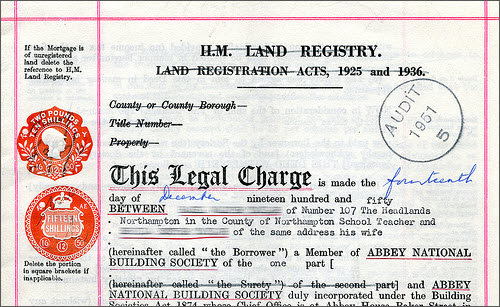
Here’s the full set that you can customize online:
- AIGA Standard for Professional Design Services
Drafted by the premier design association in the US, this is probably the most complete designer-friendly agreement out there (works best for big projects). Multiple versions available, with different licensing options. - Contract for Website Development & Identity Work, with Annotations
A modern Designer-Client Agreement, drafted by a New York lawyer. It’s loosely based off the AIGA form, but closes some loopholes and trims the fat. Informative annotations are provided to guide you through the various clauses. - AIGA/GAG Speider’s Designer Contract
The contract that the designer/writer Speider Schneider sends to his clients, as featured on Smashing Magazine. It’s a hybrid of the AIGA and GAG (Graphic Artists Guild) models, along with some common sense changes. Plus it’s optimized for e-signing to help save some trees. - Contract for Web Design
A plain language agreement for Web design development projects, based heavily on the Andy Clarke’s brilliant “Contract Killer” article on 24 Ways. The beauty of this document is in the language: this is a non-legalese, plain English, straightforward pact that two reasonable people sign. - Shortform Design Contract
Jacob Myers, the author of this sample, is a lawyer/developer who works closely with designers. In his words: “The next time a client comes to you with a quick job, save yourself time and aggravation by sending them a Short Design Contract to be signed BEFORE you start working. The doc is basically an abbreviated contract confirming the scope of the job, the schedule, fees to be paid and essential terms and conditions. Use this style of contract for quick jobs or where a full-blown contract would make the client apprehensive.” - Work for Hire
A short and flexible work-for-hire agreement, where the contractor is an artist being hired by a creative firm for a work of design. Remember that with this kind of contract the IP rights are automatically assigned to the commissioning client. - Consulting Agreement
If you’re hiring a consultant, this is a great starting point: a model agreement by a top US law firm. If you are the consultant, you might want to mitigate some of the provisions of this client-friendly document, like this version (see changes). - Shortform NDA
The contract that everybody signs, sooner or later: The Non-Disclosure Agreement. This is a unilateral example, so if both parties are disclosing confidential information to each other, make sure you use a Mutual NDA instead. - Contract for Original Illustration Work
A simple, commissioned illustration agreement drafted by a lawyer based in Portland. This contract is pro-artist, and a flat, non-refundable commission fee is charged. All rights are non-exclusively licensed, but because most people want a “unique” piece of art, the artist agrees not to resell or publish the work, except for portfolio use (such as posting on DeviantArt, Dribbble, etc.). - Simple IP Assignment
Work is done, money is in the bank, but you forgot to give the IP rights to the client? Fix the issue with this simple IP assignment. Also useful when you hired someone but forgot to have the rights assigned in the original contract. Get this signed to tie up any loose ends.
You can also download the full set in PDF/DOC, with one single file (.zip).
Don’t forget that the legal stuff is important, and so please treat these documents as a starting point. A good lawyer can help you review these examples and tailor them to your particular project and local laws. Standard documents are useful and educational, but are never a substitute for legal advice. Docracy, Smashing Magazine and the original authors of these documents disclaim any liability connected to the use of these material without a licensed attorney.
Further Reading
- The Collective Legal Guide For Designers (Contract Samples)
- Freelance Contracts: Do’s And Don’ts
- Dealing With Clients Who Refuse To Pay
- How To Guarantee Your Income With Agile Billing
 (vp, jc, il, mrn)